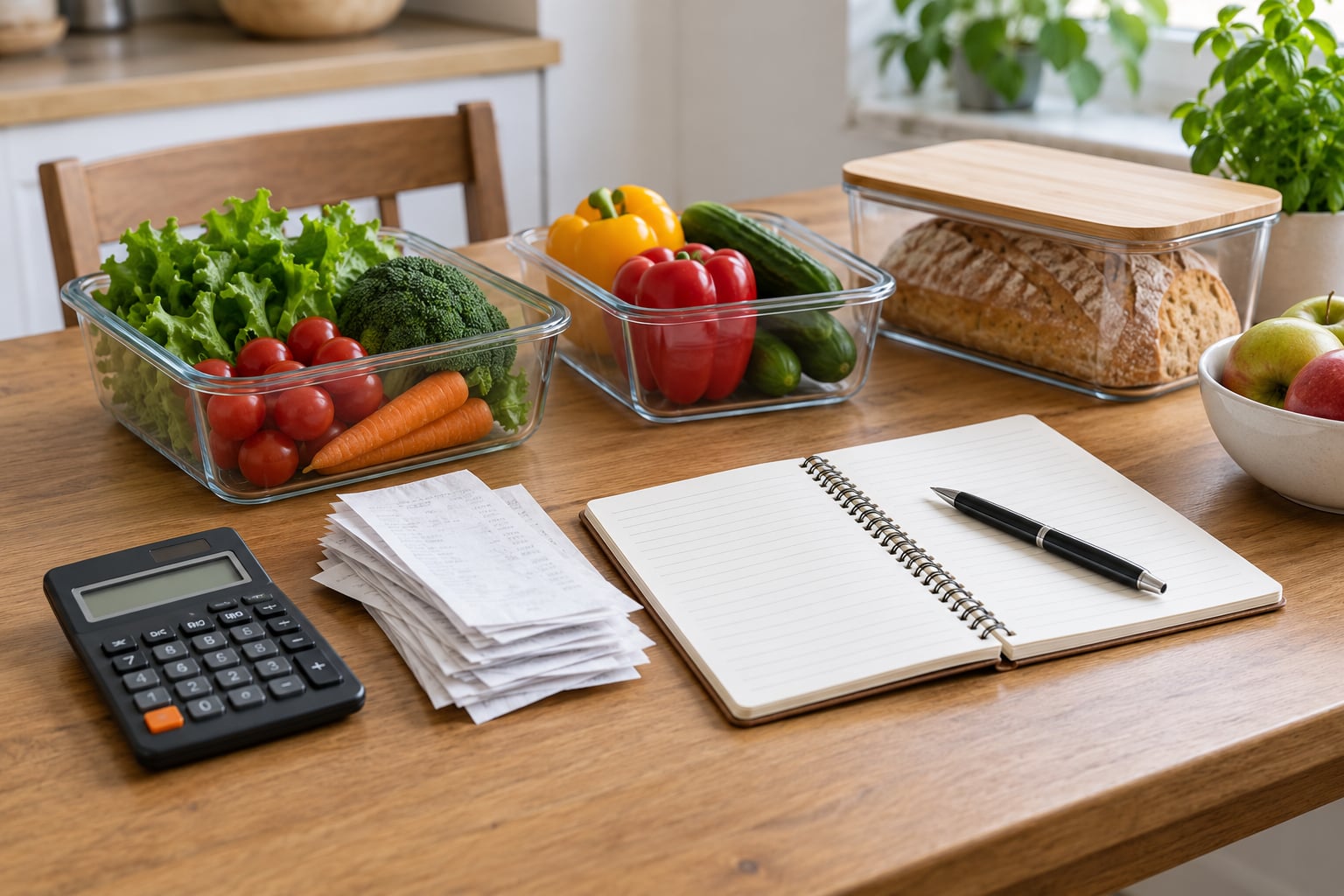
To save money on groceries each month, you need one number, one list and one shopping trip a week. Write down what you spent last month, break it into a weekly limit, and shop from a pantry-first list instead of deciding at the shelf. Small habits done for thirty days beat a total overhaul you abandon in a week.
Most people try to fix a grocery budget by cutting coupons or clipping through apps. That works for a few dollars a month. The bigger wins come from three levers: paying less per item, throwing away less food, and buying fewer random things in the first place.
Below is the seven-step system I use. It takes about an hour to set up, then twenty minutes a week to run.
Table of Contents
- What You Need
- Step-by-Step: How to Save Money on Groceries Each Month
- 1. Calculate Your Real Monthly Grocery Cost
- 2. Set a Weekly Grocery Limit
- 3. Plan Meals Before You Shop
- 4. Compare Prices and Choose the Right Store
- 5. Shop With a List and a Spending Guardrail
- 6. Use Leftovers and Reduce Food Waste
- 7. Review the Bill and Adjust Next Month
- Common Mistakes
- Shopping without a plan
- Confusing package price with unit price
- Buying too many perishables
- Relying on one bargain item
- Ignoring changes in your household
- Frequently Asked Questions
- How much should I spend on groceries each month?
- Are grocery coupons still worth using?
- How can I save money on groceries while eating out less?
- Is buying in bulk cheaper for a small household?
- What is the easiest way to reduce my grocery bill?
- A Simple Monthly Grocery Savings Plan
What You Need
The whole system runs on five things. None of them cost anything, and you probably have most of them already.
- A month of receipts or a spending record. Banking apps and store loyalty accounts both show grocery purchases, so you can pull the number without hunting for paper. Thirty days is the useful window.
- A monthly food budget. One figure you commit to. Anything more complicated than a single number usually falls apart by week three.
- One list, in one place. A notes app, a paper notebook taped inside a cabinet door, or a grocery list app. The location matters more than the tool.
- Freezer containers and a marker pen. Leftovers you cannot see are leftovers you eat. Clear containers stacked in the freezer work better than opaque tubs.
- A way to compare unit prices. A notebook works. A photo of the shelf price from the last two stores works better, because you can see the trend.
You also need permission to be imperfect. Nobody hits a grocery limit every single week, and the households that succeed are the ones that keep going after a bad trip instead of abandoning the system.
Step-by-Step: How to Save Money on Groceries Each Month
1. Calculate Your Real Monthly Grocery Cost
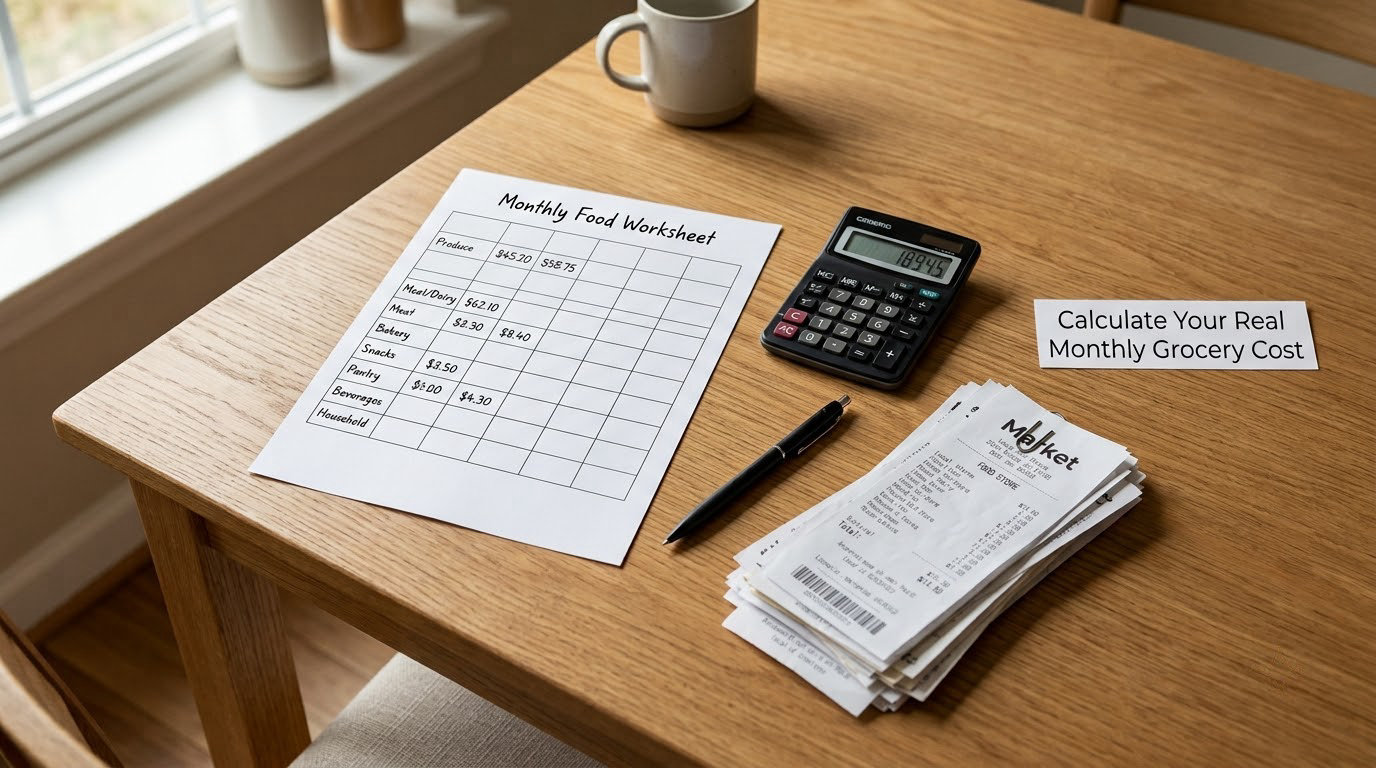
You cannot fix a number you have not measured. Pull the last thirty days of grocery spending and write it in one place before anything else.
Three adjustments make the number honest. First, separate groceries from meals eaten out, because they are different budgets and mixing them hides where the money went. Second, decide whether household supplies like paper towels and cleaning products count; pick one rule and keep it every month, since switching rules is how budgets stop meaning anything. Third, use actual purchase dates rather than statement periods, so a trip that straddles two months lands where it really happened.
Then divide the total by four for a rough weekly figure. If your shopping pattern is one big trip every two weeks, divide by two instead. The number is an estimate and it only has to be good enough to beat.
Next, sort spending into four buckets: protein, produce, pantry staples, and everything else. Most households find that one bucket is doing most of the damage. For me it was pantry staples, because I was buying a second jar of things I already had three of. You will not know which bucket is yours until the receipts are on the table.
2. Set a Weekly Grocery Limit
Now turn the monthly number into a weekly one. Monthly limit divided by four gives you your weekly ceiling, and that number does not move up because you had a hard week.
Adjust it honestly for household size before you start. A single person shopping for one rarely needs a full week of fresh produce, so a lower weekly limit is not failure, it is arithmetic. A family of four eating out four nights a week needs more in the pantry than a family that cooks every night.
Plan around irregular purchases rather than ignoring them. A holiday, a birthday, a big payday week, a month when you host a lot: put those in a separate mental column so the weekly limit still means something.
Leave yourself one planned splurge a month. Trying to hit a hard number for twelve months straight rarely holds, and one deliberate restaurant-cheap or dessert-cheap week is far easier to sustain than permanent austerity. The financial diet approach of a fixed splurge works for the same reason.
3. Plan Meals Before You Shop
Plan from what you already own. Open the pantry and the freezer, list what needs to be eaten in the next few days, and build your meals around that list. This one habit, more than any other, comes up again and again from people who actually keep a food budget.
Use an eat-first inventory: anything within two days of its date goes at the top of the list of meals to cook this week. Most food waste happens because perfectly good food sits in the back of the fridge until it turns. If you write the date on the container in marker, the problem gets a lot smaller.
Pick repeatable meals. You do not need thirty new recipes. Four or five dinners you can make without looking anything up, plus one or two you enjoy cooking, will carry most weeks and keep the shopping list short. The savings come from not buying an ingredient for a meal you never made.
Then write the shopping list organized by store section: produce first, then meat, then canned goods, then household. Walking the store in one loop without backtracking cuts impulse buys, because the unplanned item is usually one you walked past twice.
4. Compare Prices and Choose the Right Store
Compare unit prices, not package prices. A large container looks cheaper on the shelf and costs more per ounce than the small one. The shelf tag carries the unit price on most US grocery items, and once you read two or three, the habit sticks.
Keep a rough price book for the ten or fifteen items you buy every single week: eggs, butter, milk, chicken breast, ground beef, coffee, rice, pasta, olive oil, breakfast cereal. When a price jumps, you know immediately, and you can adjust before the receipt tells you.
Switching stores works for specific categories, not for everything. A discount grocer is the most commonly recommended change among people who track this, and it pays off most on pantry staples and frozen goods. A warehouse club pays off if you have freezer space and can finish a bulk package before it goes off. Everything perishable is usually cheaper at your regular store.
Be honest about the trade-off. Driving to a second store costs time and gas, and for a family that saves the difference on one trip, it is not worth it. For a household doing one big monthly shop, it usually is. That calculation is yours to run, but run it instead of assuming.
5. Shop With a List and a Spending Guardrail
Shopping without a list is the most expensive habit in most households. A list plus a route you decided on before you walked in the door turns a browsing trip into a task with a finish line.
Two guardrails help more than willpower. Put a hand limit on the cart, a number of bags rather than a dollar amount, and the cart physically stops when it is full. And check the app before you go: digital coupons and cash-back offers now attach to a loyalty account at most major chains, and the reward lands without you doing anything at the register.
Avoid the trigger zones. Candy at the checkout, the bakery table by the entrance, and the cart of sale items blocking the aisle are placed there on purpose. Go straight past them, do your list, and leave. A pause rule helps too: anything not on the list goes back unless you can name the meal it is for.
Read sale tags carefully, though. A sale on something you do not use is not a saving. It is the same cost with extra packaging.
6. Use Leftovers and Reduce Food Waste
Cooked leftovers go into the fridge within two hours and last three to four days. Reheat them to 165 degrees Fahrenheit for poultry, 160 for ground meat, and 145 for whole cuts of meat and fish. When in doubt, food safety beats saving a portion.
Freeze before the date, not after. Bread, bananas, grated cheese, cooked meat and chopped vegetables all freeze well and turn into an ingredient later instead of a loss. Flat bags take less space than rigid containers, which matters more than you would think once a freezer is three quarters full.
Run the freezer oldest-out-first. When a bag of something moves to the front, it goes on the next list. Two minutes of attention during the weekly shop is enough to keep waste near zero.
Batch cooking is the version of this that pays off for busy weeks. Cook a pot of chili, soup or sauce on Sunday, freeze it in meal portions, and the weekday decision is already made. Cooking in bulk and freezing portions is what prevents both waste and the second-meal fatigue that makes people give up.
7. Review the Bill and Adjust Next Month
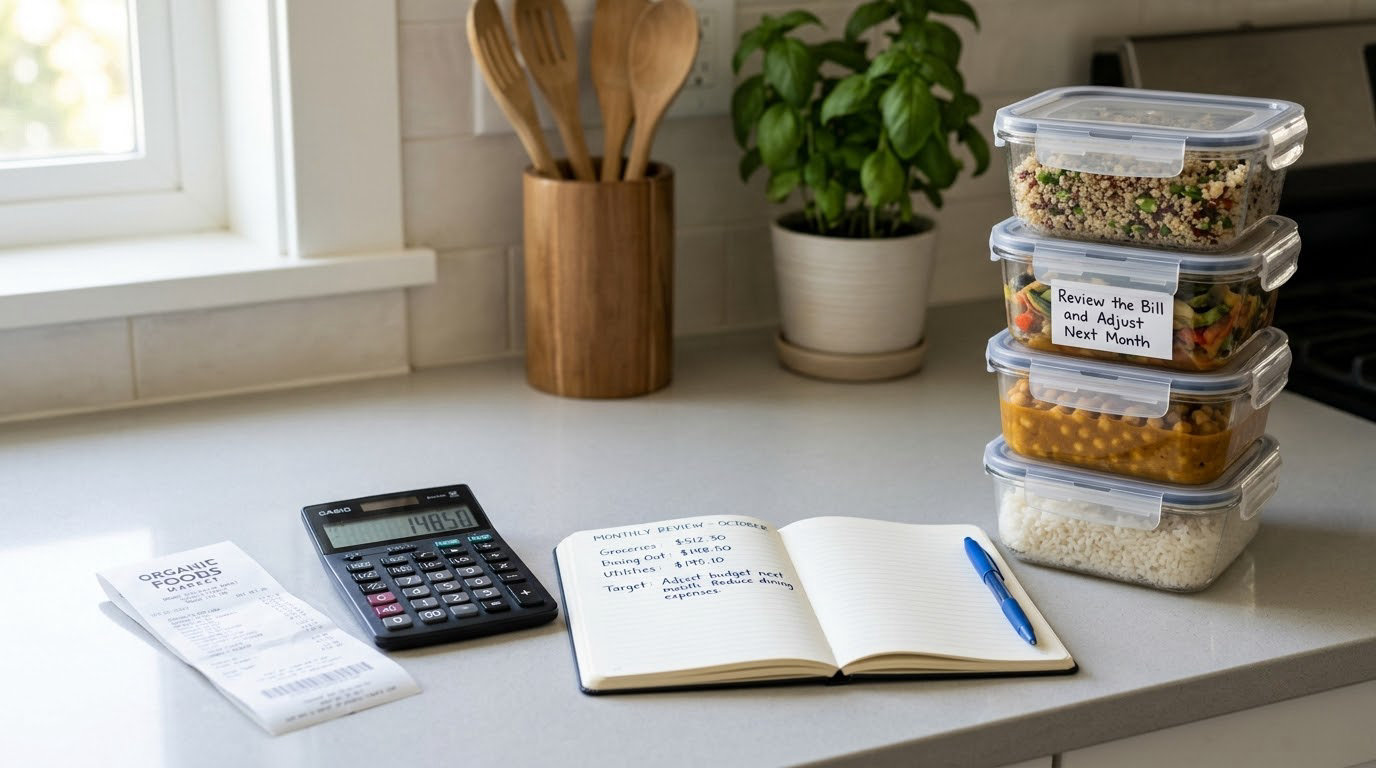
Spend twenty minutes at the end of the month with the receipts and the limit side by side. Write down the difference in plain words: over by forty-two dollars, mostly in meat and mostly on unplanned trips.
Note any price that went up and stayed up. Eggs, coffee and beef move more than most people notice, and a recurring increase is a reason to change the meal plan, not to feel bad.
Then change one or two things for next month, never ten. Pick the category where you overspent and adjust just that. Everything else stays. A system you keep running beats a perfect month you cannot reproduce.
Common Mistakes
Most failed grocery budgets fail for the same five reasons. Each one has a fix and a second tactic that goes with it.
Shopping without a plan
The fix is a list written before you leave home, not in the parking lot. The extra tactic: shop once a week on a fixed day. Weekly shoppers report fewer impulse buys simply because they are not resetting the urge every few days.
Confusing package price with unit price
Big is not the same as cheap per ounce. The fix: read the unit price on the shelf tag for anything you buy weekly. The extra tactic: for pantry staples, compare the store brand against the national brand on unit price alone, and switch whenever the store brand is meaningfully lower.
Buying too many perishables
Fresh produce and meat get thrown out at higher rates than anything else in the pantry. The fix: buy fewer kinds and more often, and only what you have a meal for. The extra tactic: keep one reliable freezer backup, such as frozen berries, spinach or chicken, so a missed produce shop does not become a delivery order.
Relying on one bargain item
A deal you cannot eat or use before it goes off is not a deal. The fix: before buying on sale, check whether you already own that item or have a freezer plan for it. The extra tactic: split bulk purchases with a neighbour or friend, which is the standard advice for singles and pairs.
Ignoring changes in your household
A budget built for two people stops working when a third appears, or when two kids move out. The fix: rebuild the weekly limit from current household size and eating patterns, not from the version of you from two years ago. The extra tactic: re-check the price book whenever a staple crosses a threshold you would not have predicted, because thresholds quietly move every year.
Two habits worth adding if you have room. Store brand products on the categories you buy most often first, since that is where the yearly total is. And consider whether the grocery budget belongs in an envelope or a separate account, because money that is visibly separate is harder to spend by accident.
Frequently Asked Questions
How much should I spend on groceries each month?
Work it out from your own receipts rather than a national average. Divide your actual thirty-day grocery total by four for a weekly figure, then multiply back by your household size as a sanity check. Rules of thumb in the US often land around 100 to 150 dollars per person per month for a person who cooks most meals at home, and roughly half that for someone eating out frequently. Your own number is the only one that matters.
Are grocery coupons still worth using?
Mostly yes, but not for the reason people think. Digital coupons and loyalty cash back are worth far more than paper clipping, because they apply automatically to purchases you were already making. Coupons on items you would never buy save you nothing and add clutter. Use digital offers on your ten or fifteen weekly staples, ignore the rest, and never let a coupon change what you eat.
How can I save money on groceries while eating out less?
Eating out less saves you the most when you replace it with planned meals rather than improvisations. Put the money you would have spent on two takeaways per week into the grocery limit for the month, so the saving is visible. Then cook in batches on one day, freeze portions, and keep two genuinely cheap fallback meals for nights when you cannot face cooking. Takeout becomes an exception instead of the default.
Is buying in bulk cheaper for a small household?
Only for non-perishables you use steadily, such as rice, pasta, canned goods, toiletries or paper products. Fresh meat, produce and dairy are usually cheaper by the single unit, and a bulk package a person cannot finish is the most common way bulk buying costs more. If you have freezer space, split bulk buys with a friend or neighbour so both households finish the package.
What is the easiest way to reduce my grocery bill?
Shop the pantry first and write your list from what is already there. It costs nothing, needs no app, and it attacks the two biggest leaks at once: buying duplicates and wasting food you already had. Second easiest is shopping once a week from a list. Third is switching to a store brand on the categories you buy most. Those three together usually do more than any coupon strategy.
A Simple Monthly Grocery Savings Plan
Start with the number. Pull thirty days of receipts, total the groceries only, and write the figure at the top of a page. Divide by four. That weekly limit is your system for the month.
Then run the seven steps once, all the way through, before you change anything else. Measure, set the limit, plan from the pantry, compare unit prices, shop from a list, freeze the leftovers, review the receipts. One complete month gives you real data on your own household, which no generic article can give you.
How to save money on groceries each month comes down to paying less per item and wasting less of what you buy. Everything else, apps and coupons and store hopping, sits on top of that and works better once the base is solid.