
If your credit file is thin, a secured card is usually the realistic first step; if you already have a score around 670 or better, an unsecured card gives you a higher limit, lower rates and real rewards. Secured credit card vs unsecured explained in one line: a secured card requires a refundable cash deposit that usually equals your credit limit, while an unsecured card requires no deposit and is approved on your credit history and income.
This is general information about how U.S. credit cards work, not individualized financial advice. Rates and score thresholds shift over time, so treat the figures below as typical ranges rather than a quote from any issuer.
Table of Contents
- Secured Credit Card vs Unsecured at a Glance
- What Is a Secured Credit Card?
- What Is an Unsecured Credit Card?
- Secured Credit Card vs Unsecured Explained: Approval and Collateral
- How the Credit Check Differs
- Which Card Has Lower Fees and Interest?
- How Deposits Affect Your Budget
- Credit Limits and Credit Building
- Which Should You Choose?
- Frequently Asked Questions
- Is a secured credit card better than an unsecured credit card?
- Does a secured credit card build credit the same way as an unsecured card?
- What happens if I close a secured credit card with a deposit?
- Can I get an unsecured credit card after a bankruptcy?
- Does applying for a secured credit card cause a hard inquiry?
- Should I carry a balance on a secured or unsecured credit card?
- Bottom Line
Secured Credit Card vs Unsecured at a Glance
This table lays out the practical differences between the two card types side by side, so you can see exactly where secured and unsecured diverge.
| Feature | Secured credit card | Unsecured credit card |
|---|---|---|
| Collateral | Refundable cash deposit held by the issuer | None |
| Deposit required | Yes, commonly 200 to 500 dollars or more | No |
| Initial credit limit | Usually matches or tracks the deposit | Set by the issuer from credit history and income |
| Credit check | Often a soft pull, sometimes a hard inquiry | Usually a hard inquiry |
| Approval difficulty | Easy; approval odds are high by design | Harder, especially below a score around 670 |
| Annual fee | Often none | Often none, sometimes 25 to 95 dollars or more |
| Purchase APR | Typically higher, often in the low to mid 20s | Typically lower, often in the high teens to low 20s |
| Rewards | Rare; usually a small cash back rate or none | Common, including cash back, travel and protections |
| Deposit returned | Usually refunded at upgrade or account closure | Not applicable |
| Overspending risk | Low; the limit is a hard stop | Higher; limits can run into the thousands |
| Reports to Equifax, Experian, TransUnion | Yes, on most cards | Yes |
| Best fit | No credit history, thin file, recent arrival, post-bankruptcy | Established credit wanting limits, rates and rewards |
What Is a Secured Credit Card?
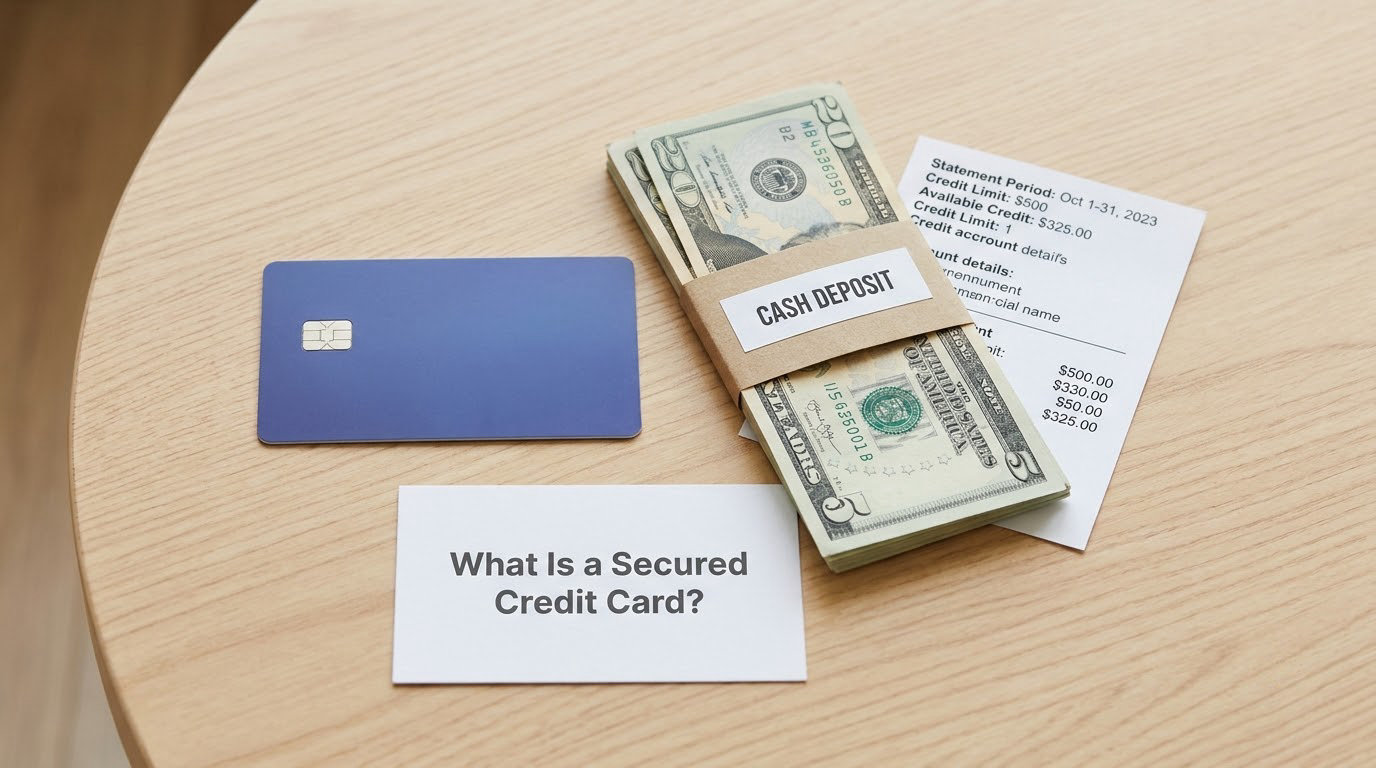
A secured credit card requires you to place a refundable security deposit with the issuer, usually equal to the credit limit it grants you. That deposit acts as collateral, so approval depends far less on your credit history than an unsecured card’s does.
The mechanics are simple. You put down 200 dollars, the issuer opens a line with roughly 200 dollars of available credit, and you use the card normally. Payments get reported to the credit bureaus exactly like any other revolving account.
One detail catches people off guard: the deposit usually counts toward your credit limit rather than sitting on top of it. A 500 dollar deposit with a 500 dollar limit does not give you 1,000 dollars to spend, which is why a small deposit also means a small cushion against overspending.
What Is an Unsecured Credit Card?
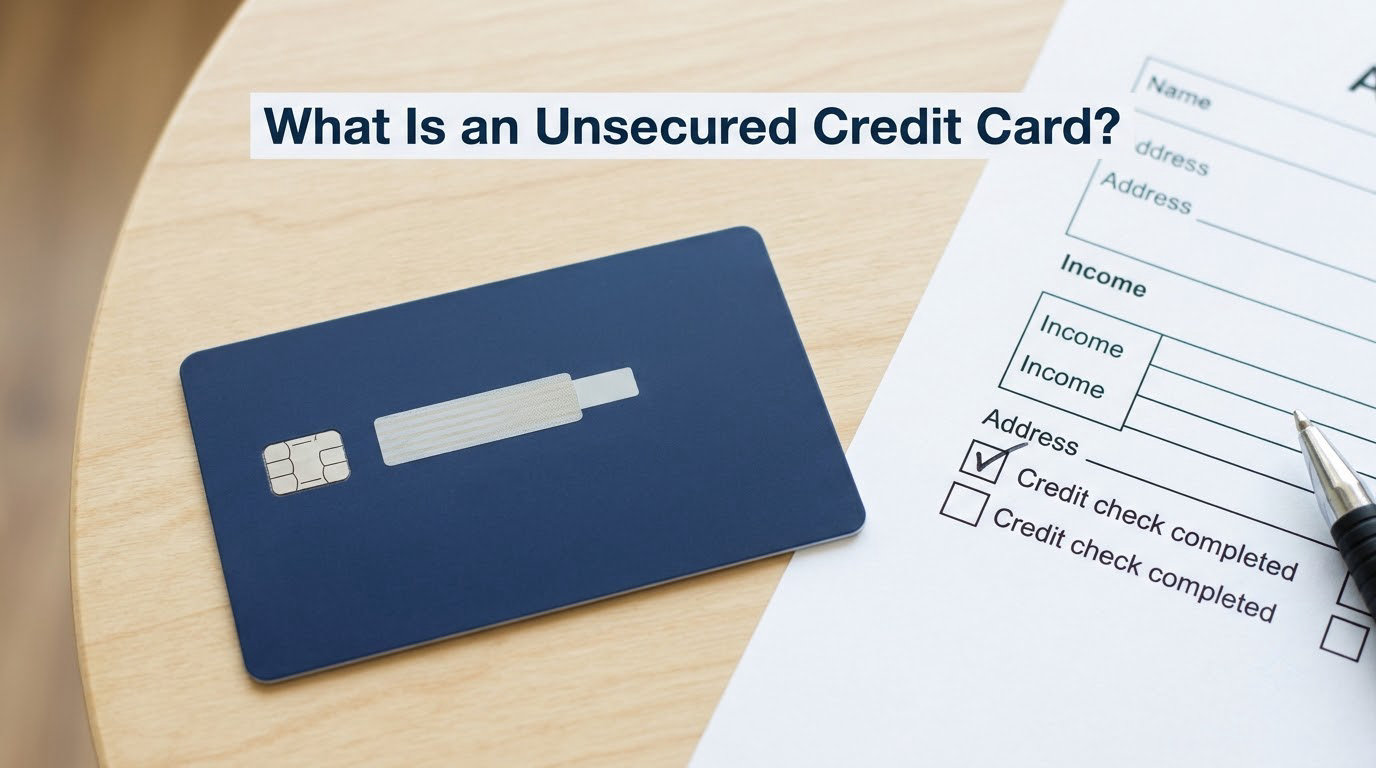
An unsecured credit card requires no deposit and no collateral. The issuer lends against your credit history, credit score and stated income, which is why approval is harder to get and why limits can run much higher than a secured card’s.
Your limit is sized from how the bureaus see you: payment history, how much revolving debt you carry, how long your accounts have existed, and any recent hard inquiries. A thin file gets a small line. A long clean record with a healthy utilization ratio gets a much larger one.
Secured Credit Card vs Unsecured Explained: Approval and Collateral
Collateral is the whole story. A secured card is backed by your deposit, so the issuer’s risk is small and approval is largely automatic. An unsecured card is backed only by your promise to repay, so the issuer has to look hard at how you have handled credit before.
That difference drives everything else in the table above: the deposit, the limit, the credit check, the APR, and who realistically gets approved. A deposit is not a fee and not a down payment on the account. It is your own money held as security, and it comes back when the relationship ends under the terms the issuer sets.
How the Credit Check Differs
Many secured card applications run a soft inquiry or a credit check that does not affect your score, though plenty of issuers use a hard pull anyway. Unsecured applications almost always involve a hard inquiry, because the issuer is taking genuine risk.
A hard inquiry stays on your file for two years and typically costs a few points for around twelve months. That is why people with no credit history should pull their report before applying anywhere. Free weekly reports are available at annualcreditreport.com, and the three bureaus are Equifax, Experian and TransUnion.
The other trap is speed. Applying for four cards in one afternoon can mean four hard inquiries in a short window, and several at once read worse to scoring models than two spread over months. Check the check type, check the fee, and check the reporting before you submit anything.
Which Card Has Lower Fees and Interest?
Secured cards more often charge no annual fee, which is exactly why credit forums push readers toward a no-fee secured card as a learning tool. Unsecured cards are mixed: plenty are free, but premium travel and rewards cards commonly run from 25 to 95 dollars a year or more.
Interest is the sharper difference. The Federal Reserve’s data on consumer revolving accounts has long put the average card APR in the low twenties, and secured cards typically sit at or above that while unsecured cards often land below it. A card that is free to open can still charge 24 percent on a carried balance.
Either type can also charge a cash advance fee with a higher APR that starts the same day, a late fee for a missed payment, and a penalty APR that can jump for going over your limit or paying late. Under 21, the CARD Act requires applicants without the income to support a credit limit to show independent income or add a cosigner.
How Deposits Affect Your Budget
Common opening deposits land somewhere around 200 to 500 dollars, and plenty of cards go higher from there. Some issuers let you start with a smaller deposit than the eventual limit, so the money you tie up at the start is not always the amount you will be holding in year two.
The deposit is due at account opening, which is the part that catches cash-tight readers. It usually comes back when the issuer graduates you to an unsecured card, when you close the account at a zero balance, or when an issuer returns it as a promotional gesture. Terms vary by issuer, so read the specific card’s agreement rather than a general article.
For the chance of losing it: closure while a balance remains, a default, or a missed payment that pushes the account into collections can reduce or forfeit the deposit. Closing a secured card early also removes a chunk of credit history, so the timing rarely feels good either way.
Frame the cost honestly. Money sitting in a deposit earns nothing, but paying 24 percent interest on a carried balance costs far more. For anyone who would otherwise pay off every statement, the opportunity cost of the deposit is the real price of the card.
Credit Limits and Credit Building
A secured card starts at whatever the deposit supports, so your limit and your score are both low at first. Most issuers review the account periodically and raise the limit or the required deposit over time, sometimes converting the account to unsecured once you have a stretch of on-time payments.
Both card types build credit the same way, which is the part most often repeated wrong. The deposit does not change how the account is reported. Equifax, Experian and TransUnion see a revolving credit account with a payment history and a balance, whether or not collateral sits behind it.
That means the levers are the ordinary ones. Pay on time every month, keep your reported balance under roughly 30 percent of your limit, and let the account age. Never carry a balance just to look active; interest is charged for the privilege, and the bureaus do not reward you for it.
Do not close either card early. An old account with a full limit helps your utilization ratio, and closing one removes that history for years. If you want the deposit back, wait until the balance is zero and check what the issuer does on closure before you cancel anything.
Which Should You Choose?
Start with your score, since it decides what you can realistically be approved for.
| Score range | Where you probably stand | Realistic starting point |
|---|---|---|
| Under 580 | No usable history, recent default, or bankruptcy discharge | Secured card, or a no-deposit credit-builder card |
| 580 to 629 | Thin file with a few accounts | Secured card, student card, or authorized-user strategy |
| 630 to 669 | Approaching the usual unsecured threshold | Apply for both; the unsecured attempt is worth making |
| 670 to 719 | Qualifies for most mainstream unsecured cards | Unsecured card |
| 720 and up | Strong file, better rates and limits | Unsecured card, ideally with rewards |
Beyond the number, a few profiles come up constantly. A student with no file should look for a student card or a secured card with no annual fee and a clear upgrade path. Someone rebuilding after bankruptcy faces the same logic, with the added benefit that a secured card works during the waiting period after discharge.
A recent arrival to the United States often has income and no U.S. credit file at all, which is the classic secured-card situation. Someone who cannot spare a deposit has better routes than a secured card: an authorized-user card on a parent’s account, a credit union card, or a credit-builder card that reports a loan-style balance to the bureaus each month.
For everyone else, pause at the size of the number. An unsecured card with a 5,000 dollar limit does not help a reader who has trouble paying down balances; it just moves the problem. A secured card’s limit is a hard stop, and for someone new to credit that safety is worth more than a larger line.
Frequently Asked Questions
Is a secured credit card better than an unsecured credit card?
A secured card is better if you have no credit history, a score under about 670, or you cannot get approved for anything else. It is easier to open, easier to keep cheap, and its limit stops you overspending. An unsecured card is better once you qualify, because limits are higher, APRs are usually lower, and rewards come with it.
Does a secured credit card build credit the same way as an unsecured card?
Yes. The bureaus see a revolving account with a payment history and a reported balance either way. The deposit changes who approves you, not how the account is scored. Pay on time, keep reported balances low against your limit, and let the account age, and the score responds the same on both.
What happens if I close a secured credit card with a deposit?
The issuer returns the deposit once any balance is cleared, but terms differ, and closing removes the account from your credit file. That can cut your available credit and shorten your average account age, which lowers your score for a while. Ask the issuer directly what happens on closure before you cancel anything.
Can I get an unsecured credit card after a bankruptcy?
Usually, but not immediately. Many issuers wait roughly a year after discharge and want on-time payments and a reportable balance in the meantime. A secured card is the common bridge during that window. Secured credit card vs unsecured approval is really a question of what the issuer sees on your report at the time you apply.
Does applying for a secured credit card cause a hard inquiry?
It depends on the issuer. Many secured cards use a soft inquiry or a check that does not affect your score, but plenty still pull hard. The application page or the issuer’s disclosure tells you which. Check your report first, since a thin file loses more from a hard pull than most people expect.
Should I carry a balance on a secured or unsecured credit card?
Neither. Interest is charged for carrying a balance, and scoring models do not reward you for it. Pay the statement balance in full each month and let a small reported balance fall before the statement date if you want to keep utilization low. You build credit by paying on time, not by owing money.
Bottom Line
Start where your credit file puts you. Under about 670, or with no history at all, a secured card with no annual fee and a clear upgrade path is the sensible opening move. At 670 and above, go straight to an unsecured card for the lower rate, higher limit and rewards.
Before you apply anywhere, compare four things on the issuer’s own terms: the annual fee, the deposit and what triggers its return, whether the application is a hard pull, and whether the card reports to all three bureaus. Then pull your report and check it. That is the first step, and it costs nothing.