
The fastest way to dispute a credit card charge is to contact your card issuer directly — through the app, the online portal, or the number on the back of the card — within 60 days of the statement that first showed it. The issuer investigates, usually by contacting the merchant, and either reverses the charge or explains in writing why it stood.
Knowing how to dispute a credit card charge properly matters because timing decides whether your rights are still in play. Under the Fair Credit Billing Act, a written billing-error notice has to reach the issuer within 60 days of that first statement, and fraud claims work best when you report them the same day you spot them. Most investigations run 30 to 45 days, and you can speed yours up by assembling the paperwork before you make the call.
This guide covers the US process. Deadlines and rules vary by issuer and by state, so check the billing-inquiries address printed on your statement if anything here conflicts with what your card company says.
Table of Contents
- What You Need to Dispute a Credit Card Charge
- Step-by-Step
- Step 1: Confirm the Charge and Gather Evidence
- Step 2: Contact Your Credit Card Issuer Promptly
- Step 3: Submit the Dispute and Ask for Confirmation
- Step 4: Follow Up and Escalate the Dispute
- Common Mistakes
- Frequently Asked Questions
- How long does a credit card dispute usually take?
- Should I contact the merchant or the credit card issuer first?
- Does disputing a charge affect my credit score?
- When can a card issuer issue a temporary credit during a dispute?
- What should I do if the credit card company denies my dispute?
- What information should I include in a written credit card dispute?
- Conclusion
What You Need to Dispute a Credit Card Charge
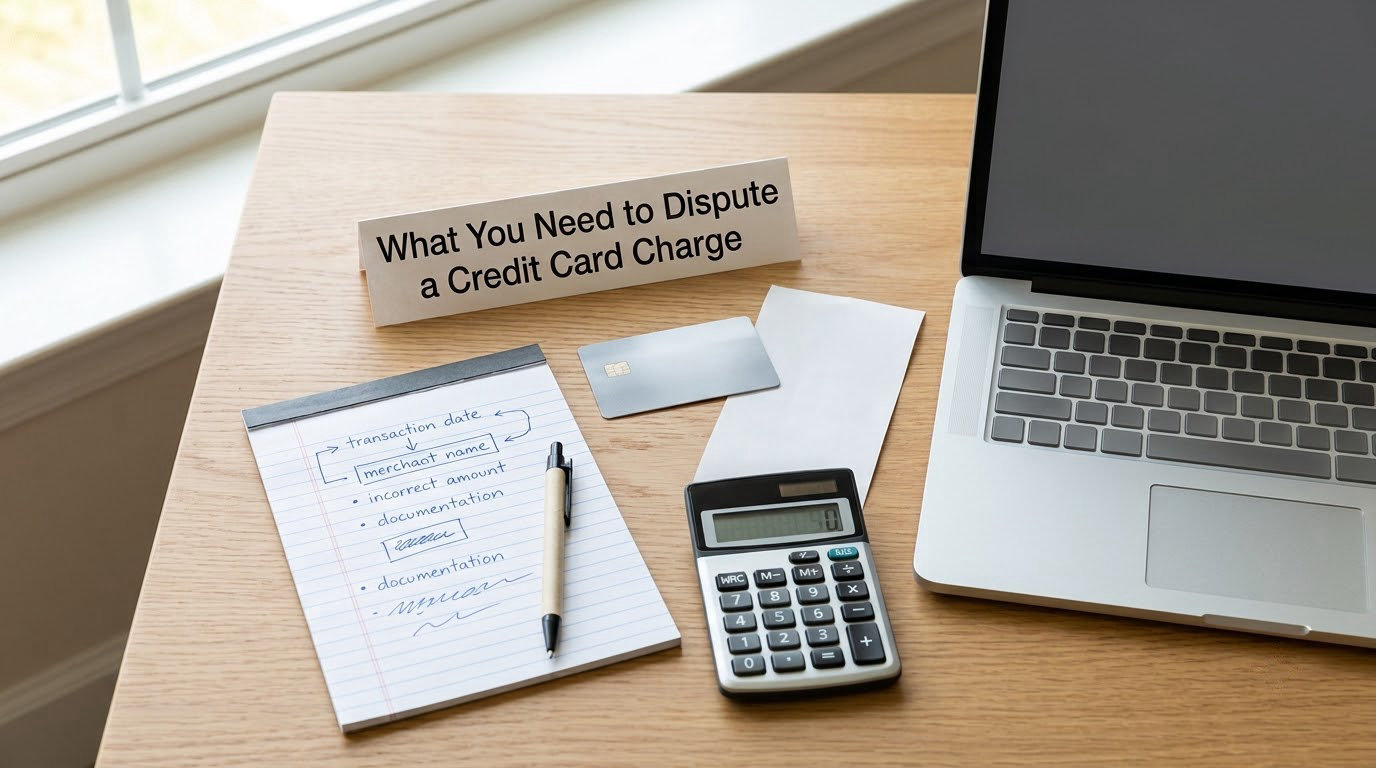
Assemble these five things before you contact anyone. Ten minutes of setup is the difference between a claim that gets approved in a week and one that stalls for two months.
- The transaction details. Date, exact amount, and the merchant name spelled the way it appears on your statement, including the city and the last four digits of the card used.
- Supporting records. Receipts, order confirmations, invoices, tracking numbers, and screenshots of emails or chat logs with the merchant.
- Your card information. The account number and customer service number printed on the back of the card.
- The right contact route. The billing-inquiries phone line or the billing-inquiries mailing address on your statement, which is not always the general customer service address.
- A written explanation. Three or four plain sentences: what happened, why the charge is wrong, and what you want instead — a refund, a corrected amount, or both.
Keep everything in one folder, digital or paper. You will be asked for it again when the investigation closes, and digging it up at that point is where most claims die.
Step-by-Step
Work through these four steps in order. Skipping ahead to the phone call is the most common mistake people make, because the issuer’s first question is almost always what evidence you have.
Step 1: Confirm the Charge and Gather Evidence
Compare the charge against your paper statement, your online account activity, and your own receipts before deciding what kind of problem it is. That classification decides which process applies, and the three processes are not interchangeable: a card issuer dispute, a merchant refund request, and a dispute with the credit reporting agencies are three separate things with three separate timelines.
Sort what you find into one of these buckets:
- Unauthorized or fraudulent. You never made this purchase, or someone used your card number. Cardholder responsibility rules and zero-liability policies generally cap your loss at a small dollar amount, and the issuer usually replaces the card.
- Duplicate. The same merchant, same amount, same day, sometimes twice within a minute. Common at gas pumps, in-app stores, and hotels that retry a capture.
- Billing error. Wrong amount, wrong date, wrong currency, or a charge for goods and services never delivered.
- Authorized but unacceptable. You made the purchase but the merchant did not deliver, delivered something defective, or billed a cancellation or restocking fee you never agreed to. This is the hardest category to win, and it needs the strongest documentation.
Now gather proof for the bucket you landed in. Screenshots of order confirmations and chat logs with the merchant are repeatedly the thing that moves a claim from denial to approval, because they show the issuer what you already tried. Write down the date, the time and the name of anyone you spoke to at the merchant, then photograph or screenshot that record.
Step 2: Contact Your Credit Card Issuer Promptly
Call the number on the back of the card, use the dispute option inside your issuer’s app or online account, or send a letter to the billing-inquiries address. All three work, but they produce different records, and the record is what you build on later.
Have these ready before you dial: your card number, the transaction date and amount, the merchant name, the type of problem from Step 1, and the evidence list. Say the words “billing error” or “unauthorized transaction” out loud — it routes the call to the right team and gets you a case number instead of a general service log.
If you file online or in the app, follow it up with a short letter by mail. Digital-only disputes frustrate a lot of cardholders who assume a paper letter is legally required; the practical fix is cheap, and a mailed notice within the 60-day window closes the statutory gap.
Step 3: Submit the Dispute and Ask for Confirmation
Put the dispute in writing, even if the phone call was the real start. Keep it short and factual: your name, account number, the transaction date, the amount, the merchant, why the charge is wrong, the evidence you are enclosing, and the resolution you want.
Three questions are worth asking out loud and once more in writing: what is my reference or case number, what is the date you received my dispute, and when will you send the written result notice? Without a reference number, a follow-up call becomes a fresh conversation where the representative has no history to work from.
Do you keep paying the charge while it is investigated? Usually the disputed amount can be withheld, but only if you tell the issuer that in the dispute itself rather than assuming. A large unpaid balance that is not flagged as disputed can still trigger a late fee or a missed payment report, so confirm the status of that specific charge on your account.
Step 4: Follow Up and Escalate the Dispute
Expect a result notice within about 30 days, sometimes 45. If you receive nothing after roughly two months, call and quote your reference number. If documentation is requested, send it immediately — an open request the issuer never receives is the same as no evidence at all.
When a dispute comes back denied, a short factual written follow-up is the single most effective move cardholders report, and it costs one page of typing. Do not argue the representative’s decision. Reference the original case number, state which evidence was submitted and on what date, explain what the issuer overlooked, and request a review by a different reviewer.
If that fails, escalate in this order: the issuer’s executive resolution or executive response office, then the card network’s dispute process through the issuer, then the Consumer Financial Protection Bureau, then your state attorney general. A state AG complaint often moves faster than people expect because issuers treat regulator mail differently from customer service tickets.
One clarification worth making: filing a card dispute does not dispute anything on your credit report. A charge that lands on your report after a denied dispute is a reporting error, and that is a separate claim to the credit bureaus, not to your card issuer.
Common Mistakes
These are the errors that cost cardholders the most money, in rough order of how often I see them.
Starting with the merchant when the charge looks fraudulent. If you do not recognize the transaction, call the issuer, not the store. Fraud reports open fraud clocks, trigger card replacement, and freeze further use of the card. The merchant-first habit makes sense for an authorized purchase you are unhappy with, and it is exactly wrong for an unknown charge.
Waiting. People assume the window is generous. It is 60 days from the first statement showing the error, not from the day the money left the account, and statements arrive well after the charge. If you are already outside the window, still file — some issuers make exceptions, but you have lost the automatic protections.
Filing without evidence. A claim with no receipt, no screenshot and no record of a merchant contact is usually decided on the merchant’s account alone. Ten minutes of screenshots before the call changes the odds more than anything else you can do.
Confusing the three dispute types. Issuer dispute, merchant refund, and credit report dispute are different doors. Filing the wrong one wastes weeks and, for unauthorized charges, delays the fraud response.
Emailing card details. Do not send a full card number, expiry, or PIN in an email or a web form that is not the issuer’s secure portal. Verify the address on the statement before mailing anything containing personal information.
Dropping the claim after a denial. A denial is a decision, not the end of the road. Ask for the written reason, then use the escalation path above.
Frequently Asked Questions
How long does a credit card dispute usually take?
Most card issuers have up to 30 days to investigate a billing-error dispute, and many take 30 to 45 days in practice. Fraud claims involving unauthorized charges often resolve faster because the card gets closed and the merchant response is quicker. If you have a reference number and hear nothing after about two months, call the issuer and ask for a status update in writing.
Should I contact the merchant or the credit card issuer first?
It depends on the type of charge. For a charge you do not recognize, contact your card issuer right away so fraud protections start and the card can be frozen. For a purchase you authorized but are unhappy with, contacting the merchant first is reasonable and often faster. Either way, document the merchant attempt with dates and names, because issuers side with cardholders more often when that attempt is on record.
Does disputing a charge affect my credit score?
Filing a card dispute itself does not appear on your credit report and does not lower your score. The risk is indirect: if you stop paying the disputed amount without telling the issuer to withhold it, the unpaid balance can be reported as a delinquency. Keep paying every other balance on time, and confirm that the disputed charge is flagged as pending rather than simply overdue.
When can a card issuer issue a temporary credit during a dispute?
A provisional credit is the amount temporarily credited to your account while the issuer investigates, and it is standard practice once a dispute is properly filed. You typically see it within one to two billing cycles, and it stays on your statement as a pending or provisional item until the investigation closes. If it is approved, the credit becomes permanent; if denied, the amount is debited back.
What should I do if the credit card company denies my dispute?
Ask for the denial reason in writing first, then send a short factual appeal that references your original case number and lists the evidence you submitted with dates. If that is rejected, escalate to the issuer’s executive resolution office, then the card network dispute process, then the Consumer Financial Protection Bureau or your state attorney general. A one-page written appeal is what most cardholders say actually changed their outcome.
What information should I include in a written credit card dispute?
Include your name, account number, the transaction date, the exact amount, the merchant name as it appears on the statement, the reason the charge is wrong, what you are enclosing as evidence, and the resolution you want. Date and sign it, keep a copy, and send it by mail to the billing-inquiries address so it arrives within 60 days of the first statement showing the error.
Conclusion
Verify the charge, gather your evidence, contact your issuer within 60 days of the statement that showed it, and get a reference number in writing. If the answer is no, appeal with one factual page, then climb the escalation ladder to the network, the Consumer Financial Protection Bureau, and your state attorney general.
What you do in the first hour decides most of the outcome. The rest is patience and paperwork.