
A health savings account is a tax-advantaged personal savings account that pairs with a high-deductible health plan (HDHP) to pay qualified medical expenses. You put money in, usually through payroll, the balance grows tax-free, and you take it out tax-free for things like deductibles, copays and prescriptions. There is no deadline to spend it.
Below is the whole mechanism in plain language, including the 2026 contribution limits, how to get money back out when you pay cash, and what happens to the account when you change jobs. Rules and dollar amounts are set by the IRS and change most years, so treat the numbers here as a starting point and confirm the current ones at IRS.gov in Publication 969.
Table of Contents
- What Is a Health Savings Account?
- How health savings accounts work day to day
- The triple tax advantage
- How Do You Open and Fund an HSA?
- Offering an HSA at work
- How Does an HSA Grow Your Money?
- What Tax Benefits Does an HSA Provide?
- How Much Can You Contribute to an HSA?
- The last-month rule and mid-year job changes
- How Do HSA Withdrawals Work?
- How reimbursement actually works
- What happens if you take money out for something else
- Can You Use an HSA for a Health Insurance Deductible?
- How Are HSAs Different From Other Health Accounts?
- What Should You Do With an HSA Balance?
- The so-called HSA loophole
- When an HSA is not worth it
- Frequently Asked Questions
- Do you have to use your HSA money every year?
- What can I use my HSA funds for?
- Can I have both an FSA and an HSA at the same time?
- What happens to my HSA when I change jobs or retire?
- How much is too much to hold in an HSA?
- Conclusion
What Is a Health Savings Account?
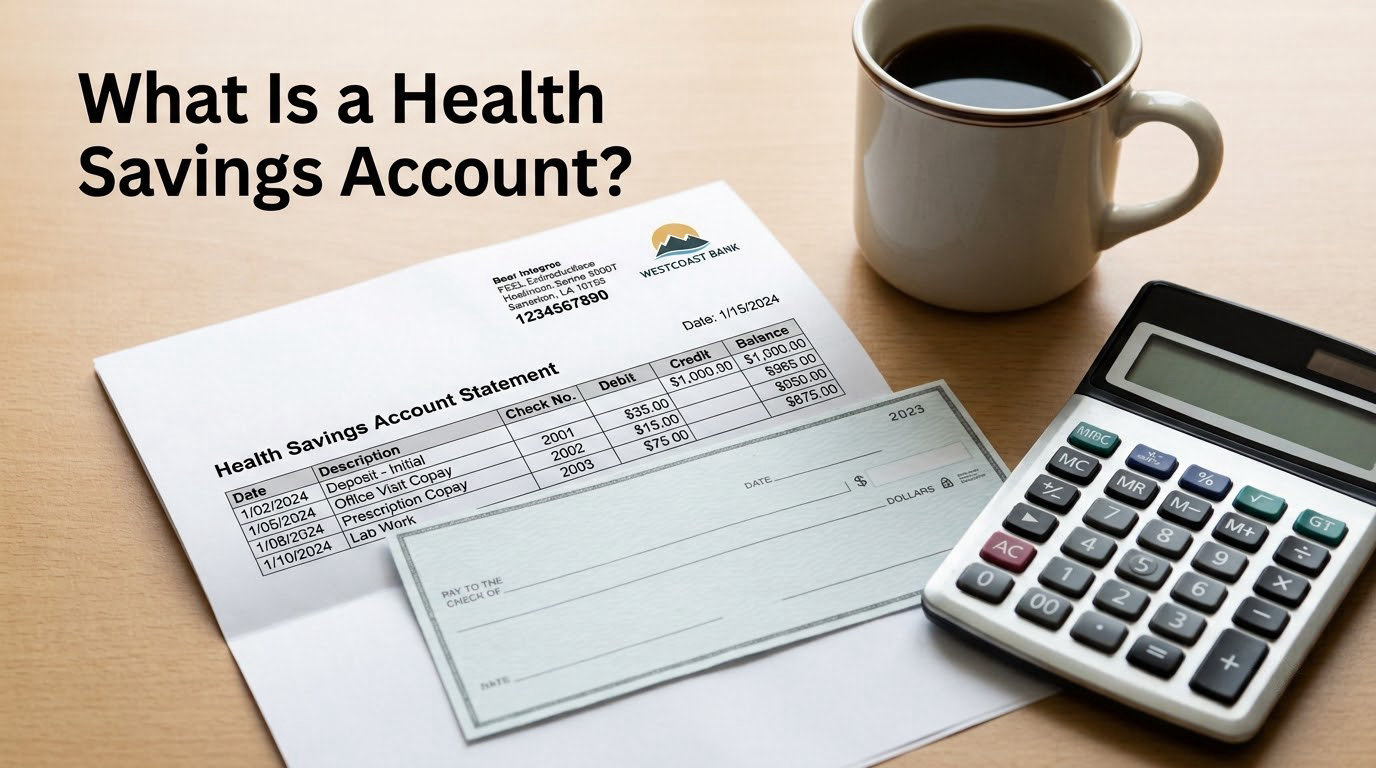
An HSA is not a bank account that happens to have a medical name. It is a tax shelter with a debit card attached, and the only spending test is whether the expense qualifies under federal rules.
You can contribute and use an HSA only if you are enrolled in a high-deductible health plan for the whole year (or a part-year under a testing period), you are not covered by Medicare, and nobody claims you as a tax dependent. Spouses can each have their own account, but one person cannot be covered by two of them at once.
A high-deductible health plan is simply a plan with a higher deductible than most plans, which is what lets you save the difference instead of paying a copay at the counter. The annual out-of-pocket maximum caps what you can be made to pay in a year.
How health savings accounts work day to day
Money moves in through payroll deduction, direct deposit or a transfer from your checking account. You then spend it with a debit card at the pharmacy, the dentist or the clinic. If you pay cash instead, you keep the itemized receipt and reimburse yourself later, which I cover in the withdrawals section.
One myth causes more confusion than anything else on this topic: people assume an unused balance expires. It does not. The money rolls over indefinitely and stays yours for decades.
The triple tax advantage
Only one account in the US tax code gets a break at all three stages. An HSA does, which is why it sits alongside a 401(k) or IRA in retirement planning conversations.
- Contributions come in pre-tax. Money deducted from your paycheck before taxes are calculated lowers your taxable income for the year.
- Growth is tax-free. Interest, dividends and investment gains are never taxed inside the account, including at retirement.
- Qualified withdrawals are tax-free. Take money out for an eligible medical expense and owe no income tax and no penalty.
How Do You Open and Fund an HSA?

Opening one takes about twenty minutes once you know your plan type. The order matters, because the account does not exist independently of the insurance plan.
- Confirm your plan qualifies. Ask HR or your insurer whether the plan is an HDHP and when your coverage starts. An HSA-eligible plan has a higher deductible, not a higher premium.
- Choose who holds the account. Your employer may offer one, or you can open an individual HSA with any bank or brokerage that has them. Employers sometimes contribute, which nudges people toward the employer plan.
- Open it and name a beneficiary. Designate a primary and backup beneficiary while you are healthy and thinking clearly. If you die with an HSA, the balance goes to that person and is treated as their own HSA.
- Fund it. Payroll deduction before tax is the cleanest route and the one most new contributors start with. You can also deposit directly, though then you claim the deduction on your return.
- Spend and document. Use the debit card, or pay out of pocket and keep every itemized receipt. Those receipts are what prove a withdrawal was qualified years later.
One practical note: watch the account’s minimum balance and monthly fee. Many providers waive the fee above a few thousand dollars, and the ones geared toward investing usually charge nothing while your money sits in cash.
Offering an HSA at work
For employers, setup means three things: enroll staff during open enrollment, withhold pre-tax contributions through payroll, and decide whether to fund the account with a match. Employers can contribute regardless of whether the employee contributes, but everything shares one annual cap. Education matters here, because an HSA nobody understands is worth nothing at enrollment time.
How Does an HSA Grow Your Money?
The balance builds the same way any account builds, with the difference that nothing the account earns is taxed. New deposits add to it, and the money already sitting there earns interest or investment returns.
Every HSA starts as a cash account paying interest. Most providers add an investment menu on top, typically low-cost index funds and mutual funds, and some let you hold individual stocks and bonds. You choose the split yourself, and many people park money near-term for this year’s deductible in cash and invest the rest.
What your account earns depends entirely on where you put it. Someone holding 100 percent in cash earns a savings rate and gives up the tax-free growth advantage entirely, which is the most common mistake I see among people who have had an HSA for years.
Nothing in the account guarantees a return. The tax treatment is fixed, though: the IRS does not tax the earnings, so whatever growth you get is yours without a tax bill attached.
What Tax Benefits Does an HSA Provide?
The federal treatment is straightforward once money moves in and out. Contributions reduce taxable income, qualified spending creates no tax consequence, and neither does anything the account earns.
Contributions are deductible above the line on Form 1040 whether they came from payroll or from your own checking account. Withdrawals for qualified medical expenses are tax-free, no matter how large or how old the expense is.
Two things can change that. Taking money out for a non-qualified expense before you turn 65 triggers income tax plus a 20 percent penalty on the amount you withdrew. After 65, the penalty disappears and the distribution is taxed as ordinary income.
State treatment varies. Most states that tax income conform to the federal treatment of HSAs, and a few do not, so the same withdrawal can feel different depending on where you live.
Last reviewed: October 2026. Contribution limits are announced by the IRS annually, so verify the current amounts at IRS.gov before you set a savings goal, and check Publication 969 for the qualified expense rules.
How Much Can You Contribute to an HSA?
The IRS sets a ceiling each year, and employer and employee contributions together count toward the same number. For 2026, the published limits are:
| Coverage type | 2026 contribution limit | Notes |
|---|---|---|
| Self-only | 4,400 USD | Applies when only you are covered |
| Family | 8,750 USD | Covers you plus eligible family members |
| Catch-up | Additional 1,000 USD | Available once you turn 55, no upper age limit |
Figures published by the IRS for 2026; confirm at IRS.gov before you rely on them.
The catch-up contribution is the sleeper feature. There is no age cap on contributing, so someone saving steadily at 68 can still add the extra amount every year.
The last-month rule and mid-year job changes
If you are eligible on December 31 and stay eligible through the following testing period, you can make the full year’s contribution by the normal deadline, even if you funded nothing in January. This is the last-month rule, and it is why a person who enrolls in an HDHP in November can still max out.
The testing period works the other way too. If you had an HDHP in January and dropped it for a cheaper plan in July, eligibility is measured month by month, and your contribution limit is prorated to the months you actually qualified. The IRS figure on your Form 8889 is calculated for you, but knowing why it looks low stops a surprise at tax time.
How Do HSA Withdrawals Work?
You spend from the account with a debit card, or you reimburse yourself. What matters after the withdrawal is whether the underlying expense qualified, not how the money moved.
Qualified expenses include deductibles, copays, coinsurance, prescription and over-the-counter medications, dental and vision care, and preventive services. Money spent on those is tax-free.
Common non-qualified spend includes gym memberships, cosmetic procedures, vitamins you buy without a doctor’s recommendation, and anything not on the IRS list. The federal treatment depends on your age at withdrawal, not on your plan type.
| Situation | Before age 65 | Age 65 and older |
|---|---|---|
| Qualified medical expense | Tax-free | Tax-free |
| Non-qualified expense | Income tax plus a 20 percent penalty | Treated as taxable income, no penalty |
| Distribution used as retirement income | Not available without penalty | Taxable as ordinary income |
How reimbursement actually works
This is the part that stalls people, and the answer is refreshingly simple: you are the one paying yourself back.
- Pay the bill yourself with your own money rather than the HSA card.
- Save the itemized receipt, showing the date, the provider and what the expense was for.
- Reimburse yourself later from the account whenever you want, even years later.
There is no third party funding the repayment, which is the misconception that trips people up again and again. Keep receipts as photos or scans in a folder, because the burden of proof sits with you if anyone ever asks.
What happens if you take money out for something else
You withdraw it, and you report it as a non-qualified distribution on Form 8889. The 20 percent penalty applies to the amount you withdrew, plus regular income tax, and both stick around for as long as you are under 65. If you are 65 or older, the same withdrawal is simply taxed as income, which is how many people fund a comfortable retirement.
Can You Use an HSA for a Health Insurance Deductible?
Yes. Paying a deductible is one of the most common qualified uses, and it is the reason most people open an account in the first place.
Say your plan has a 3,000 USD deductible. You pay the full 3,000 at urgent care, get an itemized receipt, and reimburse yourself from the HSA three months later when the money has accumulated. Copays, coinsurance, imaging, lab work and prescriptions all work the same way.
You can also pay expenses for a spouse or dependent who is covered under your plan, which is helpful when one person has the deductible and the other has the prescriptions. An adult child can be covered too, as long as they are under 27 or a tax dependent.
Rare exceptions exist for premiums. HSA funds can pay Medicare premiums, long-term care insurance premiums, COBRA premiums while unemployed, and premiums while you are receiving unemployment benefits under certain conditions. Medicare Parts B and D and Medigap premiums qualify once you are enrolled in Medicare.
For everything else, check whether your insurer requires documentation, and keep it. Long-term care premiums are only eligible above a percentage of your income set by the IRS, so the math changes at higher incomes.
How Are HSAs Different From Other Health Accounts?
The most common question on this topic is whether an FSA rules out an HSA. It does, unless the FSA is HSA-compatible, and the difference between the three accounts is easier to see in a table.
| Feature | HSA | Health FSA | HRA |
|---|---|---|---|
| Who owns it | You | Your employer | Your employer |
| Need an HDHP | Yes | No | Usually |
| Your balance rolls over | Yes, always | Usually a small carryover cap | Depends on the plan |
| Annual contribution cap | 4,400 USD self-only, 8,750 USD family in 2026 | Employer sets it, commonly lower | Employer sets it |
| Investing allowed | Yes | No | No |
| Cash carries to retirement | Yes | No | Usually no |
One rule causes most of the confusion: a general-purpose health FSA disqualifies you from contributing to an HSA. An HSA-compatible limited-purpose FSA, restricted to dental, vision and preventive care, does not. Many HDHPs pair with one, and that combination is normal.
What Should You Do With an HSA Balance?
There is no deadline, so the balance is really a decision about timing. Near-term medical costs call for cash near the account. Everything beyond that year is money you may not spend for decades.
Start by holding enough in cash to cover this year’s deductible and prescriptions, since that money has a known job. Then treat the rest as long-term money.
Before you invest anything, check three things: the account’s minimum balance and fee, whether the investment menu matches what you want to hold, and how a direct rollover works if you switch providers later. Those are sensible questions to ask before you commit money you will not touch for a decade.
The so-called HSA loophole
What people call the HSA loophole is really just the triple tax advantage stretched over decades. Contributions go in pre-tax, the balance compounds with no tax on the growth, and at 65 the money can be withdrawn as ordinary income with no penalty. That makes an HSA a second retirement account that only covers healthcare.
It is not a trick and it does not depend on timing games. It is a tax code provision doing exactly what it was written to do.
When an HSA is not worth it
An HDHP only pays off if you mostly stay healthy and rarely hit the deductible. If you expect a surgery, ongoing prescriptions, or a year with several appointments, you may pay more out of pocket than a lower-deductible plan costs you. Some people also prefer not to front the money and wait for reimbursement. Both are reasonable positions, and the choice is medical-cost arithmetic rather than an investing decision.
Whatever you pick, the account itself is portable. It survives job changes and retirement, you change nothing when you leave an employer, and direct transfers between providers take about a week or two. That is the biggest practical difference between an HSA and every other employer health account on this list.
Frequently Asked Questions
Do you have to use your HSA money every year?
No. An HSA has no use-it-or-lose-it rule. Any balance you do not spend rolls over to the next year and stays yours indefinitely, and it can keep growing for decades. Many people hold the balance for healthcare costs in retirement, when they draw on it as ordinary income at 65 with no penalty.
What can I use my HSA funds for?
Qualified medical expenses: your deductible, copays and coinsurance, prescription and eligible over-the-counter medications, dental and vision care, preventive services, and mental health care. You can also pay qualified expenses for a spouse or dependent. A few premiums qualify, including Medicare, long-term care, COBRA and certain unemployment premiums. Non-qualified spend costs you income tax plus a 20 percent penalty before 65.
Can I have both an FSA and an HSA at the same time?
Only if the FSA is HSA-compatible, which means it is a limited-purpose FSA restricted to dental, vision and preventive care. A general-purpose health FSA disqualifies you from contributing to an HSA for the months you are covered by it. Many employers pair an HDHP with an HSA-compatible FSA, and that combination does not affect your HSA eligibility.
What happens to my HSA when I change jobs or retire?
Nothing happens to it. The account and every dollar in it are yours, not your employer’s, so leaving a job changes nothing about your balance or your eligibility to use it. You can keep contributing only while you are covered by an HDHP and not on Medicare, but the money itself carries over, keeps its tax treatment, and can be invested or spent in retirement.
How much is too much to hold in an HSA?
There is no cap on the balance, only an annual cap on contributions. Once you reach the contribution limit, your existing balance can grow without limit and any investment returns inside the account stay tax-free. People who max out early often let the balance ride for retirement healthcare costs, since that money keeps its tax advantages for decades.
Conclusion
Start with four things. Confirm you are actually enrolled in an HDHP and that no other coverage disqualifies you. Pick your provider based on fees, minimum balance and investment menu rather than a sign-up bonus, then set up payroll deduction so contributions land pre-tax. Check the current IRS limits, since they move each year and a catch-up contribution becomes available at 55. And keep itemized receipts for anything you pay out of pocket.
Once that is done, put near-term medical money in cash and think seriously about investing the rest, because the tax-free growth is the part most people leave on the table.