Disputing an error on your credit report is free, and you can file it online, by mail or by phone with Equifax, Experian or TransUnion. The bureau then has 30 to 45 days to investigate, and it must correct or delete anything it cannot verify. Start by pulling your reports from AnnualCreditReport.com and writing down exactly which item is wrong.
This guide walks through the whole process the way a claims adjuster would: what to gather, who to contact, what to write, and what to do when the answer is “verified.” It takes about an hour of setup plus the bureau’s investigation window, and the paperwork is simpler than most people expect.
Rules change over time and differ by state, so treat the timelines below as the current federal baseline and check your bureau’s own help page for the latest contact details.
Table of Contents
- What You Need
- How to Dispute an Error on Your Credit Report Step by Step
- 1. Review Your Credit Reports and Identify the Error
- 2. Gather Evidence Supporting the Dispute
- 3. Contact the Credit Bureau That Listed the Error
- How to file online, by mail or by phone
- 4. Submit a Clear Written Dispute
- 5. Follow Up Until the Investigation Is Complete
- 6. Check the Updated Report and Escalate If Needed
- Common Mistakes
- Frequently Asked Questions
- How long does a credit bureau have to investigate a dispute?
- Can I dispute an error directly with the company that reported it?
- Will disputing a credit-report error hurt my credit score?
- What should I do if a credit bureau says my dispute is not valid?
- How do I dispute an error that was caused by identity theft?
- Do 609 dispute letters work?
What You Need
The Fair Credit Reporting Act, usually shortened to the FCRA, is the federal law that gives you the right to dispute inaccurate information and requires a bureau to investigate. It also caps how long most negative information stays on your file: seven years for most items and ten years for certain court judgments and bankruptcy records. That statute is the reason no company can charge you for a dispute.
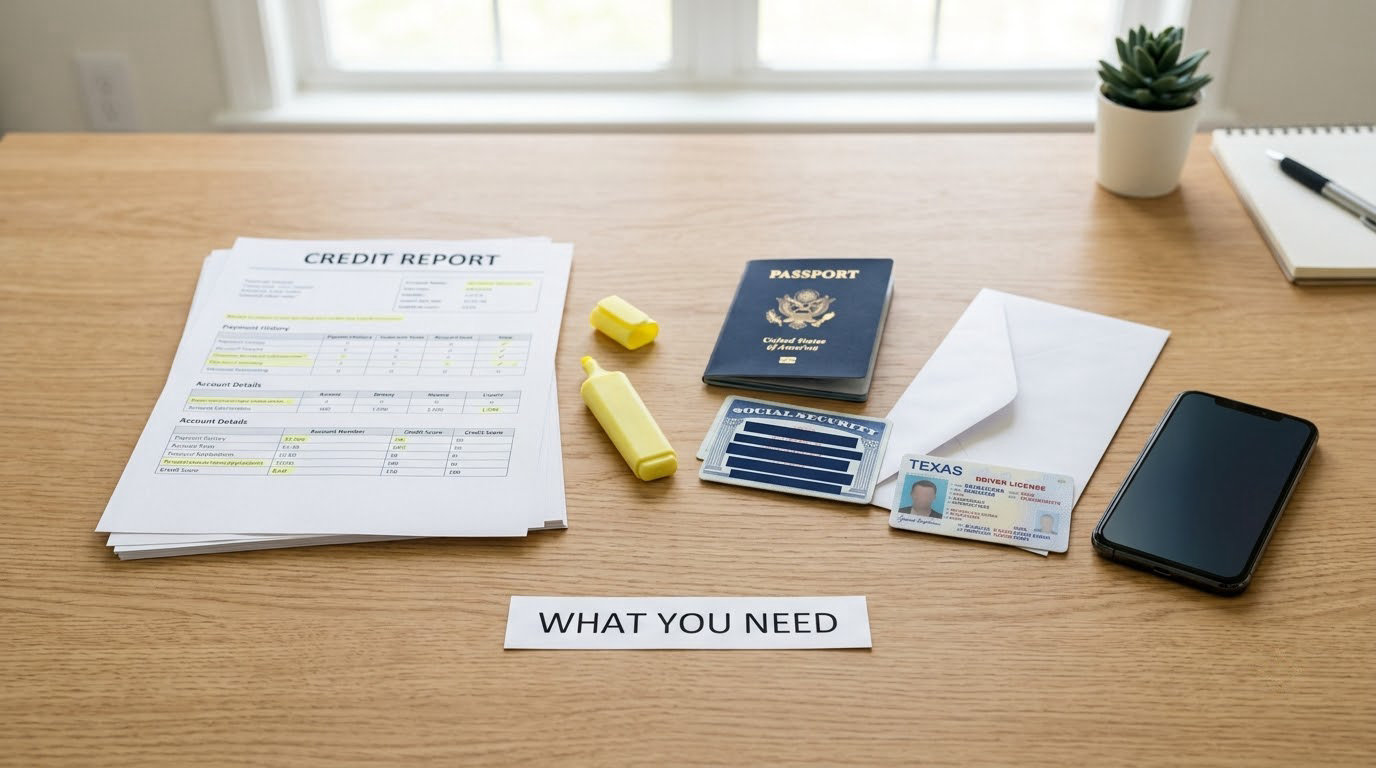
Before you contact anyone, put this on your desk:
- Your full name as it should appear, including suffix, date of birth, Social Security number, current address, and every address you have used in the past two years. Missing one of these is the most common reason a dispute gets kicked back.
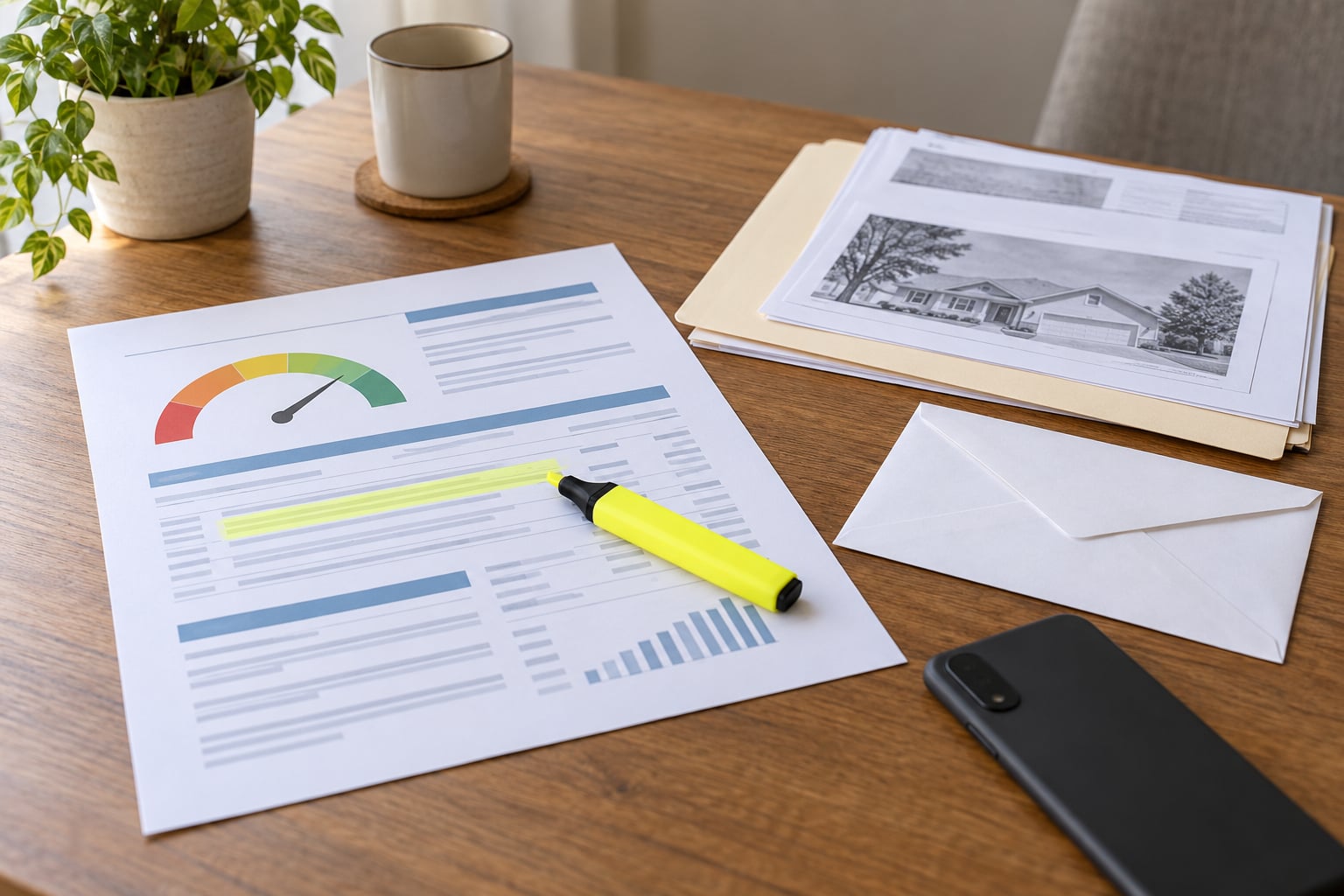
- Printouts or downloads of all three reports from AnnualCreditReport.com, one free report from each bureau every 12 months. Do not read only the summary score on a free score site.
- Precise details of the bad item: creditor or collection agency name, account number, the balance or status shown, and the date it first appeared.
- Proof the item is wrong — see the next section for the type-specific documents.
- Your contact details for the next 90 days, including a phone number and an email you actually open.
- A place to keep paper. A folder with copies of everything you send matters later, and bureaus do not return mailed documents.
Some items are not worth disputing at all. Reporting is voluntary, so the three bureaus are not required to match each other, and an entry that is accurate stays put no matter how many letters you send. Worth your time: accounts you do not recognize, balances that survived a payment or settlement, duplicates, accounts marked 30, 60 or 90 days past due that are actually current, and personal details mangled by a name change.
How to Dispute an Error on Your Credit Report Step by Step
1. Review Your Credit Reports and Identify the Error
Go to AnnualCreditReport.com and request all three reports in one visit. Read the trade lines, not just the header: balances, payment status, credit limits, date of last payment, account opening date, and any public records such as judgments or liens.
Then write the error down in one sentence before you do anything else. “Midland Credit Management shows a $430 balance on a card I paid off in March” is a usable dispute. “My credit is wrong” is not. Briefer lines are also better disputed one at a time — combining three items in a single letter gives you three chances for the letter to fail.
2. Gather Evidence Supporting the Dispute
The bureau is not required to investigate on your word alone. It reaches out to the furnisher — the creditor or collection agency that supplied the data — and the quality of your dispute usually comes down to what you attach to it.
- Not your account: an FTC Identity Theft Report from IdentityTheft.gov, a police report, or a statement from the creditor confirming you never held the account.
- Paid or settled: a paid receipt, cancelled check, settlement agreement, or a creditor letter showing the account was satisfied.
- Duplicate: the original account number alongside the duplicate one, so both can be matched.
- Bankruptcy or student loan discharge: your court order or discharge approval letter.
- Wrong personal details: a marriage certificate, divorce decree, or name-change record.
- Public records: the court docket showing the judgment was satisfied, reversed, or never filed.
Send copies only, never originals. If your lender or landlord asks for the original, it has the right to ask.
3. Contact the Credit Bureau That Listed the Error
There are three routes and they are not interchangeable. Disputing with the bureau is the fastest for removing the item from all three reports. Disputing with the furnisher directly works well for a single company that keeps reporting you wrongly. Letting the bureau contact the furnisher on your behalf is the same as filing with the bureau but saves you writing two letters.
File with every bureau that lists the item. A correction at Experian does not automatically show up at Equifax, even though users often report that a thorough furnisher investigation eventually propagates.
How to file online, by mail or by phone
- Equifax: file through the online dispute center reached from your Equifax account, or mail to the dispute address printed in the footer of the report Equifax sent you.
- Experian: use the online dispute form, which accepts document uploads, or mail to Experian, P.O. Box 4500, Allen, TX 75013.
- TransUnion: start from the online dispute flow inside your TransUnion account, or mail to the dispute address printed on your TransUnion report.
Phone disputes work and are free, but you get no written record of what was said, which is why most people prefer online or mail. If you mail a dispute, send it by certified mail with return receipt so you can prove the date. Bureau phone numbers and mailing addresses do change, so pull the current one from the contact page on the bureau’s own website rather than an old blog post.
4. Submit a Clear Written Dispute
This is the step where people most often get how to dispute an error on your credit report wrong: keep it short and factual. No anger, no story about what happened to you. Fill in these fields and nothing else is required:
- Your full name, suffix, date of birth, and Social Security number
- Your current address plus every address used in the past two years
- The creditor name, account number, and the exact item you are challenging
- One sentence on why it is inaccurate, not accurate, or incomplete
- The date on the report you are reading it from
- A request that the bureau investigate, correct or delete the item, and send you the written results
- Your phone number and email
- A copy of each supporting document, plus a copy of the letter for yourself
There is no fee, so anyone charging you to send a dispute letter is selling something you can write yourself in ten minutes.
5. Follow Up Until the Investigation Is Complete
Save your confirmation number, certified mail receipt, or a screenshot of the submission page the day you file. The acknowledgment email is not the result — it only proves the clock started.
Watch for the statutory deadline. The bureau generally has 30 to 45 days from receiving your dispute to complete a reinvestigation, and it may extend that by up to 15 days if you ask for more time or if you need to supply additional documentation. If a bureau answers in nine days with a “verified” notice and no real investigation, that is worth challenging.
6. Check the Updated Report and Escalate If Needed
Pull your reports again after the window closes and read the item fresh. Three outcomes are normal: corrected, deleted, or verified as accurate. If the result says inaccurate, the bureau must send you the results of the reinvestigation in writing within five business days.
If the item came back verified, write to the furnisher directly, attach the same proof, and ask them to correct what they reported to all three bureaus. That route often works where the bureau’s call to the creditor did not.
If that fails, put a statement of dispute on the report. A short statement — 100 words or fewer — goes on file and is provided to future creditors, though it does not change the score itself. After that, escalate in this order: a complaint to the Consumer Financial Protection Bureau on consumerfinance.gov, then your state Attorney General or local consumer protection office, then a consumer law attorney. A lawyer can tell you whether an FCRA lawsuit makes sense, where actual damages, statutory damages, and in rare cases punitive damages are on the table. Fees and timelines vary by state, so treat any figure you read as a starting point for a conversation rather than a promise.
Common Mistakes
Sending originals instead of copies. Bureaus do not return mailed documents, and users on r/CRedit report losing paperwork they needed for a second dispute. Copy everything.
Filing only with the bureau that sent the letter. If you dispute at Equifax and TransUnion still lists the error, your score barely moves. Each bureau gets its own dispute.
Disputing an item that is simply accurate. A charged-off account that really is yours and really is unpaid cannot be removed by arguing. Reporting is voluntary and the bureaus are not required to match, which is why MyFICO regulars say there is nothing to dispute when an item verifies correctly.
Stopping before a corrected report arrives. The dispute is not finished when you get the acknowledgment. It is finished when you read a new report and the item is gone or fixed.
Filing with no documentation. “The collection agency says they never received my payment” is a claim. A cancelled check is evidence. Without proof, the bureau asks the furnisher, and the furnisher says it is right.
Paying for a 609 letter or a credit repair service. The 609 letters sold online are boilerplate demand letters with no statutory authority behind them, and paid repair services mostly resell the same free process at a markup. Some also promise to remove accurate negatives, which no one with lawful authority can do.
Two habits prevent most of this. Keep every copy and confirmation in one folder, and re-check your reports every quarter so a fresh error never sits there for a year.
Frequently Asked Questions
How long does a credit bureau have to investigate a dispute?
Equifax, Experian and TransUnion generally have 30 to 45 days from the date they receive your dispute to finish a reinvestigation. They may take up to 15 extra days if you request more time or need to send documents. Within five business days of finishing, the bureau must send you the results in writing and correct or delete any item it cannot verify. You are entitled to a free updated report once the work is done.
Can I dispute an error directly with the company that reported it?
Yes. The creditor, bank or collection agency that supplied the information is a separate route from filing with a credit bureau, and you can use both. Disputing with the furnisher is often effective when a bureau verified an item that the company keeps misreporting. Put the request in writing, attach the same proof, and ask for the correction to be sent to all three bureaus.
Will disputing a credit-report error hurt my credit score?
Filing a dispute does not lower your score on its own, and it is free by law. Scores can move in either direction during the investigation for ordinary reasons: a new balance reporting, an older account updating, or an item you successfully removed. Some users on r/CreditScore report a temporary dip, others report a 36-point rise once a disputed item came off. Free score sites and official bureau reports also update at different speeds, so check the actual report before reacting.
What should I do if a credit bureau says my dispute is not valid?
First ask for the reinvestigation results in writing, then compare them with what you sent. If the bureau simply accepted the furnisher’s word, send the dispute directly to the furnisher with your documentation attached. After that, add a statement of dispute to the report, file a complaint with the Consumer Financial Protection Bureau, and contact your state Attorney General. A consumer law attorney can assess an FCRA claim.
How do I dispute an error that was caused by identity theft?
Report it to IdentityTheft.gov to generate an FTC Identity Theft Report, which most bureaus accept as supporting documentation. Then dispute every account you do not recognize with each bureau and file a police report. Ask the furnisher to block the information under the identity theft protection flag so new accounts cannot be opened in your name. Consider a fraud alert or a longer freeze, both free, while the investigation runs.
Do 609 dispute letters work?
A 609 letter is a demand letter generated by a consumer reporting agency in a real dispute. The letters sold to consumers online are imitation boilerplate with no legal authority behind them, and they rarely change a report. The same FCRA rights apply to a free dispute you file yourself, with the same 30 to 45 day investigation window. Paid credit repair services mostly resell that free process at a markup.
Pull all three reports from AnnualCreditReport.com, highlight the one item that is wrong, and gather one piece of proof for it. Then file that single dispute with each bureau that lists it, keep every copy, and check back once the 30 to 45 day window closes.