
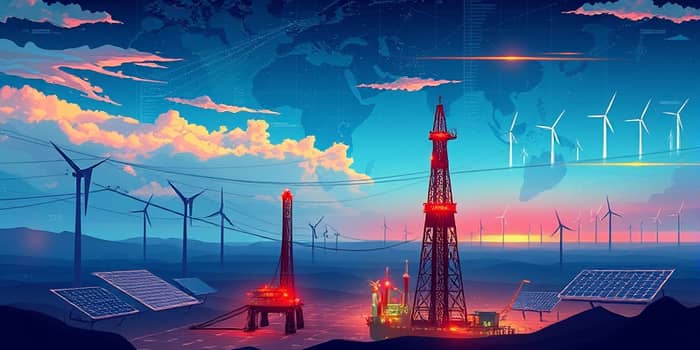
As we step into 2026, the global energy ecosystem sits at a pivotal juncture. On one hand, there is abundant traditional energy supply flooding markets. On the other, a challenging geopolitically driven transition to low-carbon solutions introduces volatility and uncertainty. Stakeholders worldwide must navigate surplus oil, slumping gas prices, rapid renewables growth, heightened demand, and shifting geopolitical alliances. This comprehensive outlook explores the forces shaping today’s energy landscape and offers practical guidance for industry leaders, policymakers, and communities striving for stability and progress.
Abundant Fossils Amid Volatility
Despite decades of investment in cleaner technologies, oil and gas continue to dominate supply chains. OPEC+ has ramped up production, generating a persistent oil surplus. Liquefied natural gas exports from the United States and Qatar have surged, driving European and Asian prices to near five-year lows. Yet beneath this abundance lies risk: political unrest in Venezuela, potential supply disruptions in the Middle East, and service-cost inflation in U.S. shale all threaten market stability.
Producers are adapting to these headwinds through capital discipline and strategic partnerships. The Permian Basin, once a growth engine, now serves as a stabilizer rather than a volume leader. Companies exploring CO₂-enhanced oil recovery find new ways to monetize reserves while mitigating emissions.
Renewables Growth Under Strain
The fastest-growing renewables and storage sector continues its meteoric rise, but not without challenges. Global investment in clean energy topped $2.2 trillion in 2025, yet grid bottlenecks and trade tensions hinder project deployment. In many regions, permitting delays and local opposition create bottlenecks that offset cost declines and technological advances.
- Grid constraints limit solar and wind integration.
- Trade policies disrupt component supply chains.
- Rising commodity costs affect turbine and panel manufacturers.
Despite these hurdles, scenarios still forecast wind and solar surpassing 50% of electricity generation in coming decades. Storage systems, especially battery energy storage, are scaling up to smooth intermittency and serve emerging demands.
Surging Demand from AI and Electrification
Energy consumption is on an unstoppable upward trajectory. Data centers powering artificial intelligence and machine learning algorithms are the new voracious consumers, driving more than 2% annual growth in electricity demand. Electrification of transport and heavy industry adds further pressure, prompting utilities and grid operators to rethink capacity planning.
Regionally, the United States leads in data center build-outs, while Europe’s electrification push targets transport and buildings. Asia-Pacific sees a balanced surge across manufacturing, transport, and digital infrastructure. Under these conditions, balancing baseload, renewables, and storage becomes a complex orchestration.
Geopolitics and Investment Realignments
Geopolitical dynamics now overshadow pure economics. Countries are prioritizing unprecedented levels of capital allocation to secure supply chains for critical minerals and energy infrastructure. Tariffs, carbon border adjustments, and bilateral trade agreements reshape investment flows. The World Energy Issues Monitor records a 62.5% rise in concerns over peace and security risks, underscoring the delicate balance between energy policy and international relations.
- United States: Onshoring minerals, supporting nuclear and geothermal, interventionist policies under OBBBA.
- Europe: Phasing out Russian fuels, tightening ETS, addressing grid vulnerabilities.
- China: Scaling cleantech dominance, boosting resilience of critical infrastructure.
- Asia-Pacific: Leading storage investments, with emissions peaking and then declining.
Investors are responding with a clear tilt toward clean technologies, which now receive two-thirds of global energy investment. Yet upstream oil and gas spending remains flat, reflecting the enduring reliance on fossil fuels even amid the green surge.
Building Resilience for a Volatile Tomorrow
Resilience is the watchword for a landscape defined by unpredictability. Stakeholders focus on diversified energy mixes for volatility mitigation—combining renewables, conventional generation, storage, and demand-side management. Robust transmission networks and digital grid upgrades are paramount to accommodate decentralized energy resources and manage supply interruptions.
Adaptation to physical climate risks—extreme weather, sea-level rise, wildfires—is also driving investment in microgrids and distributed generation. Governments and corporations alike are embedding resilience into planning frameworks, ensuring supply continuity in the face of future shocks.
Charting a Practical Path Forward
With the energy transition at once promising and precarious, actionable measures are essential. Policymakers, investors, and operators can heed these guiding principles to foster stability and progress:
- Implement pragmatic policy and investment strategies that balance speed with reliability.
- Prioritize grid modernization and digitalization to integrate diverse resources.
- Forge cross-sector partnerships to accelerate clean technology deployment.
- Invest in workforce development to meet the skills demands of tomorrow’s energy sectors.
- Embed climate resilience into all stages of planning and execution.
By aligning ambitions with realistic timelines and resource constraints, the global energy community can navigate the turbulence ahead. Embracing collaboration, innovation, and a long-term vision will be the key to unlocking a sustainable, secure, and prosperous energy future.
References
- https://think.ing.com/reports/energy-outlook-2026-abundant-supply-amid-a-challenging-transition/
- https://www.woodmac.com/news/opinion/the-2026-global-power-market-outlook/
- https://www.spglobal.com/energy/en/news-research/special-reports/energy-transition/horizons-top-cleantech-trends-2026
- https://www.weforum.org/stories/2025/12/global-energy-2026-growth-resilience-and-competition/
- https://www.worldenergy.org/news-views/entry/2026-world-issues-monitor-geopolitics-not-economics-the-key-driver-of-change-in-turbulent-energy-landscape
- https://www.rff.org/publications/reports/global-energy-outlook-2026/
- https://www.jpmorgan.com/insights/global-research/outlook/energy-outlook
- https://bcse.org/market-trends/top-six-trends/
- https://observer.com/2025/10/global-energy-investment-trends-2026/
- https://reglobal.org/global-energy-outlook-2026-report/
- https://www.woodmac.com/blogs/the-edge/five-themes-shaping-the-energy-world-2026/
- https://www.youtube.com/watch?v=7WZsK4Py7ug
- https://montel.energy/resources/academy/webinars/energy-markets-unpacked-2025-highlights-outlook-for-2026