
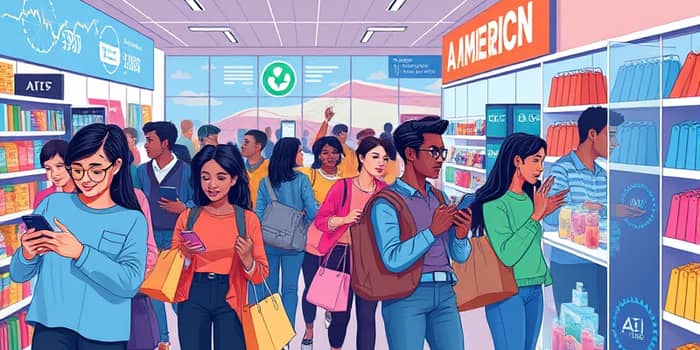
Understanding how and why Americans spend is crucial for businesses, policymakers, and investors aiming to harness market opportunities. In 2025 and early 2026, U.S. consumers demonstrated unexpected resilience amid economic divides and technological disruption.
Economic Role of Consumer Spending
Consumer spending—measured by personal consumption expenditures (PCE)—accounts for roughly two-thirds of U.S. GDP, powering the world’s largest economy. With a powerful $16.1T spending engine behind it, this economic force shapes production, employment, and innovation.
The constant ebb and flow of expenditures on goods and services reveals more than raw numbers. It unveils shifting priorities: essential needs, lifestyle experiences, and emerging channels like social commerce.
Recent Trends and Growth Metrics
In early 2026, PCE growth ticked upward by 0.5% in February and 0.3% in January, sustaining an annualized rate of 2.7% in 2025. Forecasts point to 2.8% growth for 2026 as consumers adjust to evolving price levels and income dynamics.
- Holiday 2025 spending surged 6.4% year-over-year, led by food, apparel, electronics, and beauty.
- Online purchases grew three times faster than in-store sales during the holiday season.
- High-frequency data in March 2026 showed point-of-sale receipts up 7% from a year earlier.
Despite a 3.3% rise in the Consumer Price Index over 12 months through March 2026, energy costs soared 10.9%, prompting consumers to redirect budgets toward essentials and value-driven purchases.
The K-Shaped Divide in Income
The U.S. economy exhibits a widening K-shaped economic divide. High-income households—earning above $217,000—boosted holiday spending by 29%, lifted by tax cuts under the 2021 Act. Meanwhile, lower-income consumers face unpredictable income streams and heightened price sensitivity.
Buy Now Pay Later (BNPL) usage reached a record $20 billion in holiday 2025, reflecting how credit alternatives support purchases for price-conscious buyers. Still, policy shifts favoring wealthier households risk leaving vulnerable segments further behind.
Generational Shifts and Behaviors
These generational divides reveal that younger consumers remain adaptable, often cutting dining out or subscriptions when pessimistic, yet splurging on experiences when confident.
Channel and Tech-Driven Changes
Technology is redefining purchase paths. Searches for social commerce options rose by 65% over five years. Platforms like TikTok Shop enable seamless, interactive buying experiences.
Meanwhile, artificial intelligence broke key thresholds in holiday 2025: referral traffic from AI channels soared 700%, and 19% of AI users completed purchases directly through machine recommendations.
The demand for shorter and more personalized purchasing funnels has led retailers to optimize checkout flows and tailor product suggestions in real time.
Sentiment Versus Actual Behavior
Consumer sentiment often lags behind real spending patterns. In early 2026, only 34% of Americans expected improved finances, while 53% reported they were budgeting more—even as wages remained steady and layoffs stayed low.
Pessimists cut 66% of dining-out plans and 54% of clothing purchases. Yet optimists increased their spending on groceries (22%) and holidays (21%). This contrast underscores the complex psychology behind wallets and well-being.
Category Intents and Adjustments in Q1 2026
- Essentials: Flat to slight increases in fresh produce and household staples.
- Discretionary: Negative net intent overall, but sunshine for travel (+5pp) and home improvement (+11pp).
- Optimists versus pessimists: Clear splits in spending aims across dining, clothing, and wellness categories.
Such shifts illustrate how consumers pivot between necessity and indulgence, guided by economic cues and personal confidence.
Future Outlook and Strategic Implications
Looking ahead, consumer spending is projected to remain resilient—driven by stable employment, tax refunds, and gradual income growth. Yet the landscape will stay segmented by income, generation, and tech adoption.
Businesses can respond by leveraging data analytics to tailor strategies to distinct demographics, optimizing AI-powered discovery, and offering flexible financing options like BNPL. Agility, personalization, and empathy will define winners in this evolving marketplace.
Ultimately, decoding the complex tapestry of spending behaviors offers a roadmap for innovation, growth, and shared prosperity in a world where every dollar tells a story of value, aspiration, and change.
References
- https://explodingtopics.com/blog/consumer-behavior
- https://www.bea.gov/data/consumer-spending/main
- https://www.pwc.com/us/en/industries/consumer-markets/holiday-2025-spending.html
- https://www.usbank.com/investing/financial-perspectives/market-news/consumer-spending.html
- https://yougov.com/en-us/articles/54197-us-consumer-spending-and-budgeting-trends-in-2026
- https://nielseniq.com/global/en/info/consumer-spending-data/
- https://www.mckinsey.com/industries/consumer-packaged-goods/our-insights/the-state-of-the-us-consumer
- https://www.deloitte.com/us/en/insights/industry/retail-distribution/consumer-behavior-trends-state-of-the-consumer-tracker.html
- https://economics.td.com/us-k-shaped-consumer-spending
- https://institute.bankofamerica.com/consumer-checkpoint.html
- https://www.ups.com/us/en/customized-shipping-logistic-services/retail-store-shipping-logistic-solutions/retail-consumer-trends
- https://www.mastercard.com/us/en/news-and-trends/Insights/2025/the-ultimate-guide-to-customer-behavior-analysis.html
- https://www.bls.gov/news.release/cpi.nr0.htm
- https://rpubs.com/iamareejinal/1262304
- https://www.deloitte.com/us/en/insights/topics/economy/consumer-pulse/state-of-the-us-consumer.html