
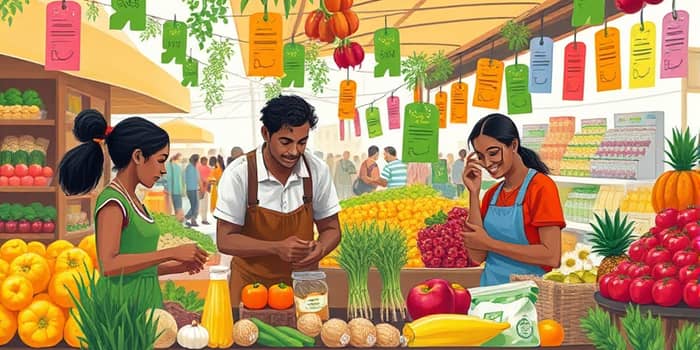
Inflation has quietly but powerfully reshaped how households shop, dine, and save. As prices climb faster than wages, every decision at checkout becomes a strategic choice between wants and needs. This article unpacks the historical context, explores consumer responses, and offers practical guidance to thrive in an environment of rising costs.
The Post-Pandemic Surge and Its Legacy
In the aftermath of the global pandemic, supply chain disruptions, energy shocks, and surging demand converged to drive inflation to levels unseen in decades. From a modest global rate of 1.91% in 2020, annual inflation spiked to nearly 8% by 2022. While central banks have since tamed the peak, core prices remain stubbornly above targets in many regions.
This era of volatility eroded consumer purchasing power at alarming rates, pushing families to rethink budgets and prioritize essentials. Even as headline figures moderate toward 3% by 2026, the psychological imprint of rapid price increases endures.
Historical Inflation Trends at a Glance
Understanding recent history helps contextualize current challenges. Below is a snapshot of global inflation rates and their root causes:
How Consumers Adapt and Thrive
Faced with rising costs for groceries, utilities, and fuel, households have become more selective in their spending. According to global surveys, over 80% of shoppers adjust their grocery lists, and more than half opt for private-label items.
- Shift to store brands and discount retailers
- Embrace digital coupons and loyalty rewards
- Plan meals around sale items and bulk purchases
- Reduce dining out by cooking at home more often
By adopting a careful budgeting and conscious spending habits, families can shield their finances from unexpected price jumps. Meal prepping, price-comparison apps, and timed purchases—such as stocking pantry staples during seasonal sales—provide tangible savings.
Behavioral Shifts and Emotional Impact
Inflation doesn’t just strain wallets—it affects well-being. The stress of stretching every dollar can lead to anxiety and a sense of uncertainty about the future. Yet, many consumers discover newfound resilience by focusing on value rather than volume.
- Practicing gratitude for non-monetary comforts
- Building community through shared bulk buys
- Tracking spending trends to anticipate price surges
These adaptive behaviors remind us that financial pressure often sparks creativity and solidarity. A local community co-op, for instance, might negotiate group discounts on staples, turning a challenging environment into an opportunity for collaboration.
Regional and Sector Insights
Inflation’s impact varies widely across countries and industries. In the United States, core consumer prices are projected to settle around 3.2% by 2026, driven by persistent goods inflation. Europe, by contrast, should hover near 2% as wage growth cools.
Emerging markets continue to face double-digit rates, prompting more severe spending cuts. From Venezuela’s hyperinflation to India’s moderate 3.4% rise, the spectrum of experiences underscores that local policies and supply conditions matter.
Sectorally, discretionary categories like travel, entertainment, and luxury goods see sharper cutbacks, while essentials such as groceries and utilities command a larger share of shrinking budgets.
Policy Responses and Business Strategies
Central banks have largely paused rate hikes, balancing the risk of rekindling inflation against economic slowdown. Meanwhile, government measures like subsidies for energy or healthcare aim to ease the burden on households.
Businesses, too, adapt by enhancing value propositions. Supermarkets expand private labels, restaurants introduce budget-friendly menus, and retailers launch subscription discounts. These initiatives not only retain customers but also foster loyalty in uncertain times.
By collaborating with suppliers to optimize logistics, companies can maintain margins without transferring full cost increases to consumers, creating a win-win scenario.
Strategies for Personal Financial Resilience
Consumers looking to safeguard their finances can take proactive steps today:
- Review recurring expenses and negotiate better rates
- Build an emergency fund covering 3–6 months of expenses
- Allocate a portion of income to inflation-protected investments
- Leverage community resources like bulk-buy clubs
By learning to navigate today’s shifting economic landscape, you empower yourself to handle future uncertainties with confidence. Small, consistent changes can accumulate into profound long-term benefits.
Looking Ahead
Although the worst of the post-pandemic price boom has passed, inflation’s legacy remains. Consumers and businesses alike must remain vigilant, embracing innovation and collaboration to thrive.
Ultimately, inflation can serve as a catalyst for greater financial discipline, community engagement, and strategic planning. Through mindful choices and shared efforts, we can transform the pressures of rising costs into an opportunity to build stronger, more resilient households and markets.
References
- https://www.paytronix.com/blog/how-does-inflation-affect-consumers
- https://www.jpmorgan.com/insights/global-research/economy/global-inflation-forecast
- https://www.oliverwyman.com/our-expertise/insights/2023/sep/inflation-impact-on-global-consumer-spending.html
- https://www.statista.com/statistics/256598/global-inflation-rate-compared-to-previous-year/
- https://online.wpunj.edu/degrees/business/mba/general/impact-inflation-on-purchasing-power/
- https://fred.stlouisfed.org/series/FPCPITOTLZGWLD
- https://newsroom.csun.edu/2024/10/02/as-inflation-still-persists-consumers-are-changing-their-behavior-csun-prof-says/
- https://tradingeconomics.com/country-list/inflation-rate
- https://www.jpmorgan.com/insights/global-research/economy/inflation-cost-of-living
- https://en.wikipedia.org/wiki/List_of_countries_by_inflation_rate
- https://insights.som.yale.edu/insights/how-does-inflation-change-consumer-behavior
- https://data.worldbank.org/indicator/FP.CPI.TOTL.ZG
- https://www.statista.com/statistics/1440244/impact-of-inflation-on-spending-global/
- https://www.imf.org/external/datamapper/PCPIPCH@WEO
- https://www.imf.org/en/publications/fandd/issues/series/back-to-basics/inflation