
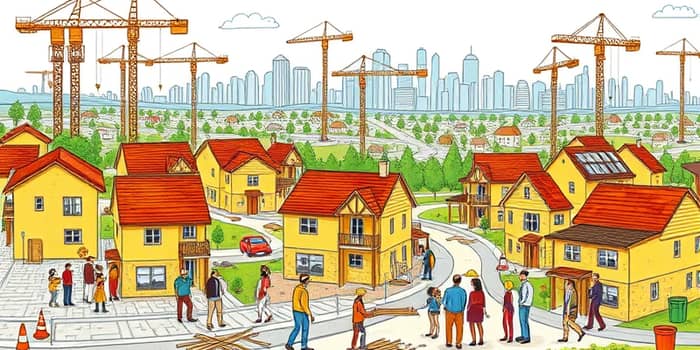
In the intricate tapestry of macroeconomics, few sectors offer as clear a signal of underlying trends as housing. As a leading economic indicator of growth, homebuilding and property sales often precede shifts in broader activity. This article delves into the historical role of residential real estate, examines current challenges, outlines forecasts for 2026, and highlights the key metrics that guide investors, policymakers, and homeowners alike.
By understanding how residential construction, sales, and price movements interact with consumer sentiment and monetary policy, stakeholders can anticipate turns in the economic cycle and adjust strategies to both mitigate risks and seize opportunities.
Understanding Housing's Economic Significance
Housing influences over 18% of U.S. GDP and directly affects accounts for one-third of consumer spending through construction, furnishing, and related services. Shelter costs alone make up about one-third of the Consumer Price Index, with a 4.3% year-over-year rise driving broader inflation pressures. Because housing demand is sensitive to changes in interest rates and consumer sentiment, shifts in starts, permits, and sales can foreshadow turning points in the economic cycle.
As mortgage rates ebb and flow, buyer behavior shifts dramatically. During periods of low financing costs, demand surges, driving up prices and fueling new construction. Conversely, rate spikes often freeze transactions, causing ripple effects throughout related industries—from raw materials suppliers to home appliances and landscaping services. This supply-demand imbalances across major regions highlight housing’s centrality to both macroeconomic stability and localized prosperity.
Historical Patterns and Predictive Indicators
Historically, downturns in homebuilding have heralded recessions. Before the financial crisis of 2007–2008, housing starts fell sharply, and building permits declined, signaling reduced investment and weakening consumer demand. By April 2025, housing starts dropped 1.7% year-over-year, while single-family starts trailed pandemic-era surges by 5% as of August.
Post-pandemic, the industry saw record highs in housing starts and price appreciation, fueled by ultra-low rates and remote work trends. Yet by mid-2025, sentiment had cooled. The NAHB/Wells Fargo Housing Market Index fell below its long-term average, reflecting increased material costs, labor shortages, and uncertainty over Federal Reserve policy. Historically, such sentiment shifts precede downturns in construction activity and broader economic slowdown.
Key measures track industry sentiment and activity:
- NAHB/Wells Fargo Housing Market Index (builder sentiment on a 0–100 scale)
- Census Bureau data on housing starts and building permits
- Existing-home sales and the FHFA House Price Index
- Mortgage application volumes and affordability indices from NAR
Cancellations of one in seven purchase agreements in April 2025 further underscored buyer hesitation, reflecting shifts in confidence and financing costs.
Current Market Challenges
Mid-2025 data reveal a market stretched by affordability and supply constraints. The median U.S. home sale price of $416,900 marked a 27% rise over five years. Conversely, mortgage rates climbed from 2.99% in mid-2021 to 6.85% by mid-2025, creating an affordability crisis in major markets.
The affordability gap is stark: the average monthly mortgage payment has risen by over 50% since 2019, outpacing wage growth in most metros. Many buyers find that even modest rate increases translate to hundreds of dollars more per month, effectively pushing them out of the market. This dynamic reinforces the mortgage rate lock-in keeps sellers hesitant phenomenon, reducing turnover and exacerbating supply constraints.
Other headwinds include:
- Supply shortages—estimated at 1.2 million homes—sustain price levels
- Regional overbuilding in Sun Belt and West Coast markets led to localized price declines
- Buyer sentiment softens as payment-to-income ratios increase
Despite these pressures, approximately 40% of homeowners hold mortgage-free properties, and strong equity positions buffer many against downturn risks.
2026 Forecast and Regional Outlook
Most analysts project a balanced recovery, with modest wins for buyers as interest rates stabilize. Forecasts vary, but a consensus emerges around slight price gains, improved affordability, and regional divergence.
Smaller metros in the Northeast and Midwest stand out as hotspots for value and space, while parts of the Sun Belt and West Coast adjust to overbuilding and price corrections. Builders are deploying incentives like rate buydowns to stimulate demand.
Economic Implications and Policy Shifts
An easing in shelter cost growth could support disinflation efforts, relieving one of the largest CPI components. Lower rates and increased inventory may unlock pent-up demand, bolstering consumer spending on travel, retail, and services. Policymakers may adjust subsidies and tax incentives to encourage construction of affordable units, while regulatory changes aim to ease zoning restrictions and accelerate permit approvals.
Federal policy can play a pivotal role. Should the Fed pursue additional rate cuts, borrowing costs could fall enough to revive stalled transactions. Meanwhile, fiscal measures—such as expanded Low-Income Housing Tax Credit allocations or first-time buyer grants—might boost construction of entry-level homes. A balanced policy approach could yield signals of buyer-friendly market shifts, easing cost pressures for a broader swath of consumers.
Investor strategies often hinge on hyper-local conditions—job growth, equity accumulation, and demographic trends—underscoring the market’s complexity and the need for granular analysis.
Risks, Resilience, and What to Watch
While the outlook is generally constructive, risks remain. A swift tightening in monetary policy, unforeseen shocks to consumer confidence, or disruptions in construction supply chains could stall gains. Conversely, strong household balance sheets and stock market wealth provide a cushion.
Global factors also weigh on the outlook. Supply chain disruptions for lumber, steel, and appliances could reignite cost inflation, while geopolitical tensions influence commodity markets. Labor market dynamics—specifically shortages of skilled trades—remain a chronic hurdle, adding months to project timelines and driving up wages. Investors should note that housing’s interconnectedness means external shocks may propagate swiftly through the economy.
Key indicators to monitor include:
- NAHB/Wells Fargo HMI readings for builder optimism
- Monthly housing starts and permit figures from the Census Bureau
- Mortgage application trends and average rate movements
- Local employment data and migration patterns
Conclusion: Navigating the Housing Horizon
The housing market remains an indispensable gauge of economic momentum. By closely watching starts, sales, prices, and sentiment, stakeholders can anticipate shifts, seize opportunities, and mitigate risks. In 2026, a landscape of measured growth, regional variation, and enhanced affordability may define the next chapter of housing’s role as an economic bellwether.
Ultimately, the housing market’s trajectory will reflect a delicate balance between interest rate policy, builder incentives, and consumer confidence. By synthesizing national trends with local insights, participants can chart a course through volatility and position themselves to benefit from emerging opportunities. The next year promises a housing landscape shaped by resilience, adaptation, and the ever-present quest for affordability.
References
- https://www.fiduciary-trust.com/insights/is-the-housing-market-about-to-turn-how-housing-can-impact-the-economy/
- https://www.realtor.com/research/top-housing-markets-2026/
- https://www.huduser.gov/portal/ushmc/hmi-update.html
- https://www.zillow.com/research/2026-housing-predictions-35800/
- https://www.nahb.org/news-and-economics/housing-economics
- https://www.youtube.com/watch?v=Tb2aeEGMhyY
- https://research.library.gsu.edu/c.php?g=115355&p=751455
- https://www.jpmorgan.com/insights/global-research/real-estate/us-housing-market-outlook
- https://www.treadstonemortgage.com/blog/real-estate-opportunities/
- https://www.youtube.com/watch?v=by-wwu2ovfA
- https://www.searsrealestate.com/blog/2026-housing-market-outlook/