
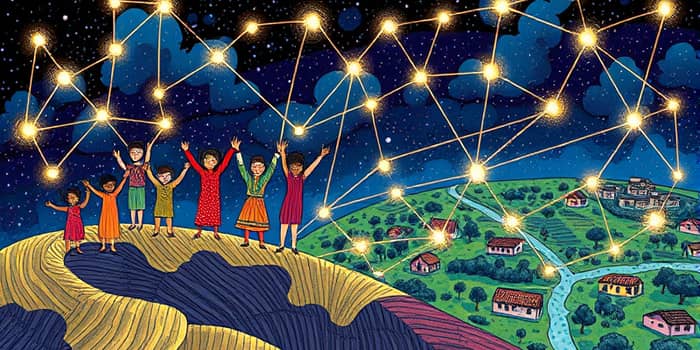
In today's fast-paced digital era, connectivity serves not just as a luxury but as a cornerstone of opportunity and innovation. Yet, despite remarkable advances in technology, a vast portion of the global population remains on the wrong side of the line that separates the connected from the disconnected. This chasm, known as the digital divide, represents more than unequal device ownership and network access—it signifies deep systemic barriers to opportunity that hinder millions from participating fully in a digital economy.
While urban centers in high-income countries revel in high-speed broadband and ubiquitous mobile coverage, rural villages, underserved communities, and low-income households struggle for basic internet connectivity. These disparities not only limit individual potential but also perpetuate cycles of poverty, reducing economic mobility and stalling national progress. Recognizing the scale and urgency of this challenge is the first step toward forging solutions that will empower everyone, regardless of geography or income, to thrive in a connected world.
Understanding the Digital Divide
The digital divide extends beyond simply having or lacking internet. It encompasses multiple dimensions: access to reliable networks and effective usage, ownership of capable devices, and the skills needed to use these tools effectively. When any of these elements is missing, individuals face exclusion from education, health services, employment opportunities, and civic engagement platforms.
Research shows that low-income, rural, elderly, and minority populations experience the most severe forms of digital exclusion. Without the means to leverage online resources, these groups often encounter a widening gap in knowledge, innovation participation, and economic advancement. Addressing the divide requires an integrated approach that tackles infrastructure, affordability, literacy, and relevance of digital services in everyday life.
Global Disparities in Connectivity
Despite steady progress in overall internet penetration, significant disparities persist. High-income nations boast connectivity levels exceeding 90%, whereas many low-income countries hover around 30%. The urban-rural gap remains stark: metropolitan areas enjoy speedy fiber and 5G networks, while rural regions frequently rely on slow, costly connections.
Moreover, gender and demographic factors compound these inequalities. In dozens of countries, women are statistically less likely than men to be online, limiting their participation in digital economies and community decision-making. The result is not just a technological divide, but a social one that underscores existing inequities.
Economic Costs of Exclusion
The economic impact of digital exclusion is profound. Experts estimate that the global economy could lose over half a trillion dollars in the next five years due to persistent connectivity gaps. By 2030, the education and technology divide could cost up to $10 trillion annually, exacerbating poverty traps and stifling growth.
At the local level, counties with limited broadband access witness slower job creation, lower entrepreneurship rates, and fewer remote work opportunities. Meanwhile, workers in well-connected areas benefit from flexible employment, online training, and e-commerce platforms. Bridging the divide is therefore not only a moral imperative but a strategic economic investment that can unlock untapped productivity and innovation worldwide.
Sectoral Impacts: Education, Healthcare, and Civic Engagement
Education: Students without reliable internet or devices missed critical learning opportunities during the pandemic, deepening achievement gaps. In some high-divide regions, as many as one in four children lack the resources to participate in remote schooling.
Healthcare: Telemedicine and online health information have revolutionized patient care, yet millions remain unable to schedule appointments or access medical advice digitally. This limits preventive care and treatment options, especially in remote communities.
Civic Engagement: Digital platforms have become vital for government services, voting information, and public discourse. Those left offline face barriers to accessing benefits, participating in decision-making processes, and staying informed about local developments.
Root Causes of Inequity
- High setup and subscription costs: Equipment and service fees can exceed local incomes.
- Lack of infrastructure in remote areas: Sparse networks leave communities unconnected.
- Insufficient skills and digital literacy: Training gaps leave users behind.
- Age, gender, and disability impacts: Demographics influence technology engagement.
Strategies for Bridging the Gap
- Invest in community-driven broadband initiatives to expand reach.
- Subsidize devices and data plans for low-income families.
- Offer accessible training programs that build digital skills and confidence.
- Foster partnerships between governments, NGOs, and private sector innovators.
- Ensure services are designed with meaningful user input to address real needs.
Conclusion
Closing the digital divide is critical for fostering inclusive economic growth, empowering communities, and strengthening social cohesion. By implementing coordinated policies, investing in infrastructure, and emphasizing digital literacy, we can create a world where connectivity is a universal right rather than a privilege.
Each stakeholder—government leaders, business innovators, educators, and community organizers—has a role to play in dismantling the barriers that perpetuate digital exclusion. Together, we can unlock the potential of billions, driving progress toward a future where every individual can fully participate in the benefits of a connected world.
References
- https://globaldigitalinclusion.org/2025/10/11/access-is-power-unpacking-the-true-cost-of-the-digital-divide/
- https://www.internetsociety.org/blog/2025/12/moving-the-needle-on-universal-and-meaningful-access/
- https://ischool.syracuse.edu/what-is-the-digital-divide/
- https://www.ookla.com/articles/mapping-internet-connectivity-inequality-around-the-world
- https://pmc.ncbi.nlm.nih.gov/articles/PMC8914302/
- https://www.itu.int/en/mediacentre/Pages/PR-2024-11-27-facts-and-figures.aspx
- https://pcrd.purdue.edu/the-state-of-the-digital-divide-in-the-united-states/
- https://ourworldindata.org/grapher/share-of-individuals-using-the-internet
- https://www.goodthingsfoundation.org/policy-and-research/research-and-evidence/research-2024/digital-inclusion-datasets
- https://siepr.stanford.edu/publications/working-paper/internet-access-and-its-implications-productivity-inequality-and
- https://www.digitalunite.com/digital-inequality-facts-stats
- https://dl.acm.org/doi/10.1145/3726122.3726143
- https://www.brookings.edu/articles/fixing-the-global-digital-divide-and-digital-access-gap/
- https://data.worldbank.org/indicator/IT.NET.USER.ZS
- https://www.oecd.org/en/topics/digital-divide-in-education.html