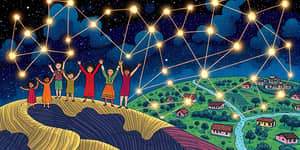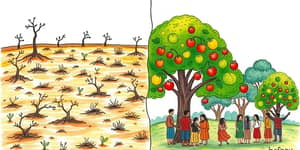
We stand at a crossroads in history, facing a polycrisis of inequality, climate collapse and democratic erosion. The dominant GDP-driven economic paradigm has reached its limits, creating systemic risks that threaten people and planet alike.
Yet, throughout the world, inspiring alternatives are emerging—demonstrating that human and environmental wellbeing over extraction is not only possible, but already in practice. This article explores these models, their potential, and pathways to scale them for a resilient future.
The Urgency of Transformation
The concept of a singular, growth-obsessed capitalism no longer meets the needs of a planet in crisis. Rising temperatures, deepening social divides, and persistent poverty highlight the failure of GDP as the sole measure of progress.
Academics and activists warn of a widening “polycrisis”—simultaneous ecological, social, and political breakdowns. To address these challenges, we must shift towards a pluriverse of economic possibilities that values wellbeing and sustainability above profit maximization.
Existing Beyond-GDP Frameworks
Numerous “beyond-GDP” initiatives already operate effectively in communities worldwide. By redefining success, they prioritize people and planet over endless production.
- Economy for the Common Good: Measures impact via a Common Good Matrix, rewarding ethical practices and social benefit.
- Circular Commons: Implements zero-waste policies and shared resource stewardship to combat climate and biodiversity loss.
- Non-Workers’ Paradise: Explores post-work futures where automation frees individuals for creativity and civic engagement.
These models redirect focus from continuous growth to enhancing quality of life and collective wellbeing, demonstrating real-world viability at local and regional scales.
Advanced Post-Capitalist Visions
Beyond grassroots experiments, scholars propose bold, systemic frameworks designed to replace money-centric economies altogether.
- Resource-Based Economy: All goods and services are freely allocated based on need, managed by AI and advanced logistics.
- Universal Basic Infrastructure (UBI 2.0): Guarantees housing, healthcare, education, food, and energy as universal rights.
- Decentralized AI Governance: Employs blockchain and collective intelligence platforms for transparent, direct democracy.
In these visions, private ownership of essential resources gives way to communal stewardship, while automation liberates individuals to pursue research, art, and social innovation.
Principles of a Pluriverse Economy
All alternative models share common principles that contrast sharply with neoliberal orthodoxy:
- Redistribute power from corporations to communities and public institutions.
- Recognize and value uncounted work, especially care labor and ecological stewardship.
- Enshrine free, prior, informed consent for Indigenous Peoples and marginalized groups.
- Invest in public goods that enhance collective resilience and solidarity.
Embedded in these principles is the belief that economic democracy and social solidarity underpins lasting justice, rather than top-down control by a corporate elite.
Policy Pathways for Implementation
Translating visionary models into reality requires targeted policies, robust regulation, and community-driven governance.
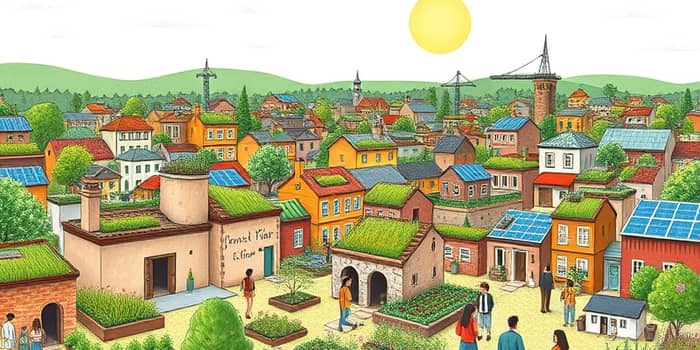
Place-based approaches can catalyze change from the ground up. Local initiatives might include retraining workers for green industries, converting idle industrial sites into community hubs, and supporting cooperative enterprises.
At the national and international levels, governments must:
- Limit corporate power through binding treaties and stringent regulations on environmental and human rights risks.
- Implement progressive taxation on wealth, financial transactions, and resource extraction.
- Create legal frameworks for cooperatives, commons governance, and participatory budgeting.
These reforms can dismantle structural barriers that currently privilege profit over people.
Building Momentum: From Research to Practice
Academic institutions and philanthropic networks have already invested millions in alternative economy research. Projects at Harvard, MIT, and community universities explore cooperative networks, circular systems, and decolonial economic strategies.
Grassroots movements, such as municipalist coalitions and ecofeminist collectives, translate these ideas into tangible actions—from community energy projects to urban agriculture and mutual aid networks.
A Call to Collective Action
Reimagining capitalism demands participation from every corner of society. Activists, policymakers, educators, and everyday citizens each play a vital role in shaping a decolonial, ecofeminist economic renaissance.
Start locally: form cooperatives, support regenerative agriculture, and demand transparency in corporate and government decision-making. At the ballot box, endorse candidates committed to environmental justice and economic democracy.
In boardrooms and community centers alike, foster dialogue around values that prioritize care, equity, and planetary health over shareholder returns.
Conclusion: Towards a Flourishing Future
The transition away from GDP-obsessed capitalism is not a distant utopia—it is already unfolding through diverse experiments and policy breakthroughs. By weaving together knowledge from alternative frameworks—participatory economics, doughnut economics, resource-based planning—we can forge a resilient, equitable economy.
Our collective challenge is to scale these innovations, embedding them into governance structures and everyday practices. Only then can we secure a future where communities thrive, ecosystems regenerate, and human potential flourishes beyond the confines of profit-driven growth.
References
- https://www.greenpeace.org/international/story/54859/beyond-gdpalternatives-to-capitalism-already-exist/
- https://www.andyhinesight.com/there-are-alternatives-to-capitalism/
- https://www.hks.harvard.edu/faculty-research/policy-topics/globalization/wanted-new-economic-models-post-globalization-world
- https://philarchive.org/rec/MALBCD-2
- https://sase.org/networks/i-alternatives-to-capitalism/
- https://www.youtube.com/watch?v=-BWj1YaS6dk