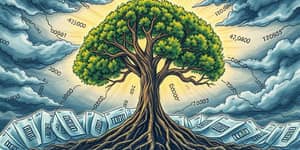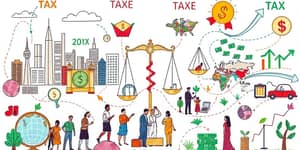
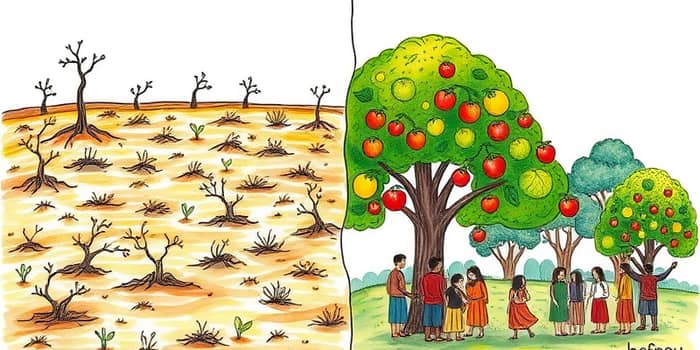
Human societies have long navigated the tension between limited resources and boundless potential. By understanding how economic frameworks evolve, we can chart a path toward a more equitable and flourishing future.
Historical Transitions
Early economies began as barter systems where goods were exchanged based on perceived worth. Communities traded surplus harvests, handcrafted tools, and livestock, forming the foundation of what later became formal markets.
With the advent of coinage and standardized measures, this barter network transformed into a monetized system of exchange. Quantitative values replaced qualitative assessments, enabling trade across vast empires.
The final major shift was the commodified economy, where labor itself became tradeable. Under this model, individuals and assets were assigned monetary worth, reshaping social hierarchies and production methods.
Intellectual Foundations of Abundance
Belief in progress and abundance took root centuries ago. John Locke argued that human improvement of land could multiply wealth a hundredfold. His vision challenged the notion that resources were finite and fixed.
- John Locke’s productivity insight
- Dutch Republic’s trade innovation
- Keynes’s technological foresight
The Dutch Republic demonstrated that a nation with few natural resources could achieve unprecedented prosperity through finance, trade, and innovation. Later, Thomas Babington Macaulay proclaimed that the comforts of the elite could become accessible to all, reshaping ambitions.
Defining Scarcity and Abundance
Modern economics often labels value by availability. In a scarcity-oriented economy, rarity enhances worth. Precious metals, exclusive artworks, or unique skills command high prices because they cannot be easily replicated.
By contrast, an abundance-oriented economy celebrates widespread access. Digital content, renewable energy, and open-source software illustrate how plentiful supply can generate communal benefits and drive innovation.
Value Collisions in Today’s World
When scarcity and abundance paradigms intersect, tensions arise. Ancient forests are undervalued as timber but priceless as ecosystems. Childcare becomes a low-cost service in markets yet a vital communal investment when freely offered.
- Timber versus ancient forest conservation
- Labor markets and wage disparities
- Digital attention and idea scarcity
These conflicts show that pricing alone cannot capture social worth or sustainable outcomes. We need frameworks that honor both efficiency and community well-being.
Digital Disruption and the Long Tail
The Long Tail economic model challenges old scarcity limits. Digital platforms can host infinite niche products, empowering creators and serving diverse interests.
Yet true abundance in ideas remains elusive. Customer attention, talent, and trust are finite. Near-monopolies have emerged to gatekeep access, reminding us that abundance and scarcity coevolve.
Surplus and Post-Scarcity Theories
Surplus economics inverts the traditional focus on allocation. Instead of agonizing over shortages, it asks how to manage excess capacity and its social impacts.
Post-scarcity theory imagines automated production, where minimal labor yields near-unlimited goods. While technological advances progress rapidly, equitable distribution remains a human challenge.
The Paradox of Technological Abundance
As machines replace manual work, societies grow wealthier yet face income inequality. When ownership of capital outweighs ownership of labor, gains concentrate at the top.
This technological capital-biased progress poses urgent questions: how do we ensure that prosperity is shared, and that work remains meaningful?
Global Economic Symbiosis
Scarcity, sufficiency, and abundance systems are interdependent. Production in one region fuels consumption in another. Multinational corporations leverage cost differences, creating a global economic symbiosis that drives growth and inequality simultaneously.
Understanding these links allows policymakers and communities to design fairer trade rules and investment strategies.
Psychological Dimensions and Mindsets
A scarcity mindset can narrow focus, inducing stress and short-term thinking. Conversely, an abundance mindset fosters collaboration, creativity, and long-term planning.
By cultivating gratitude, shared goals, and inclusive narratives, individuals and organizations can shift perspectives and unlock innovation.
Charting a Path Forward
To move from scarcity to abundance, we must blend economic insight with ethical vision. Practical steps include:
- Investing in education and skill development
- Designing social safety nets for automation
- Supporting open-source and collaborative platforms
- Promoting regenerative resource management
By embracing both efficiency and empathy, we can build systems that honor human dignity, foster resilience, and unlock shared prosperity.
References
- https://pdx.pressbooks.pub/navigatingspace/chapter/week-five-chapter-five/
- https://www.cato.org/commentary/where-did-our-belief-abundance-come
- https://www.library.hbs.edu/working-knowledge/what-happens-when-the-economics-of-scarcity-meets-the-economics-of-abundance
- https://en.wikipedia.org/wiki/Post-scarcity
- https://www.jstor.org/stable/4228287
- https://www.frontiersin.org/journals/research-metrics-and-analytics/articles/10.3389/frma.2022.974706/full
- https://www.emerald.com/ijoes/article/35/1/119/138402/Scarcity-in-the-age-of-abundance-paradox-and
- https://pubmed.ncbi.nlm.nih.gov/36118014/
- https://freakonomics.com/podcast/do-you-have-a-scarcity-mindset-or-an-abundance-mindset/