
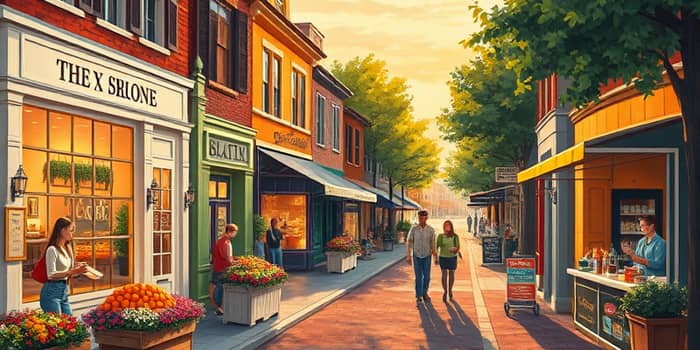
Small businesses are the unsung heroes of our towns and cities. They drive economies, shape communities, and foster innovation. With over 36.2 million establishments in the U.S. representing 99.9% of all businesses, they form the bedrock of local prosperity.
By understanding their immense value, we can all play a part in sustaining the vibrant tapestry of small enterprises that enrich our daily lives.
Economic Power and Growth
Small businesses contribute nearly half of the nation’s economic activity, accounting for 44% of U.S. economic activity. This share has remained remarkably stable around 43.5% through 2026, despite challenges from recessions, rising regulations, and competition from large chains.
They circulate funds locally at an astonishing rate—68% of every dollar spent at a small business stays in the community, compared to only 43% at big-box retailers. This multiplier effect sustains schools, public services, and infrastructure.
Between 1990 and today, that share dipped slightly but stabilized, demonstrating resilience. In many regions, local firms respond faster to changing needs, fostering a more adaptive and robust marketplace.
Job Creation and Workforce Impact
Nearly half of private-sector workers are employed by small businesses, making these enterprises the largest combined employer in the nation. They generate two-thirds of net new jobs, adding an average of 1.5 million positions each year.
Since 2003, small firms have created over 5.1 million new jobs, underscoring their critical role in reducing unemployment and building career pathways. Many start with modest capital—often under $20,000—yet their impact ripples far beyond initial investment.
Despite their vitality, challenges remain: more than 50% of new small businesses do not survive the first year, and over 66% report financial hurdles such as cash flow constraints. By supporting them, consumers and communities help mitigate these risks.
Community Fabric and Identity
Small businesses do more than sell products—they define the character of neighborhoods. From sponsoring local sports teams to hosting seasonal festivals, these enterprises weave the social and cultural fabric we cherish.
With 70% of businesses encouraging employees to shop locally, 66% donating to charities, and 64% sponsoring local events, they actively reinvest in their surroundings. This cycle of giving and receiving fortifies civic pride and belonging.
Consumer Loyalty and Local Shopping
While 81% of Americans express a desire to shop locally, convenience often steers them toward big retailers. Yet, over half are willing to pay a small premium for personalized service and unique offerings.
On average, consumers spend more during the holidays at local shops, with 60% increasing their local purchases and 52% planning to take part in Small Business Saturday. These moments offer pivotal support for year-long sustainability.
- 81% of shoppers prefer local businesses
- 57% willing to pay more for local products
- 1 in 5 shop locally on a regular basis
Current Outlook and Future Trends
In Q4 2025, only 43% of small business owners viewed their local economy as healthy, down slightly but still ahead of national outlooks. The Fiserv Small Business Index stood at 68.4, reflecting cautious optimism.
Technology is reshaping operations: 60% of small firms now integrate AI into daily workflows, and 73% of employees are expected to work remotely by 2028. Half of all businesses identify marketing as their top growth strategy.
However, financial challenges persist. Cash flow comfort remains a concern, and many entrepreneurs cite credit access as a barrier to expansion. Natural events and market disruptions can also trigger sudden spikes in demand for sectors like construction and transportation.
Why Supporting Local Businesses Matters
Every purchase made at a small business reverberates through the community. Local sourcing keeps money close to home, reducing environmental impacts and strengthening local supply chains.
- Creates positive economic feedback loops
- Fosters innovation and unique specialty offerings
- Generates tax revenue for public services
Choosing local businesses empowers communities to tailor services to their own values and needs. It nurtures entrepreneurship and preserves the distinctive charm of each neighborhood.
Taking Action: How You Can Help
Every individual has the power to make a difference. Next time you need a gift, a meal, or professional services, consider the small business option first.
Engage with local entrepreneurs on social media, leave positive reviews, and participate in community events. Organize group shopping outings or gift card exchanges with friends and family.
Together, these actions ensure that small businesses remain the vibrant pillars of our local markets, fueling both economies and communities with enduring strength.
References
- https://www.ipx1031.com/small-business-statistics-report/
- https://deerwoodbank.com/the-vital-role-of-small-businesses-in-our-communities/
- https://www.uschamber.com/sbindex/summary
- https://cumberlandbusiness.com/blog/how-small-businesses-impact-their-communities/
- https://advocacy.sba.gov/2019/01/30/small-businesses-generate-44-percent-of-u-s-economic-activity/
- https://nationalbusiness.org/the-impact-of-small-businesses-on-the-united-states-economy/
- https://www.fiserv.com/en/insights/articles-and-blogs/the-power-of-local-small-business-data.html
- https://www.bankmw.com/knowledge-center/how-supporting-small-businesses-helps-local-economies/
- https://www.thezebra.com/resources/research/small-business-statistics/
- https://www.widemerchantgroup.com/index.php/about-us/blog/138-small-businesses-are-the-backbone-of-the-american-economy
- https://www.sellerscommerce.com/blog/small-business-statistics/
- https://www.sba.gov/business-guide/plan-your-business/market-research-competitive-analysis
- https://usafacts.org/articles/what-role-do-small-businesses-play-in-the-economy/
- https://ilsr.org/fighting-monopoly-power/small-business/