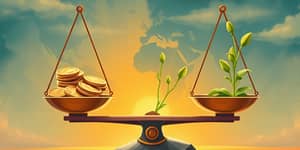
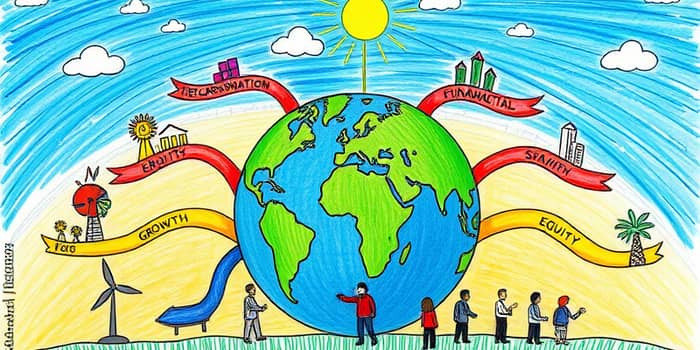
In a world facing rapid climate change, financial instability, and social inequities, the concept of policy pathways emerges as a beacon of hope and clarity. Unlike narrative-driven scenarios, these frameworks rely on structured scenario-based frameworks to quantify the impacts of policy decisions on economic outcomes. By modeling variables such as consumption, emissions, and innovation, they illuminate the trade-offs and synergies embedded in choices about decarbonization, stability, growth, and equity. This article explores how these pathways can inspire decisive action and foster a resilient global economy.
Understanding Policy Pathways
Policy pathways differ fundamentally from shared socioeconomic pathways. While narrative approaches capture qualitative shifts, policy pathways embed options within economic models, allowing variables to respond endogenously. This method enables decision-makers to visualize timelines for decarbonization and growth under clearly defined policy settings, such as carbon pricing escalators or fiscal stimuli targeted at green infrastructure.
These frameworks present a powerful narrative: policy is not merely a story but a set of quantifiable levers that shape our collective future. By offering projections from 2022 to 2050, they demonstrate that well-designed policies impose only modest consumption delays in the short term yet catalyze long-term economic growth promotion and environmental restoration.
Theoretical Foundations
At the heart of policy pathways are endogenous growth models, drawing on innovations such as the Romer model, which integrates labor, capital, and energy into production blocks. These models assign roles to research and development, capturing how investments in clean technology drive innovation feedback loops. A parallel taxonomy tree breaks down policy instruments into atomic actions across fiscal, monetary, trade, and stabilization categories, enabling a systematic classification.
By combining theoretical rigor with practical calibration, these frameworks transcend abstract planning. They enable policymakers to test the robustness of strategies against shocks, vulnerabilities, and emerging trends, ensuring that policies remain effective in diverse scenarios. This analytical foundation empowers leaders to craft policies grounded in data and resilient to uncertainty.
Policy Areas and Trajectories
Policy pathways can be applied across multiple domains, guiding decisions to foster inclusive and sustainable growth:
- Climate and Decarbonization: Scenarios for carbon pricing and net-zero targets.
- Fiscal and Monetary Policy: Balancing deficits, inflation goals, and macroprudential tools.
- Equitable Recovery and Labor: Designing inclusive job pathways and reskilling programs.
- Coherence and Integration: Aligning economic, social, and environmental objectives.
- Regional and Competitiveness Strategies: Tailoring policies to specific economic contexts.
In each area, policy pathways offer a timeline that links interventions to outcomes. For instance, in the climate domain, three decarbonization scenarios reveal the impact of different carbon escalators on emissions and growth.
Scenario Comparison for Decarbonization
This table underscores that only an aggressive carbon escalator will drive the deep emissions cuts needed by mid-century. Yet, even moderate policies yield lasting growth dividends by stimulating innovation in clean energy sectors.
Case Studies in Action
Real-world applications of policy pathways demonstrate their transformative potential. The IMF’s Integrated Policy Framework blends exchange rate flexibility with macroprudential measures, showcasing how countries can manage cross-border capital flows without derailing growth. Meanwhile, the Federal Reserve’s upcoming 2025 review of its monetary policy framework highlights the importance of forward guidance and flexible average inflation targeting to navigate the effective lower bound on interest rates.
In the fiscal realm, historical analyses trace the effects of budget surpluses and deficits on national saving and investment. These insights inform debates on public spending, emphasizing the need to balance short-term stimulus with long-term fiscal sustainability to avoid crowd-out effects that undermine future prosperity.
Challenges and Solutions
Despite their promise, policy pathways face obstacles. Incoherent policies can fragment progress, with misaligned fiscal and climate goals undermining shared objectives. Risk and uncertainty—stemming from market volatility, political shifts, or technological breakthroughs—demand robust stress-testing of scenarios. Furthermore, vulnerable economies with shallow financial markets or high currency mismatches require tailored policy mixes.
Tackling these challenges requires an integrated approach. Embedding risk assessment tools within pathway models, fostering cross-institutional collaboration, and maintaining policy flexibility can ensure resilience. Equally important is stakeholder engagement: transparent dialogue builds trust and aligns public expectations with policy ambitions.
Actionable Recommendations
To translate theory into practice, policymakers should consider the following strategic actions:
- Implement escalating carbon pricing to incentivize clean energy innovation.
- Strengthen macroprudential tools alongside exchange rate policies for stability.
- Prioritize progressive fiscal measures that support inclusive growth.
- Establish regular reviews to test policy robustness under stress scenarios.
By following these guidelines, leaders can steer economies toward equitable prosperity while safeguarding environmental and financial stability.
Practical Steps for Local Leaders
Regional and local authorities play a critical role in adapting pathway insights to community needs. Consider these practical steps:
- Conduct evidence-based assessments of local economic vulnerabilities.
- Foster public-private partnerships to finance green infrastructure.
- Develop targeted reskilling programs aligned with future labor market demands.
- Monitor key indicators and adjust policies in real time for maximum impact.
These tactics empower communities to harness global frameworks and catalyze transformative change at the grassroots level.
Conclusion: Navigating the Road Ahead
Policy pathways illuminate the path to a resilient and inclusive future. By leveraging quantitative scenario analysis and embedding flexibility into policy design, governments can navigate uncertainty with confidence. Whether targeting net-zero emissions, financial stability, or equitable recovery, these frameworks offer a clear roadmap from ambition to action.
The journey toward sustainable prosperity demands collaboration across sectors and scales. As we stand at the crossroads of climate imperatives and economic opportunity, policy pathways guide us toward a horizon where growth and equity go hand in hand. Now is the moment to harness their power, transform intention into action, and shape a future that benefits all.
References
- https://cepr.org/voxeu/columns/economic-pathways-new-approach-climate-policy
- https://www.imf.org/en/topics/ipf-integrated-policy-framework
- https://www.iwmi.org/multimedia/episode-one-introducing-policy-pathways/
- https://www.brookings.edu/articles/fiscal-policy-and-economic-growth-a-simple-framework/
- https://www.jff.org/idea/state-policy-road-map-equitable-economic-recovery/
- https://academic.oup.com/book/34297/chapter/290771032
- https://www.federalreserve.gov/econres/notes/feds-notes/a-roadmap-for-the-federal-reserves-2025-review-of-Its-monetary-policy-framework-20250822.html
- https://www.nga.org/publications/service-as-a-pathway-to-economic-opportunity-a-roadmap-for-governors/
- https://arxiv.org/html/2507.03233v1
- https://www.oecd.org/en/publications/policy-pathways-beyond-the-shoreline_1aedeacb-en.html
- https://initiatives.weforum.org/future-of-growth-initiative/framework
- https://pmc.ncbi.nlm.nih.gov/articles/PMC10520034/
- https://www.isc.hbs.edu/competitiveness-economic-development/frameworks-and-key-concepts/Pages/default.aspx
- https://www.dol.gov/agencies/eta/research/publications/building-better-pathways-analysis-career-trajectories-and