
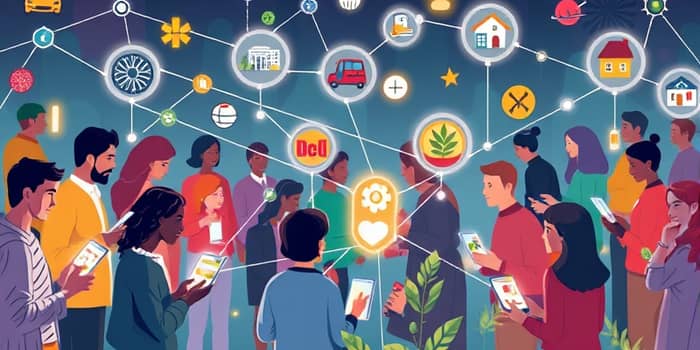
In today’s fast-paced world, the sharing economy has emerged as a beacon of innovation, challenging traditional models of ownership and commerce. By championing access over ownership and tapping into under-utilized resources, it creates new pathways for economic, social, and environmental progress. This article unpacks the core principles, evolution, and future of this powerful movement, offering practical insights for individuals, businesses, and communities.
Understanding the Sharing Economy
The sharing economy is a socio-economic system that enables intermediated exchanges of goods and services between individuals and organizations. Through digital platforms, users can rent, swap, or donate assets, transforming idle capacity into value. These transactions are often peer-to-peer, but can also involve centralized pools of resources managed by service providers.
At its heart lies the idea of optimizing idle capacity. Rather than purchasing an item for occasional use, consumers can pay to access it when needed. This shift from ownership to access fosters shared-value creation, blending economic opportunity with community and environmental benefits.
Evolution and Growth
The concept of collaborative consumption gained traction in the early 2000s, but it was not until platforms like Airbnb and Uber emerged that the sharing economy captured global attention. Since 2013, market forecasts have predicted explosive growth, with values soaring from billions to nearly a trillion dollars in just a decade.
Consider these projections:
Growth drivers include rising internet penetration, digital platform innovation, and a growing appetite for flexible, sustainable consumption. In emerging markets, smartphone adoption has unlocked new user bases, while in developed economies, shifting values emphasize experiences over possessions.
Mechanisms of Value Creation
Sharing economy platforms employ two primary models:
- Peer-to-peer intermediation: Platforms connect individual providers and consumers directly. Airbnb, for example, allows homeowners to rent spare rooms to travellers, retaining property rights while generating income.
- Centralized resource pooling: Service providers own fleets or inventories, offering standardized access. Car-sharing services manage vehicles in urban centers, ensuring availability and maintenance under a unified brand.
Hybrid approaches blend these models, combining the personalization of peer exchanges with the reliability of centralized fleets. Firms optimize their value configurations by balancing customization and standardization, as well as decentralized and centralized property rights.
Benefits Across Three Pillars
The sharing economy delivers multi-dimensional value:
- Economic opportunities: Individuals earn supplementary income, while consumers enjoy lower prices and flexible services.
- Social empowerment: Platforms foster communities of trust, building connections among users and enabling skill-sharing.
- Environmental sustainability: By reducing demand for new goods, sharing minimizes waste and carbon emissions, supporting environmental and social goals.
Challenges and Tensions
Despite its promise, the sharing economy faces criticisms and hurdles:
1. Role ambiguity: Some scholars argue it’s more utilitarian than altruistic, emphasizing monetary exchange over gift-based sharing.
2. Regulatory complexity: Local laws around housing, transportation, and labor often lag behind rapid platform growth, creating friction and uncertainty.
3. Non-participation: Surveys reveal that about two-thirds of consumers have yet to engage with sharing services, pointing to gaps in awareness, trust, or perceived value.
The Road Ahead: Trends and Opportunities
As we move toward 2030, the sharing economy is poised to surpass $750 billion in value. Emerging trends include electrified transport fleets, group rides to reduce congestion, and integration of blockchain for secure, transparent transactions. Businesses and communities can harness these developments through strategic partnerships, regulations that balance innovation and consumer protection, and platform designs centered on equitable access.
Organizations should:
- Invest in platforms that prioritize user trust and transparency.
- Design incentives for resource owners, enhancing supply reliability.
- Collaborate with policymakers to develop supportive frameworks.
Conclusion: Embracing a Shared Future
The sharing economy represents more than a business model—it’s a cultural shift that redefines value by emphasizing collaboration, sustainability, and inclusive growth. By unlocking idle resources and empowering individuals, it offers a blueprint for a more resilient, connected world.
Whether you’re an entrepreneur launching a new platform, a policy-maker crafting regulations, or a consumer seeking smarter ways to consume, the sharing economy invites you to envision a future built on collective growth potential. Embrace the movement, explore its possibilities, and contribute to a global ecosystem where value is created not through exclusive ownership, but through shared access and mutual benefit.
References
- https://timreview.ca/article/1215
- https://friendwitha.com/blog/sharing-economy-statistics/
- https://pmc.ncbi.nlm.nih.gov/articles/PMC7817141/
- https://www.thebusinessresearchcompany.com/report/sharing-economy-global-market-report
- https://ultima.com/blog/embracing-the-sharing-economy-a-path-to-sustainable-living/
- https://www.alliedmarketresearch.com/sharing-economy-market-A230672
- https://www.progressive.com/resources/insights/new-face-of-sharing-economy/
- https://manhattan.institute/article/why-americans-love-the-sharing-economy
- https://www.bls.gov/opub/mlr/2016/beyond-bls/awareness-and-usage-of-the-sharing-economy.htm
- https://hbr.org/2015/01/the-sharing-economy-isnt-about-sharing-at-all
- https://www.ala.org/future/trends/sharingeconomy
- https://www.statista.com/statistics/830986/value-of-the-global-sharing-economy/
- https://luthresearch.com/glossary/where-to-find-data-on-the-growth-of-the-sharing-economy/