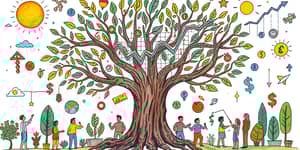

In recent decades, the world has witnessed a profound demographic transformation. With global population is aging rapidly, the balance between younger and older generations is shifting. This change carries far-reaching implications for economies, communities, and individuals across every region.
Population aging refers to the rising share of older individuals relative to younger age groups. It is driven by sustained low birth rates, medical advances, improved public health, and enhanced social services. Understanding these forces and their impact is essential for forging resilient and inclusive future strategies.
The Demographic Shift Across the Globe
Declining fertility rates and rising longevity are the twin forces reshaping societies. Since 1950, the proportion of people aged 60 and over grew from 8% to 12% by 2014, and it continues to climb. Today’s median global age stands at 31, up from 24 in 1950.
- By 2020, individuals aged 60+ outnumbered children under five worldwide.
- By 2030, one in six people (1.4 billion) will be 60 or older.
- By 2050, the 60+ population will double to 2.1 billion; those 80+ will triple to 426 million.
- Women comprise 61% of the global population aged 80 and above.
These numbers reveal the historic reversal of age structures from prior centuries, when populations were overwhelmingly young. Regions vary in speed and scale, with Japan already over 30% aged 60+, while low-income countries will see rapid aging over the next three decades.
The Economic Challenges of an Aging Society
As the demographic profile shifts, economies face mounting pressures. A shrinking workforce can lead to skill shortages, slower innovation, and diminished competitiveness on the global stage.
Healthcare spending grows sharply, driven by chronic conditions prevalent in older age. Between 1990 and 2019, disability-adjusted life years among seniors rose by 32%, with projections of a 55% increase by 2030. Families and governments alike struggle to finance care and support for rising patient numbers.
Pension systems, largely designed in eras of younger populations, come under strain when few workers fund benefits for many retirees. In the United States, pension outlays are projected to climb from 5.2% to 6.1% of GDP, while countries like Spain already dedicate over 8% of GDP to pensions.
The shrinking working-age populations strain economies, demanding bold policy responses to maintain fiscal health and social cohesion.
Unleashing the Silver Economy: Opportunities and Strategies
Despite challenges, the aging trend also offers economic potential. The silver economy encompasses goods and services tailored to older adults, from healthcare technology to leisure and mobility solutions.
- Boost senior employment through flexible, part-time, and remote work options.
- Support lifelong learning and retraining to keep skills relevant.
- Invest in automation and digital technologies to augment labor capacity.
- Design age-friendly urban spaces and promote accessible infrastructure.
- Reform pension frameworks for sustainability and flexibility.
By adopting harness the potential of older adults, countries can spur innovation and open new markets. Policies such as paid caregiver leave and wage enhancements for care workers strengthen the care economy and redistribute support obligations.
International bodies like the WHO and UN advocate for age-friendly initiatives, encouraging local governments to integrate older citizens into community planning, digital inclusion efforts, and civic engagement.
Lessons from Leading Countries
Countries at the forefront of aging provide valuable blueprints. Japan’s early experience demonstrates the power of technology in eldercare, from robotics in nursing homes to AI-driven health monitoring.
Italy reached the milestone of more seniors than children in the 1990s. Its focus on multigenerational housing and community support networks underscores the social dimensions of ageing.
The United States, facing the Baby Boomer retirement wave, explores phased retirement options and employer-retained health benefits to ease the transition out of the workforce.
China plans for 400 million seniors by 2035, building rural care centers that blend family traditions with public assistance, showcasing culturally tailored solutions.
In Europe, diverse welfare systems reveal both fiscal strains and private-sector ingenuity. From senior-friendly public transportation to entrepreneurial incubators for older founders, adaptive measures abound.
Japan illustrates the urgency of demographic adaptation while Europe and North America highlight the need for cross-sector partnerships between government, businesses, and civil society.
Looking Ahead: Building Resilient Futures
Forward-thinking strategies must embed demographic insights across all policy areas. Infrastructure planning, urban design, and digital services should assume an aging user base, ensuring universal accessibility.
Education systems can extend beyond youth, offering continued vocational training and digital literacy programs for seniors. Such investments bolster individual well-being and extend productive participation.
Cross-generational initiatives—like mentorship schemes and shared community spaces—foster mutual learning and reduce social isolation among elders.
Technological innovations, from telemedicine to smart-home systems, can improve quality of life while containing healthcare costs. Public-private collaborations are key to scaling these solutions responsibly.
Conclusion
Population aging presents both remarkable challenges and unprecedented opportunities. By reforming fiscal policies, embracing technological advances, and valuing the contributions of seniors, societies can evolve into inclusive, sustainable models that benefit all ages.
Achieving this vision requires creativity, cooperation, and long-term commitment. When older adults are empowered as active participants, they become catalysts for growth, innovation, and social harmony. In charting this path, communities can transform longevity from a concern into a collective strength.
References
- https://www.abacademies.org/articles/exploring-the-economic-implications-of-aging-populations-in-developed-nations-17296.html
- https://www.who.int/news-room/fact-sheets/detail/ageing-and-health
- https://pmc.ncbi.nlm.nih.gov/articles/PMC9445535/
- https://www.omu.edu.tr/en/icerik/news/global-ageing-trend-21-percent-population-will-be-over-60-2050
- https://www.brookings.edu/articles/global-aging-the-almost-invisible-crisis-shaping-our-future/
- https://wifitalents.com/ageing-population-statistics/
- https://www.weforum.org/stories/2025/01/super-ageing-and-youthful-populations-global-risks-report/
- https://www.globalissues.org/news/2026/01/16/42128
- https://sogevity.com/longevity-statistics/
- https://distance.physiology.med.ufl.edu/about/articles/the-impacts-of-an-aging-population-on-society
- https://www.pewresearch.org/short-reads/2026/01/09/the-oldest-baby-boomers-turn-80-in-2026/
- https://cri.georgetown.edu/what-does-an-aging-population-mean-for-economic-growth-and-investing/
- https://www.un.org/en/global-issues/population