
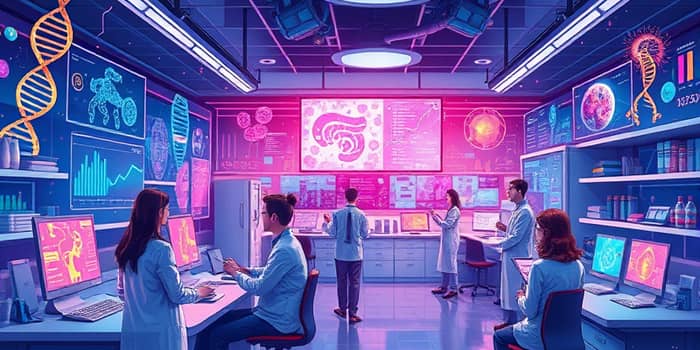
Over the past decade, the convergence of biology and computing has sparked an unprecedented wave of innovation. Biotech firms are harnessing artificial intelligence, advanced genomic tools, and novel therapeutic modalities to tackle diseases once deemed incurable. From rare genetic disorders to widespread chronic conditions, these breakthroughs promise to transform patient outcomes, streamline drug development, and redefine global healthcare economics.
Spurred by soaring investments and cross-disciplinary collaboration, the industry is shifting from one-off products to platform-based research and development approaches that can be adapted across multiple diseases. This paradigm shift is fueling a surge of startups and large-scale programs dedicated to precision medicine, scalable manufacturing, and data-driven clinical strategies.
The AI Revolution in Drug Discovery
Artificial intelligence has emerged as a cornerstone of modern biotech, replacing laborious trial-and-error approaches with in silico experimentation and predictive modeling. By leveraging vast datasets of molecular structures, clinical outcomes, and patient genetics, AI platforms can identify promising compounds, optimize lead candidates, and anticipate adverse effects long before a human ever enters the lab.
These innovations are delivering dramatically shortened development timelines, cutting years off traditional pipelines and reallocating resources to the most promising assets. Virtual screening can evaluate millions of molecules in days, while machine learning algorithms refine trial protocols to maximize patient safety and efficacy.
- Accelerates virtual compound screening and hit identification
- Predicts molecular binding affinity and toxicity profiles
- Optimizes trial design and patient stratification strategies
- Enables end-to-end simulation of development pipelines
Genomic Medicine and Gene Editing
Genomic medicine is maturing into a multibillion-dollar sector, projected to generate over $80 billion annually by 2032. By targeting the root causes of disease—mutations in DNA—researchers aim for one-time cures in rare pediatric illnesses, cardiovascular disorders, and metabolic syndromes.
Advanced editing tools like CRISPR and base editors are unlocking precision medicine tailored to individual genomes, correcting faulty genes in situ. Meanwhile, synthetic biology and viral vector engineering are expanding delivery options, offering hope for hereditary conditions that were previously untreatable.
Pharma giants and nimble startups alike are investing in next-generation delivery systems and safety switches to refine specificity, minimize off-target effects, and enable wider clinical application across diverse patient populations.
Promising Biotech Startups to Watch in 2026
In the Class of 2026, fifteen companies stand out for their modality-driven strategies and innovative pipelines. These ventures exemplify the diversity of modern biotech, from RNA silencing to oncolytic viruses.
- Arnatar: Developing ART104, an antisense oligonucleotide for Alagille syndrome, with pediatric orphan designations.
- Corsera: Advancing COR-1004 siRNA therapy to lower PCSK9 and LDL cholesterol, aided by AI risk prediction models.
- Haya: Pioneering antisense drugs (Wisper/HTX-001) for hypertrophic cardiomyopathy and obesity with a dark genome platform.
- Renasant: Creating oral small molecules targeting PC1/PC2 to treat autosomal dominant polycystic kidney disease.
- Dispatch: Leveraging the Flare platform to combine tumor-specific viruses with CAR-T approaches in solid tumors.
- Kivu: Engineering KIVU-107, a novel ADC targeting PTK7, to overcome resistance in solid tumors.
- Stylus: Innovating in vivo genome integration via lipid nanoparticles for durable CAR-T cell therapies.
Cell and Gene Therapies: Scaling Challenges and Solutions
Cell and gene therapies are rewriting treatment paradigms for genetic and oncologic diseases, but manufacturing complexity and cost remain hurdles. Traditional ex vivo processes require individualized cell collection, expansion, and reinfusion—limiting scalability and inflating prices.
New platforms aim to industrialize production with industrial-scale cell therapy manufacturing solutions, incorporating automation, closed-system bioreactors, and AI-driven process control. In vivo engineering techniques, such as those developed by Stylus, bypass ex vivo steps entirely, editing immune cells directly within the patient’s body.
Next-Generation Oncology and Precision Therapeutics
Oncology remains a focal point for biotech innovation. Antibody-drug conjugates, bispecific antibodies, and radiopharmaceuticals are delivering targeted cytotoxicity with reduced collateral damage. Novel agents like tumor-specific viruses and CAR-T enhancements are pushing the boundaries of immune engagement.
Integrated with AI-driven molecular modeling and simulation platforms, these therapies can be designed with unprecedented specificity. Computational tools predict epitope presentation, optimize linker chemistry in ADCs, and simulate immune-tumor interactions in virtual microenvironments.
- Antibody-Drug Conjugates (e.g., KIVU-107 targeting PTK7)
- Bispecific antibodies against PD-1×VEGF
- Radiolabeled peptides for precision imaging and therapy
- Oncolytic viruses combined with CAR-T platforms
The Platform Paradigm: Future Outlook
As biotech converges on modular, data-centric platforms, R&D strategies are becoming more resilient and adaptable. Investors are backing infrastructure rather than individual molecular assets, betting on cross-disease scalability reducing pipeline risk. Unified data environments will enable end-to-end virtual trials, real-time safety monitoring, and adaptive dosage regimens.
Looking ahead, the fusion of AI, genomics, and novel delivery technologies will continue to democratize access to advanced therapies. While challenges around regulatory alignment, manufacturing capacity, and equitable distribution remain, the momentum is unmistakable. A new era of personalized medicine is dawning—one in which precision, speed, and scalability converge to reshape healthcare on a global scale.
References
- https://www.globalxetfs.com/articles/biotechnology-pioneering-the-future-of-medicine/
- https://www.biospace.com/nextgen
- https://blog.investengine.com/the-future-of-healthcare-how-biotech-and-ai-are-transforming-medicine/
- https://biotechbreakthroughawards.com/biotech-in-2026-ai-models-predictive-platforms-and-automation-accelerating-discovery-pipelines/
- https://www.youtube.com/watch?v=NFoQznXKAPA
- https://www.labiotech.eu/in-depth/2026-biotech-trends/
- https://pmc.ncbi.nlm.nih.gov/articles/PMC11772680/
- https://www.bcg.com/publications/2026/reimagining-business-models-biopharma-trends
- https://healthcaretoday.com/article/comment-biotechs-big-rebound