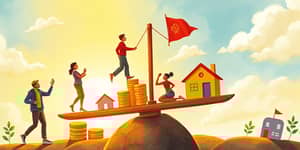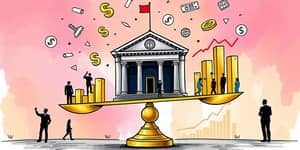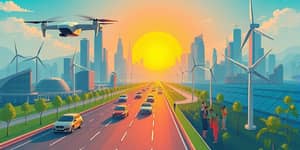

For decades, policymakers, analysts, and the public have relied on gross domestic product (GDP) to gauge economic performance. It offers a simple snapshot of total market activity, but it leaves critical questions unanswered.
As societies confront climate change, social inequality, and public health crises, the limitations of traditional GDP have become increasingly apparent. We must explore metrics that capture the true dimensions of prosperity.
The Shortcomings of GDP as the Sole Metric
GDP measures the total value of goods and services produced within a country’s borders. While it excels at tracking output, it remains a measure of economic quantity, not quality or welfare.
By ignoring negative externalities like pollution, resource depletion, and social costs, GDP can paint an overly optimistic picture of progress. The 2008 financial crisis stands as a stark reminder of this blind spot; a glaring blind spot in prosperity measures left policymakers unprepared for a collapse that rocked global markets.
Emerging Alternatives: From GPI to HDI
The search for more comprehensive metrics has yielded a diverse set of alternatives, each aiming to capture economic, social, and environmental dimensions of well-being.
The Genuine Progress Indicator (GPI) builds on GDP’s framework but adjusts for positive and negative factors that affect real prosperity.
- Pollution and ozone depletion costs
- Poverty rates and income inequality
- Health standards and value of education
- Cost of commuting and road accidents
- Value of volunteer work and parenting
Other notable measures have emerged to highlight different facets of progress:
- Index of Sustainable Economic Welfare (ISEW): Adds domestic labor services and subtracts environmental degradation.
- Human Development Index (HDI): Emphasizes life expectancy, education, and income.
- Green GDP: Subtracts environmental damage and resource depletion from traditional GDP.
- Better Life Index, Happy Planet Index, Thriving Places Index, and more, each focusing on unique elements such as subjective well-being or ecological efficiency.
Comparing Key Metrics
A snapshot of leading alternative measures highlights their core objectives and methodologies.
Methodological and Implementation Challenges
Despite the promise of these frameworks, major hurdles impede widespread adoption. One major issue is the valuation of non-market activities, such as volunteer service or domestic labor, which requires careful methodological design.
Measurement complexity further complicates cross-country and cross-sector comparisons, as data availability and collection standards vary greatly. Achieving consensus on appropriate valuation methodologies is critical to gaining credibility.
Policy and Advocacy: From Advocacy to Action
The push to move beyond GDP to holistic progress metrics has gained momentum through global forums and national experiments.
In 2007, the Beyond GDP conference in Brussels gathered over 650 participants from government, academia, and civil society to chart new approaches. The UN Summit of the Future and the OECD have since echoed these calls, urging member states to adopt complementary indicators.
Several U.S. states, including Hawaii, Maryland, and Vermont, have piloted the GPI. Their experiences offer valuable lessons on data integration, stakeholder engagement, and policy translation.
Charting a Path Forward: Dashboards and Integration
Rather than abandoning GDP, experts recommend assembling a dashboard of complementary indicators that provides a multidimensional view of progress. This approach allows decision-makers to:
- Identify who benefits from economic growth and who is left behind
- Track environmental sustainability alongside output measures
- Assess subjective well-being and life satisfaction trends
- Monitor distributional outcomes across demographics
By layering metrics on a single platform, policymakers gain a richer evidence base for policy formation that values long-term resilience, equity, and ecological balance.
Conclusion: Embracing True Progress
Confronted with complex global challenges, we can no longer rely solely on GDP as our compass. A holistic approach to measurement captures the multifaceted nature of human and environmental well-being.
Adopting complementary indicators like GPI, HDI, and Green GDP equips societies with the insights needed to craft policies that promote thriving communities and a healthy planet.
The journey toward measuring genuine progress demands collaboration among statisticians, economists, and communities. However, the potential rewards—inclusive prosperity, sustainable development, and shared well-being—make it a journey worth taking.
By looking beyond GDP, we can unlock a future where economic growth truly contributes to lasting human happiness and environmental stewardship.
References
- https://www.economicshelp.org/blog/167255/economics/alternatives-to-gdp/
- https://www.stlouisfed.org/open-vault/2023/apr/three-other-ways-to-measure-economic-health-beyond-gdp
- https://intheblack.cpaaustralia.com.au/economy/8-ways-of-measuring-economic-health
- https://www.ecologic.eu/9072
- https://en.wikipedia.org/wiki/Broad_measures_of_economic_progress
- https://sdg.iisd.org/news/beyond-gdp-measuring-global-human-progress-and-comprehensive-wealth/
- https://www.ecologicaleconomicsforall.org/gdp-and-its-alternatives
- https://www.rcc.int/pages/183/beyond-gdp-measuring-just-and-green-transitions-for-resilient-and-inclusive-economic-growth
- https://www.weforum.org/stories/2020/02/beyond-gdp-put-alternatives-economics-growth/
- https://www.oecd.org/en/publications/2018/11/beyond-gdp_g1g98ae6.html
- https://osr.statisticsauthority.gov.uk/blog/beyond-gdp-redefining-economic-progress/
- https://unctad.org/news/beyond-gdp-what-else-matters-and-how-measure-it
- https://ui.adsabs.harvard.edu/abs/2013EcoEc..93...57K/abstract