
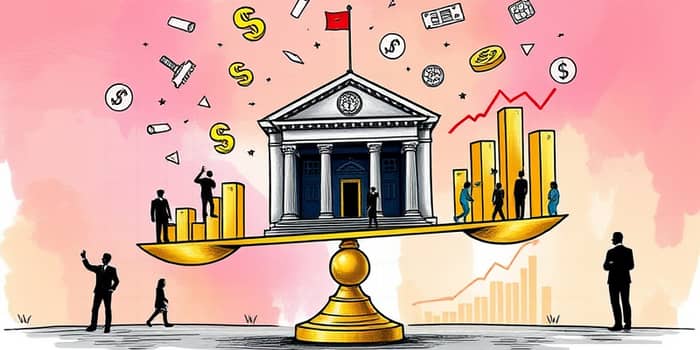
Monetary policy may seem like a remote topic reserved for economists, but its decisions touch every wallet, business plan, and household budget. By understanding how central banks steer economies, you can make more informed choices and feel confident about the future.
What Is Monetary Policy?
At its core, monetary policy is the process through which a nation’s central bank manages the supply of money and the level of interest rates to steer the economy toward desired goals. Through deliberate actions, it seeks to achieve low and stable inflation, maximum employment levels, and moderate long-term interest rates.
When central banks inject money into the economy, borrowing becomes cheaper, consumers spend more, and businesses invest. Conversely, reducing the monetary base can cool spending, helping to curb runaway price increases.
The Dual Mandate: Price Stability and Full Employment
Many central banks, like the U.S. Federal Reserve, operate under a dual mandate. This means they balance two major objectives:
- Controlling inflation – keeping price increases around a target (often 2% annually).
- Maintaining full employment – reducing joblessness and supporting sustainable growth.
Some institutions, such as Australia’s Reserve Bank, add a flexible inflation target range (2–3%) to better smooth economic cycles without stifling job creation.
Key Tools of Monetary Policy
A variety of instruments allow central banks to adjust the financial environment. Each tool has unique strengths and limitations, and is chosen based on current economic conditions.
- Interest Rate Targeting – setting benchmark rates (like the Federal Funds Rate or Australia’s Cash Rate) to influence borrowing costs.
- Open Market Operations – buying or selling government securities to expand or contract the monetary base.
- Reserve Requirements – changing the proportion of deposits banks must hold, affecting how much they can lend.
Additional measures include quantitative easing (large-scale asset purchases), forward guidance (communicating future policy paths), and adjusting interest paid on reserves held by banks.
Expansionary vs. Contractionary Policy
Central banks switch between easing and tightening tactics to respond to economic changes. The following table highlights their core differences:
How Monetary Policy Reaches You
Though central bank meetings occur behind closed doors, their decisions ripple through everyday life:
- Mortgage and loan rates rise or fall, changing your monthly payments.
- Savings account yields shift, affecting returns on deposits.
- Business investment plans accelerate or pause based on financing costs.
Understanding these connections helps you anticipate changes, refinance debt at opportune moments, and choose the best savings options.
Practical Tips to Navigate Rate Changes
Rather than feeling overwhelmed when announcements hit the headlines, consider these strategies:
- Monitor central bank press releases and summaries for forward guidance insights.
- Lock in fixed-rate loans when rates are low to shield against future hikes.
- Diversify savings: combine high-yield accounts with short-term bonds for balance.
By aligning your financial moves with expected policy shifts, you can seize opportunities and mitigate risks.
Learning from History and Global Examples
Past crises showcase the power of unconventional measures. After 2008, quantitative easing helped stabilize markets. During the 2020 downturn, swift rate cuts and massive bond purchases drove recovery.
Different nations tailor their approaches. Emerging economies may rely more on administrative controls, while advanced economies emphasize market-based operations.
Conclusion: Empowering Your Financial Future
Monetary policy shapes the economic landscape, influencing prices, jobs, and growth. By grasping its goals and tools, you become a more confident participant in financial markets and everyday decisions.
Keep learning, stay informed, and apply practical strategies to turn central bank actions into personal advantage. In an ever-changing economy, knowledge is your most valuable currency.
References
- https://www.ebc.com/forex/types-of-monetary-policy-explained-for-beginners
- https://www.khanacademy.org/economics-finance-domain/ap-macroeconomics/ap-financial-sector/monetary-policy-apmacro/a/monetary-policy
- https://www.interactivebrokers.com/campus/trading-lessons/introduction-to-monetary-policy/
- https://www.federalreserve.gov/monetarypolicy/monetary-policy-what-are-its-goals-how-does-it-work.htm
- https://www.youtube.com/watch?v=INsafdTVDKs
- https://en.wikipedia.org/wiki/Monetary_policy
- https://www.rba.gov.au/education/resources/explainers/what-is-monetary-policy.html
- https://app.achievable.me/study/finra-series-65/learn/economic-factors-and-business-information-basic-economic-concepts-monetary-policy
- https://www.youtube.com/watch?v=IMkLAP_aj3I
- https://www.imf.org/en/publications/fandd/issues/series/back-to-basics/monetary-policy