
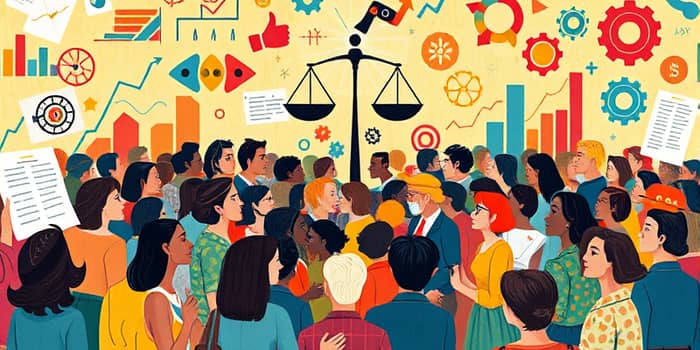
Behavioral economics has reshaped how we view financial choices by blending rigorous economic models with insights from psychology. This interdisciplinary field reveals why individuals, often assumed to be perfectly rational, make decisions that depart from classical economic predictions. By examining emotional, social, and cognitive influences, it provides a more nuanced framework for interpreting market dynamics and personal finance behavior.
Grounded in decades of research by pioneers like Daniel Kahneman, Amos Tversky, and Richard Thaler, behavioral economics challenges core assumptions and offers practical guidance for consumers, businesses, and policymakers. In this article, we explore its foundational concepts, key biases, historical evolution, applications, and empirical evidence to illuminate how understanding human psychology can transform economic outcomes.
Definition and Core Concepts
At its essence, behavioral economics integrates psychology into economic theory by studying how people actually behave when faced with choices. Unlike traditional models that depict agents as coldly logical, this approach recognizes that decisions are shaped by mental shortcuts, emotions, social context, and cultural norms. Researchers test hypotheses using both laboratory experiments and real-world data, providing robust evidence that human behavior systematically deviates from rational expectations.
Three core principles guide the field. First, optimization within bounded rationality acknowledges that individuals strive to make the best decisions but often settle for satisfactory options due to cognitive limits. Second, equilibrium concepts are refined to account for behavioral factors, showing how market interactions can amplify biases. Third, an empirical emphasis ensures that theories are validated against observed patterns, making behavioral economics a dynamic, data-driven discipline.
Key Biases Shaping Decisions
Behavioral economics identifies a range of cognitive biases and heuristics that influence choices. These systematic tendencies affect everything from simple purchases to complex investment strategies.
- Loss Aversion: People fear losses more than equivalent gains, leading them to hold onto declining stocks or avoid necessary risks.
- Anchoring: Initial numbers, like a starting price, disproportionately sway judgments and valuations.
- Framing Effect: Choices change based on presentation, so a 90% fat-free label often outperforms 10% fat despite identical content.
- Social Proof: Individuals follow the crowd, trusting popular products or trending investments in uncertain situations.
- Overconfidence: Excess belief in personal skill can drive excessive trading or poor project forecasts.
- Temporal Discounting: Preference for immediate rewards undermines long-term planning, affecting savings and health behaviors.
- Default Bias: People stick with preselected options, from retirement plans to organ donation settings.
Biases in Market Context
In financial and marketing arenas, these biases shape consumer choices and market trends. The following table summarizes several major biases, relevant examples, and their broader impact:
Historical Development
The roots of behavioral economics trace back to early observations by Adam Smith on human self-control and overconfidence. However, the field truly coalesced in the 1970s and 1980s when Daniel Kahneman and Amos Tversky introduced prospect theory, demonstrating that people evaluate outcomes relative to reference points and exhibit strong loss aversion.
Richard Thaler built on these insights to question the assumptions of rational choice, leading to practical applications—from retirement savings defaults to choice architecture in public policy. Nobel Prizes awarded to Kahneman in 2002 and Thaler in 2017 cemented behavioral economics within mainstream scholarship and encouraged widespread adoption in academic curricula and organizational practices.
Applications in Markets and Policy
By harnessing behavioral insights, businesses and governments can design strategies that align with actual human behavior rather than idealized models.
- Marketing & Consumer Behavior: Employ nudges such as scarcity cues and social endorsements to boost engagement.
- Financial Trading: Develop tools that counteract overconfidence and herd instincts, improving portfolio performance.
- Public Policy & Business Decisions: Implement defaults for retirement plans, opt-out organ donation, and simplified forms to enhance participation.
These applications rest on the principle of guide without restricting individual freedom, often referred to as libertarian paternalism, where subtle environmental tweaks lead to large-scale behavioral shifts.
Empirical Support and Critiques
Behavioral economics combines laboratory experiments with field studies to test theories under varied conditions. Research consistently shows that predictions better reflect actual behavior when psychological factors are included, offering more accurate forecasts than purely rational models.
Critics argue that some biases may be context-specific or that the field overemphasizes anomalies. Ongoing integration with neuroscience and computational modeling aims to refine theories, identify boundary conditions, and ensure that behavioral insights remain robust across cultures and economic environments.
Conclusion: Embracing Behavioral Insights
Behavioral economics transforms our understanding of market psychology by illuminating the hidden drivers of decision-making. From reshaping marketing tactics to informing public policy, its principles empower stakeholders to design environments that foster better outcomes for individuals and societies.
As we navigate increasingly complex economic landscapes, embracing these insights offers a path to more compassionate, effective, and realistic solutions—rooted in a deep appreciation of human nature and its rich tapestry of cognitive and emotional influences.
References
- https://www.digivate.com/blog/digital-marketing/behavioural-economics-marketing/
- https://www.aeaweb.org/articles?id=10.1257%2Faer.p20151047
- https://en.wikipedia.org/wiki/Behavioral_economics
- https://brandtrust.com/blog/behavioral-economics/
- https://bookmap.com/blog/6-behavioral-economics-principles-every-trader-should-know
- https://study.uq.edu.au/stories/predicting-unpredictable-6-key-behavioural-economics-concepts
- https://globalyouth.wharton.upenn.edu/articles/world-economy/5-truths-about-behavioral-economics-and-studying-consumer-behavior/
- https://dash.harvard.edu/bitstreams/7312037d-dddd-6bd4-e053-0100007fdf3b/download
- https://econreview.studentorg.berkeley.edu/applying-behavioral-economics-to-marketing-policy-and-beyond/
- https://news.uchicago.edu/explainer/what-is-behavioral-economics
- https://pmc.ncbi.nlm.nih.gov/articles/PMC33745/
- https://www.behavioraleconomics.com/resources/mini-encyclopedia-of-be/
- https://www.neuroscienceof.com/branding-blog/behavioral-economics-consumer-behavior-merle-van-den-aaker-interview
- https://www.psychologytoday.com/us/basics/behavioral-economics