
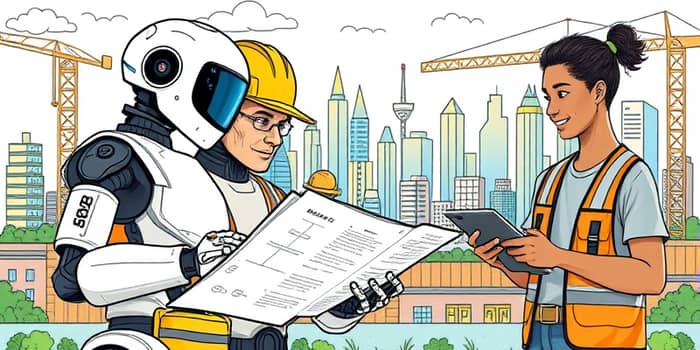
In an era marked by technological breakthroughs and economic headwinds, the workplace is undergoing seismic shifts. As individuals and organizations confront automation, demographic changes, and evolving expectations, adaptability has become the greatest currency of all.
Understanding the Shifting Landscape
Today’s labor market is defined by a tension between innovation and stability. While AI promises unprecedented productivity gains, it also raises anxieties about job displacement. Demographic trends further complicate the picture: over the next decade, 1.2 billion young people in emerging economies will enter the workforce, yet only 420 million new jobs are projected. How can we navigate these conflicting forces?
By acknowledging both challenges and opportunities, we can craft a more inclusive, dynamic future of work.
Major Workforce Impacts at a Glance
1. AI’s Dual Impact on Employment
Artificial intelligence is a force of both creation and destruction. In sectors like technology, finance, and logistics, AI fuels smart automation and deeper insights, driving efficiency to new heights. Yet in entry-level finance, law, consulting, and administrative roles, basic tasks are increasingly handled by algorithms.
This duality demands a proactive stance: workers must cultivate skills that complement machines, while employers must guide AI integration with clear objectives and ethical guardrails.
2. Blue-Collar Surge vs. White-Collar Decline
Contrary to assumptions, many blue-collar occupations are flourishing. Infrastructure projects, green energy transitions, and skilled trades offer stable, high-demand pathways. At the same time, traditional white-collar roles are concentrating at levels requiring strategic creativity.
Gen Z, witnessing the disruption of expected knowledge-work careers, is increasingly drawn to hands-on vocational opportunities. Embracing this shift can unlock personal growth and societal prosperity.
3. Hybrid Work as the New Norm
Remote work is no longer a temporary fix. With nearly 40% of employees working remotely at least part time, organizations have learned that structured flexibility drives engagement. Clear core hours, shared protocols, and regular in-person collaboration sessions create a hybrid model that balances autonomy and connection.
Industries handling sensitive data or requiring high collaboration may lean back into offices. Others, like creative and tech sectors, will continue pioneering flexible arrangements.
4. Skills as the Operating System
The future workplace runs on skills—transferable, adaptable, and ever-evolving. Yet only 12% of large organizations have embedded skills-based practices. By 2030, 92% of employers plan to prioritize reskilling and upskilling, recognizing that continuous learning unlocks career mobility.
Transferable skills—communication, critical thinking, digital literacy—buffer earnings losses after displacement and broaden job prospects. Organizations that weave skills thinking into every decision will outpace rigid hierarchies.
5. Designing a Resilient Workforce
Tomorrow’s workforce will be fluid, modular, and adaptive. Agility replaces hierarchy as the organizing principle. Rather than asking how many people are needed, leaders will ask who is best suited to each task.
This mindset shift fosters innovation, accelerates project cycles, and empowers individuals to build fulfilling careers aligned to their strengths.
6. Navigating Labor Market Fragility
Both labor supply and demand are softening. Slower job growth, rising unemployment, and shifting immigration flows highlight a fragile equilibrium. To strengthen resilience, communities and policymakers must invest in targeted support for those most vulnerable.
Workforce Vulnerability and Resilience
Adaptive capacity determines how well workers weather transitions. Four key components shape this capacity:
- Net liquid wealth: financial reserves for job searches
- Skill transferability: applying competencies across roles
- Geographic density: access to diverse opportunities
- Age: varying transition challenges by life stage
Those in clerical roles with limited savings and specialized skills face higher risks. In contrast, individuals with above-median adaptive capacity—often highly AI-exposed professionals—can pivot more easily.
Organizational Strategies for a Changing World
Companies that thrive will champion transparency, empathy, and strategic foresight. Three pillars guide effective workforce planning:
- AI Integration: Define clear objectives, establish ethical guardrails, and use automation to free employees for creative problem-solving.
- Workforce Planning: Combine job elimination scenarios with reskilling pathways, reallocate labor to high-growth areas, and build knowledge transfer systems.
- Engagement: Embed wellness, flexibility, and purpose into culture, ensuring Gen Z and other cohorts feel valued and motivated.
Macroeconomic and Demographic Context
Technological innovation, green transitions, and political polarization are converging to reshape 2030’s labor market. The early 2020s belief in stable professional jobs and optional offices has given way to realignment, consolidation, and disruption.
Rising healthcare costs, efficiency mandates, and a widening productivity-pay gap since 1979 underscore the urgency of reforming how work is designed, measured, and rewarded.
Sectoral Insights and Policy Implications
Technology, finance, and logistics remain the most AI-exposed sectors, while infrastructure, energy, and skilled trades promise growth. Policymakers can harness adaptive capacity data to prioritize funding for workforce adjustment programs and streamline support for those most in need.
- Target public funding to workers with lower adaptive capacity.
- Use data-driven measures to inform eligibility for transition assistance.
- Monitor labor market shifts to refine policy in real time.
Embracing the Future
Change is inevitable, but its outcomes are not predetermined. By cultivating a growth mindset—both individually and institutionally—we can transform disruption into opportunity. Investing in skills, designing agile organizations, and prioritizing inclusive policies will empower every worker to thrive.
The future of work beckons us to be bold: to reimagine our roles, upgrade our capacities, and shape an economy that values both human creativity and technological prowess. Together, we can build a resilient, equitable, and prosperous world of work for generations to come.
References
- https://www.jpmorgan.com/insights/global-research/economy/labor-market
- https://www.brookings.edu/articles/measuring-us-workers-capacity-to-adapt-to-ai-driven-job-displacement/
- https://leadershipcircle.com/blog/workplace-trends-2026/
- https://www.frbsf.org/research-and-insights/publications/economic-letter/2026/01/recent-slowdown-in-labor-supply-and-demand/
- https://www.weforum.org/publications/the-future-of-jobs-report-2025/in-full/1-drivers-of-labour-market-transformation/
- https://charleskochfoundation.org/news/future-of-work-an-outlook-for-2026/
- https://siepr.stanford.edu/publications/policy-brief/us-economy-2026-what-watch
- https://www.cohnreznick.com/insights/workforce-efficiency-in-changing-economy
- https://hbr.org/2026/02/9-trends-shaping-work-in-2026-and-beyond
- https://www.epi.org/productivity-pay-gap/
- https://www.pewresearch.org/social-trends/2024/12/10/key-labor-force-trends/