
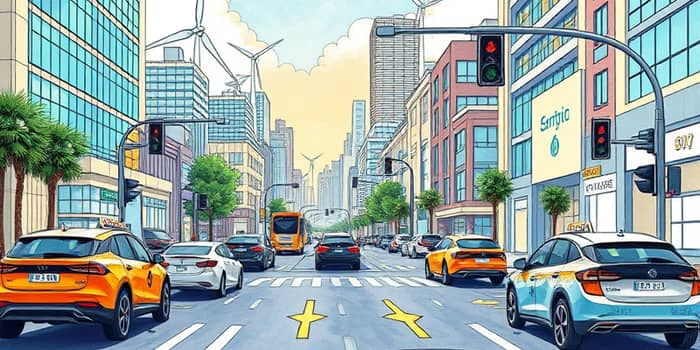
The transportation industry stands at a crossroads of innovation and opportunity, poised to redefine mobility on a global scale. Fueled by rapid technological advances, shifting consumer behaviors, and mounting environmental concerns, stakeholders across sectors are mobilizing resources to chart a new course. In this landscape, understanding the surface-level data is only the first step. Industry leaders must embrace holistic strategies that marry growth objectives with sustainability goals.
This article explores unprecedented growth potential in market size and investment, dives into groundbreaking technology trends, and offers actionable insights for practitioners aiming to navigate complexities. By uniting vision with execution, we can build a transportation ecosystem that is efficient, inclusive, and resilient.
Market Growth and Investment Landscape
The intelligent transportation system market was valued at USD 60.4 billion in 2025 and is forecast to reach USD 137.8 billion by 2035, representing a robust CAGR of 8.6%. North America alone accounts for USD 1.1 trillion in transportation market value, driven by surging e-commerce activity and last-mile delivery innovations. Concurrently, annual investments in autonomous and green technologies are projected to exceed USD 30 billion and 20 billion respectively.
These figures highlight robust investment opportunities across sectors. Strategic capital allocation and public-private partnerships will play a pivotal role in unlocking this growth.
Autonomous Vehicles and Smart Infrastructure
Autonomous vehicles (AVs) and robotaxis are moving beyond pilot phases. Today, Waymo operates over 2,500 robotaxis in ten U.S. cities, delivering 450,000 paid rides weekly. Freight applications are also scaling, with heavy-duty autonomous trucks generating cost savings over USD 200 million annually for leading logistics firms. By 2035, AV passenger miles traveled are projected to increase from 1% to 8%, signaling mainstream adoption.
Equally transformative is the rise of smart infrastructure. Cellular-V2X deployments in Atlanta demonstrate real-time traffic signal preemption for emergency vehicles and dynamic safety alerts. Adaptive traffic signals, integrated multi-modal platforms, and predictive analytics are reshaping urban workflows to deliver seamless integrated platforms that optimize flow and safety.
Demand Drivers and Economic Forces
Several converging factors underscore the urgency for innovation in transportation. From consumer preferences to macroeconomic trends, understanding these dynamics is essential:
- E-commerce boom, with U.S. online sales approaching USD 1 trillion and growing by USD 200 billion;
- Urbanization, as over 55% of the global population now resides in cities, creating congestion challenges;
- Cost pressures, fueled by rising fuel prices, labor shortages, and insurance premiums;
- Shift toward flexible ownership models, reflecting changing lifestyles and sustainability concerns.
These forces demand agile strategies that balance profitability with social responsibility.
Emerging Business Models: From MaaS to Shared Mobility
Mobility-as-a-Service (MaaS) platforms are redefining access to transportation. By integrating ride-hailing, public transit, and micromobility into subscription-based offerings, MaaS empowers users with convenience and choice. Corporate programs are introducing mobility budgets to streamline employee commuting, boosting retention and reducing carbon footprints.
- Corporate MaaS solutions with mobility budgets;
- Subscription-based EV sharing for urban commuters;
- Dynamic routing algorithms optimizing multi-modal trips;
- Partnerships between transit agencies and private operators.
Embracing these models helps organizations stay ahead of evolving user expectations and regulatory landscapes.
Sustainability and Environmental Imperatives
Environmental stewardship has moved to the forefront of transportation planning. Electric vehicle adoption is accelerating, supported by incentives and falling battery costs. Moreover, hydrogen fuel cell technologies are gaining traction for heavy-duty applications in ports and urban fleets.
Green delivery strategies, such as micro-fulfillment centers and low-emission last-mile vehicles, are critical for carbon emissions reduction strategies. These efforts not only mitigate climate impact but also resonate with increasingly eco-conscious consumers and stakeholders.
Infrastructure, Funding, and Workforce Challenges
Addressing critical infrastructure bottlenecks, particularly in the Southeast and Midwest corridors, is essential to prevent congestion from stifling growth. Funding models are diversifying, with states experimenting with tolling, EV fees, and mileage-based user charges to supplement flat federal outlays.
- Tolling and congestion pricing to manage demand;
- Electric vehicle registration fees to fund charging networks;
- Public-private partnerships for large-scale infrastructure;
- Mileage-based user fee pilots promoting fair usage charges.
Simultaneously, workforce shortages in driving and logistics roles are driving the adoption of autonomous solutions, offering a path to enhance safety and operational resilience, while retraining programs help employees transition to new roles.
Strategic Imperatives for Industry Leaders
To thrive in this dynamic environment, organizations must cultivate comprehensive scenario planning and build adaptable strategies. Key focus areas include technology investment, cross-industry partnerships, and data-driven decision making. Investing in cybersecurity and data protection is non-negotiable as connected ecosystems expand.
Fostering stakeholder collaboration frameworks—among policymakers, manufacturers, and operators—will accelerate regulatory alignment and standards development for AVs and smart mobility. Scenario analysis can help anticipate disruptions, from technological breakthroughs to economic shocks, ensuring resilience.
By aligning core business objectives with long-term societal goals, companies can pioneer future-ready transportation systems that deliver both profitability and positive impact.
As we look ahead, the transportation industry stands on the brink of a profound transformation. By embracing innovation, sustainability, and collaboration, stakeholders can unlock unprecedented value and shape a mobility ecosystem that elevates communities, safeguards the planet, and drives economic prosperity. The journey is complex, but the destination promises a world where transportation is safer, cleaner, and more accessible for all.
References
- https://meadhunt.com/6-trends-transportation-2026/
- https://mynatsa.org/charting-the-course-the-2026-transportation-industry-outlook/
- https://www.mckinsey.com/industries/automotive-and-assembly/our-insights/the-future-of-mobility-global-implications
- https://www.qargo.com/us/post/logistics-trends/
- https://www.kenresearch.com/north-america-transportation-industry
- https://www.hubinternational.com/insights/outlook/2026/transportation/
- https://www.deloitte.com/us/en/insights/industry/government-public-sector-services/transportation-trends.html
- https://www.chrobinson.com/en-us/resources/resource-center/guides/2026-freight-market-outlook/
- https://insightss.co/blogs/the-future-of-transportation-how-to-prepare/
- https://transportationinsight.com/resources/q1-2026-transportation-outlook/
- https://center-forward.org/basic/the-future-of-transportation-congestion-infrastructure-energy-efficiency/
- https://www.futuremarketinsights.com/reports/intelligent-transportation-system-market
- https://www.wipo.int/en/web/technology-trends/future-of-transportation
- https://www.plslogistics.com/resources/education/education-v1/transportation-industry-trends/