
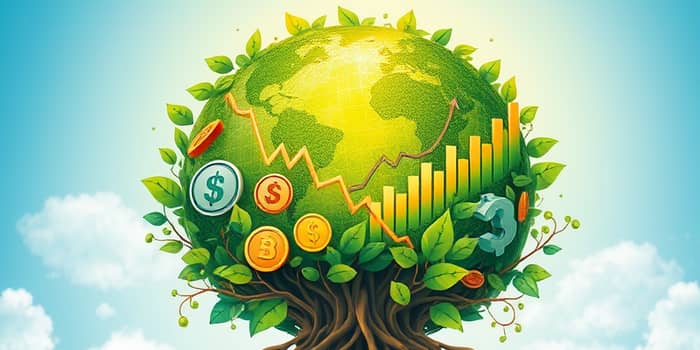
As the world grapples with climate change and social challenges, the financial sector stands at the forefront of transformation. Investors, corporations, and policymakers are aligning capital flows with Environmental, Social, and Governance (ESG) principles to fund initiatives that protect ecosystems, uplift communities, and generate long-term returns.
From green bonds to sustainability-linked loans, the sustainable finance market is a beacon of hope—and opportunity. This article explores market dynamics, key drivers, and practical steps for stakeholders to drive meaningful change through finance.
Market Size and Growth Projections
The sustainable finance market has scaled from USD 754.43 billion in 2024 to estimates of USD 7.95 trillion by 2025, with some projections reaching USD 42.68 trillion by 2035. Differences reflect varying scopes—from ESG-integrated portfolios to the broader green instrument universe.
This rapidly expanding sector encompasses green bonds, social impact bonds, sustainability-linked loans, and more. Analysts forecast a compound annual growth rate (CAGR) of nearly 20% through the next decade, driven by rising regulatory mandates and investor demand.
Core Concepts and Instruments
At its heart, sustainable finance channels capital to projects that combat climate change, protect natural resources, and promote social equity. Key instruments include:
- Green Bonds: Funds renewable energy, infrastructure upgrades, and efficiency projects. Issuance soared to hundreds of billions annually, now offered by governments, corporations, and municipalities.
- Social Bonds and Loans: Target affordable housing, healthcare, and education, delivering social impact alongside financial returns.
- Sustainability-Linked Instruments: Tied to performance targets—such as emissions reductions—encouraging issuers to meet ambitious sustainability goals.
These products not only align investments with impact but also help issuers manage risks, enhance brand reputation, and achieve decarbonization milestones.
Key Market Drivers
Several forces converge to propel sustainable finance into the mainstream:
- Regulatory frameworks: The EU Taxonomy, SEC climate disclosures, and G20 commitments boost transparency and accountability.
- Technological innovation: AI-powered ESG analytics, blockchain transparency, and advanced impact measurement tools.
- Investor shifts: From exclusionary screens to integrative strategies, with adaptation and resilience opportunities valued at USD 9 trillion by 2050.
- Corporate commitments: Financial giants like HSBC pledging USD 1 trillion by 2030 for low-carbon projects illustrate the scale of ambition.
These drivers underscore an ecosystem where capital and sustainability objectives reinforce each other, creating a virtuous cycle of growth and impact.
Regional Insights
2026 Trends and Future Outlook
Industry analysts highlight seven trends set to reshape sustainable finance:
- Adaptation and Resilience: Financing water infrastructure, coastal defenses, and disaster insurance.
- Transition Finance: Guidelines for high-emitting sectors, carbon pricing expansion, and transition bonds.
- Nature and Biodiversity: Closing a USD 1 trillion funding gap for conservation through innovative debt instruments.
Other trends include the evolution of ESG regulation, private/blended capital growth, and digital bond platforms—each unlocking new avenues for impact and returns.
Challenges and Opportunities
While the outlook is promising, hurdles remain:
- Physical climate risks (droughts, flooding) and transition mispricing can erode value.
- Financing gaps in adaptation and biodiversity demand inventive blended finance solutions.
- Skills shortages in quantitative ESG analysis and impact reporting challenge firms to build capacity.
Yet with challenge comes opportunity. Harmonized taxonomies, carbon credit markets, and private credit innovations can bridge funding divides. Professionals who master ESG data and regulatory fluency will be well-positioned to lead the next wave of sustainable finance.
Practical Steps to Engage
Whether you’re a portfolio manager, corporate treasurer, or policy advocate, here are actionable steps to participate:
- Assess carbon intensity and nature impact in existing portfolios using advanced analytics.
- Explore issuance of green or social bonds, with clear performance targets and third-party verification.
- Engage stakeholders: align corporate strategy with sustainability goals and communicate progress transparently.
- Invest in skills: train teams in ESG integration, climate risk modeling, and impact measurement.
By adopting these measures, organizations can contribute to global sustainability while unlocking new sources of value.
Conclusion
The sustainable finance revolution is well underway, driven by regulatory momentum, investor demand, and technological breakthroughs. As the market grows from trillions to potentially tens of trillions of dollars, the imperative to balance profit and purpose has never been clearer.
Now is the time to embrace sustainable finance strategies, build resilient portfolios, and finance the transition to a low-carbon, equitable future. In doing so, stakeholders can not only achieve competitive returns but also leave a lasting, positive legacy for generations to come.
References
- https://www.precedenceresearch.com/sustainable-finance-market
- https://www.spglobal.com/sustainable1/en/insights/2026-sustainability-trends
- https://businessstories.sandiego.edu/the-future-of-sustainable-finance-green-investing
- https://connect.sustainalytics.com/sustainable-investing-trends-to-watch-in-2026
- https://www.sustainalytics.com/esg-research/resource/sustainable-finance-on-the-rise
- https://www.youtube.com/watch?v=jrgDZ6Qy09s
- https://www.grandviewresearch.com/industry-analysis/sustainable-finance-market-report
- https://sustainability.freshfields.com/post/102mfa5/7-esg-trends-to-watch-in-2026
- https://www.gminsights.com/industry-analysis/sustainable-finance-market
- https://www.schroders.com/en/nordics/professional/insights/2026-sustainable-investment-outlook-7-key-trends-for-north-america-in-the-year-ahead/
- https://www.environmental-finance.com/content/market-insight/
- https://www.environmental-finance.com/content/analysis/11-market-trends-set-to-shape-sustainable-debt-in-2026.html
- https://treasury.worldbank.org/en/about/unit/treasury/client-services/sustainable-finance-advisory
- https://www.responsible-investor.com/ri-editorial-outlook-five-sustainable-finance-trends-for-2026/
- https://www.spglobal.com/en/research-insights/market-insights/sustainability/sustainable-finance