Updated for October 2026
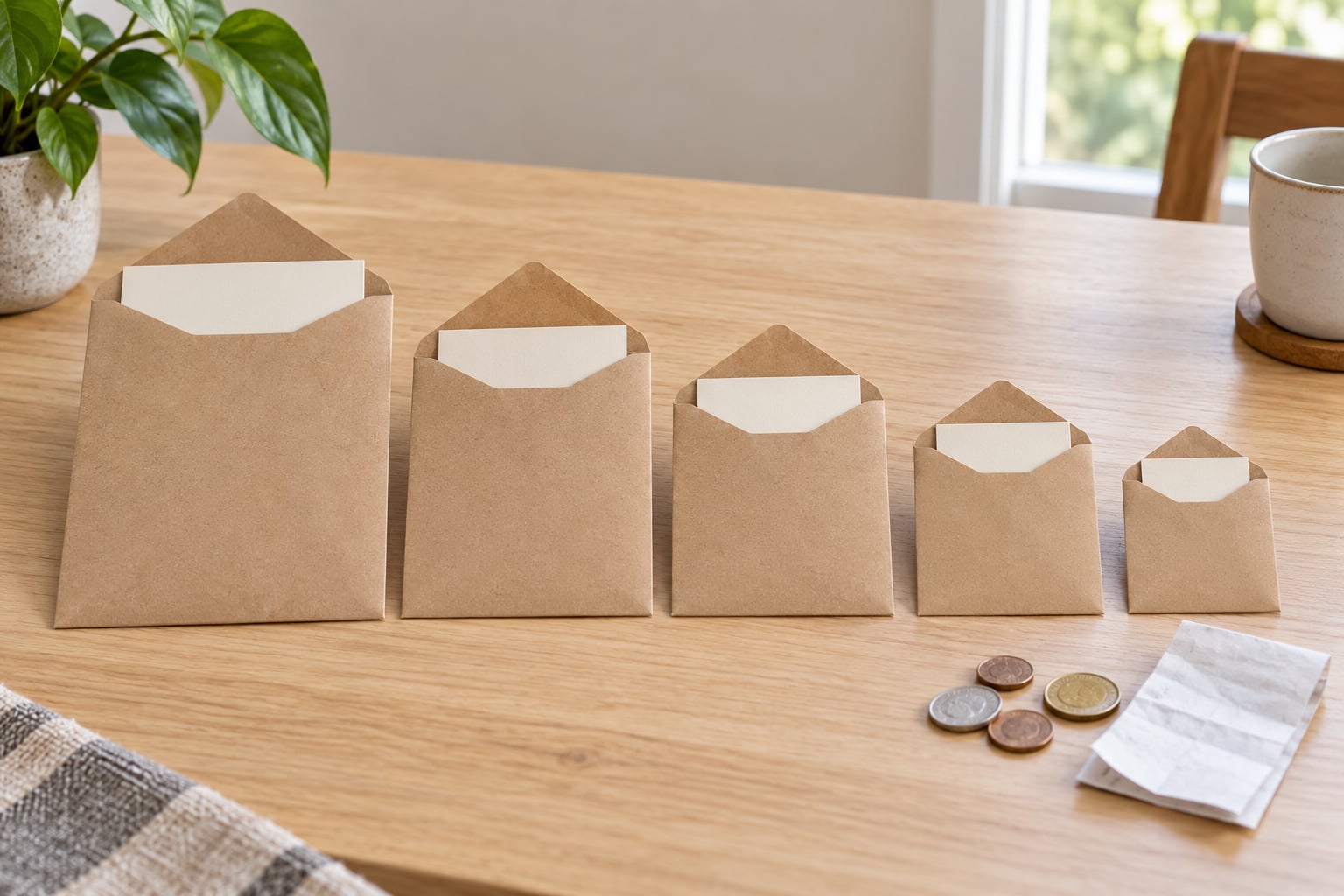
Envelope budgeting is a money management method where you divide your income into spending categories, assign a fixed amount to each one, and stop spending in that category once its money is used up. Instead of one blurry number called “money left,” you get ten or twelve separate pots, each with a job and a limit.
The idea is older than most people expect. Dave Ramsey’s version of it, popularized in The Total Money Makeover, made the cash envelope system famous, and the cash-stuffing ritual that comes with it is still how a lot of people budget. What changed is that you no longer need physical envelopes to run it, and this guide covers both versions.
The envelope budgeting method explained comes down to four steps:
- Pick the spending categories you actually want to control.
- Assign a dollar amount to each category for the period.
- Put that money in an envelope, physical or virtual.
- Spend only from that envelope. When it is empty, that category waits.
A full setup takes about an hour. Most of that hour goes to reading three months of bank statements, not to handling cash.
Table of Contents
- What Is the Envelope Budgeting Method?
- How Does Envelope Budgeting Work?
- Envelope Budgeting Categories and Example Limits
- How to Set Up an Envelope Budget
- A Simple Envelope Budgeting Example
- Cash Envelopes vs. Digital Envelope Budgeting
- How to Handle Bills, Savings, and Irregular Expenses
- Common Envelope Budgeting Mistakes and Fixes
- How to Choose a Monthly Review Date
- Frequently Asked Questions
- Do I need physical envelopes to use this budgeting method?
- How much money should I put in each envelope?
- What if I do not have enough money to fund every category?
- Should envelope budgeting include debt payments and emergency savings?
- How often should I review my envelope budget?
- What is the best way to track envelope spending?
- Conclusion: Start With Your Biggest Spending Category
What Is the Envelope Budgeting Method?
Envelope budgeting is a way of budgeting where each spending category gets its own limit, funded separately, and spending in that category stops the moment its money is gone. The limit is the point, not the paper.
Most people who fail at budgeting fail the same way. They set one target for “monthly spending” or “discretionary,” overshoot it in three specific places, and have no idea where the money went. Envelope budgeting forces you to name the categories first, so the overspending has a name attached to it before it happens.
Everything else in the method follows from that: separate limits, funding on a schedule, and a clear signal that a category is finished for the period.
How Does Envelope Budgeting Work?
The method is a cycle, and the cycle repeats on your pay schedule rather than on the calendar month. Most people fund on payday, which means semi-monthly or weekly envelopes rather than monthly ones.
- Decide how much income is available. Use what lands in your account, not what you earn on paper. Taxes, insurance withholdings and retirement contributions come out first.
- Give every category a job and a number. A category without a number is a wish, not a budget.
- Move money into each category at the start of the period. Cash people do this by withdrawing and sorting bills. Digital people move money into sub-accounts or assign amounts inside an app.
- Spend from that category and nowhere else. When the amount runs out, spending in that category pauses until the next funding date.
- At the end of the period, count what is left. Surplus goes to savings or to the next period. Shortfalls tell you which limits were wrong.
Step five is where most people quit. Without it, envelopes just slowly leak.
Envelope Budgeting Categories and Example Limits
Below is a starter list for a US household with 3,800 a month in take-home pay. The amounts are examples to show how the split works, not recommendations. Your numbers come from your own statements, and what counts as essential changes by household, city and stage of life.
| Budget category | Illustrative monthly amount (USD) | What it covers |
|---|---|---|
| Housing | 1,500 | Rent or mortgage, HOA fees, renters insurance |
| Bills and utilities | 360 | Electric, gas, water, internet, phone |
| Groceries | 520 | Supermarket and household staples |
| Transportation | 300 | Fuel, parking, transit, occasional rideshare |
| Insurance | 240 | Auto, health and other premiums |
| Subscriptions | 90 | Streaming, apps, memberships, software |
| Eating out and coffee | 160 | Restaurants, takeout, daily coffee |
| Household and personal | 250 | Clothing, haircuts, toiletries, gifts |
| Debt payments | 300 | Minimums plus extra principal |
| Emergency savings | 80 | Added to every period, not spent from |
Ten categories is plenty to start. Splitting further adds work without adding control, unless a category is genuinely the one you struggle with.
How to Set Up an Envelope Budget
The envelope budgeting method explained step by step
- Write down your real take-home income. Open the account your paychecks land in and use an average of the last two or three months. Variable income? Use the lower of your last three months.
- List the categories you overspend in. For most people it is groceries, eating out, gas and subscriptions. Those are the only four that need envelopes at the start.
- Set each number from your statements. Pull the actual total from three months ago, not the number you wish you spent.
- Subtract the fixed costs. Housing, minimum debt payments and insurance come off the top. What remains is what you divide among the variable categories.
- Pick your funding frequency. Biweekly pay usually means biweekly envelopes. Monthly envelopes funded twice a month simply split the same totals.
- Fund the envelopes and track spending. With cash, keep the receipts in the envelope and subtract when it is nearly empty. Without cash, log each purchase in a spreadsheet or app the same day.
The last step is where beginners lose momentum. A category with no running balance is just a number on a page, and a number on a page does not stop anyone from spending.
A Simple Envelope Budgeting Example
Take a household earning 3,800 a month after deductions, paid twice monthly. Each payday funds 1,900. Here is what one month actually looked like.
| Envelope | Funded (USD) | Spent (USD) | Remaining |
|---|---|---|---|
| Housing | 1,500 | 1,500 | 0 |
| Bills and utilities | 360 | 372 | -12 |
| Groceries | 520 | 610 | -90 |
| Transportation | 300 | 244 | +56 |
| Insurance | 240 | 240 | 0 |
| Subscriptions | 90 | 78 | +12 |
| Eating out and coffee | 160 | 80 | +80 |
| Household and personal | 250 | 296 | -46 |
| Debt payments | 300 | 300 | 0 |
| Emergency savings | 80 | 0 | +80 |
Three envelopes ran dry. Groceries hit zero on the 19th, so 80 was moved in from eating out and 10 more from transportation. Household and personal needed 46, which came from the unused transportation money, and the utility bill ran 12 over, covered from subscriptions.
Nothing was borrowed for an impulse purchase. At the end of the period the only real surplus was the 80 sitting in emergency savings, and the review produced two adjustments: groceries moves to 600 because the original target was unrealistic, and eating out drops to 90 because 160 was never going to survive.
That is the whole point of the review. The numbers changed because real behavior changed them.
Cash Envelopes vs. Digital Envelope Budgeting
Cash and digital envelopes enforce the same rule in different ways. Cash enforces it through physical scarcity. Digital enforces it through a visible balance you have to check before spending.
| Factor | Cash envelopes | Digital envelopes |
|---|---|---|
| Spending friction | High: you cannot spend what you do not have on you | Low to medium: a tap skips the check |
| Setup cost | A pack of envelopes and a cash trip | Free paper method, or an app subscription |
| Tracking effort | Receipts go in the envelope | Log each purchase the same day |
| Convenience | Weak: unusable online or at a drive-through | Strong: works anywhere a card works |
| Card rewards | None | Usually kept, if you fund after paying |
| Risk | Cash can be lost or stolen with no dispute | Card can be frozen instantly |
| Best for | Leaky everyday categories: groceries, gas, dining out | Couples, shared money, irregular income, most bills |
Many long-time users run both together: cash for the three categories that leak, sub-accounts or app categories for everything else. That hybrid handles the two things cash is bad at, online shopping and large annual bills, without giving up the friction where it counts.
On the digital side, You Need a Budget and EveryDollar run strict category limits you fund from available money. Actual Budget and Goodbudget take a lighter approach, and a bank that lets you open free sub-accounts or issue a debit card per category removes the app question entirely. Envelopebudgeting.com keeps the zero-based math in the open.
EveryDollar is Dave Ramsey’s own tool, so if you have seen the cash version of the method, that is the same idea rebuilt for a screen. Forum users on r/ynab and r/personalfinance converge on the same conclusion: the software helps most when it covers one to three leaky categories, not the whole budget.
How to Handle Bills, Savings, and Irregular Expenses
Not everything deserves a cash envelope. Treating a fixed utility bill as a cash category adds a step without adding control, because the bill is the limit.
- Recurring bills. Keep them in the checking account. An envelope for each one works as a checklist so a payment never gets missed.
- Debt. Minimum payments come out first. Any extra goes to the highest-interest balance, and that extra amount belongs in the envelope until the bill is paid.
- Emergency savings. Give it an envelope that only ever receives money. Do not fund it with last-minute leftovers, or it stays empty for years.
- Subscriptions. One combined envelope, reviewed once a year. Cancelling one unused service pays for several months of groceries.
- Irregular costs. These become sinking funds: an envelope for car repairs, registration, property tax, a birthday, a trip. Divide the expected annual cost by twelve and fund it every month.
Variable income needs the same treatment. Fund from what actually arrived last month, not from a good month, and keep a slow-paying buffer in a separate savings account so a thin check does not empty the grocery envelope.
Short goals work the same way. The 100-envelope challenge is just a savings target wearing a costume, and building an envelope per goal gets you the same result with better tracking.
Common Envelope Budgeting Mistakes and Fixes
- Setting limits from optimism instead of statements. Fix: use last quarter’s actual spending per category, then subtract a small amount. Being slightly under is easier to live with than being wrong by 300.
- Making twenty envelopes. Fix: start with four. People on r/budget report abandoning the system when setting it up takes longer than tracking it.
- Treating borrowing between envelopes as cheating. Fix: write your rule down before you need it. Moving money from a genuinely under-spent category to cover a genuine shortfall is the fix, not the failure.
- Skipping the monthly review. Fix: put a 25-minute appointment in your calendar the day after payday. An unreviewed budget never corrects itself.
- Expecting an app to create cash friction. Fix: if the categories you overspend in are physical ones, use physical cash for those and let the app handle the rest.
- Ignoring receipts. Fix: the receipt tells you where a gap came from. Without it you are guessing at the number you are about to set for next month.
Expect to feel poorer for the first two or three months even while spending less. That adjustment is documented on r/ynab, and it is not a sign the method failed.
How to Choose a Monthly Review Date
Review within three days of payday, while the money is still fresh and the bank statement has landed. Same day every month matters more than which day you pick.
Twenty-five minutes is enough if you follow the same order:
- Record anything you forgot to log during the period.
- Total what was spent against what was funded in each category.
- Move surplus to savings or the next period.
- Adjust two or three limits, not all of them.
- Note the irregular bills landing next month and fund their sinking funds early.
Once every quarter, set the next period’s targets from scratch. Monthly reviews fix drift, quarterly reviews fix a budget built on a life that has changed.
Frequently Asked Questions
Do I need physical envelopes to use this budgeting method?
No. The envelope is just a named limit on a category. Physical cash envelopes add spending friction, which is the part that helps some people stop. Digital versions use app categories, bank sub-accounts or a debit card per category. Most people end up mixing both: cash for groceries, gas and dining out, digital for everything else.
How much money should I put in each envelope?
Base each amount on what you actually spent in that category over the last two or three months, then trim slightly. Use your real take-home income, not your gross pay. After the fixed costs come off, split what remains among the variable categories you can influence, and fund that split on every payday.
What if I do not have enough money to fund every category?
Fund the essentials first: housing, utilities, minimum debt payments and food. Whatever remains gets split among the categories you can influence, and you adjust those limits to fit the amount you actually have. An underfunded honest budget beats a complete budget you cannot fund and abandon in week two.
Should envelope budgeting include debt payments and emergency savings?
Yes, both, but they work differently from spending categories. Debt envelopes hold the minimum plus any extra principal you are sending that month. An emergency savings envelope only ever receives money, funded every payday, and is not drawn from unless something genuinely unplanned happens.
How often should I review my envelope budget?
Once a month, within three days of payday, takes about 25 minutes. Record forgotten purchases, total spending against funding, move surplus to savings, and adjust two or three limits. Review quarterly as well, because a budget built on last year’s income or expenses eventually stops matching your life.
What is the best way to track envelope spending?
With cash, keep the receipts in the envelope and subtract when it is nearly empty. Without cash, log each purchase the same day you make it, in a spreadsheet or a budgeting app. Either way the rule is the same: update the balance immediately, because a stale balance is the same as no balance.
Conclusion: Start With Your Biggest Spending Category
Start with the one category where your money disappears fastest, usually groceries, dining out or gas. Pull three months of statements, set one limit you can live with, and fund it on your next payday. One envelope that holds is worth more than twelve that do not.
The first month will almost certainly need adjusting, and the second will too. Budgeting rules and tax treatment vary by state and change over time, so treat any limit here as a starting point to check against your own numbers. Consistency over three months matters far more than a perfect first week.