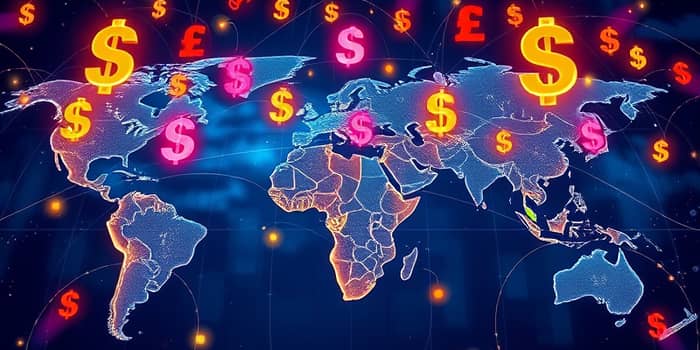
Forex trading opens a gateway to the heartbeat of the global economy, empowering individuals with the tools to exchange one currency for another and capture shifting market values.
As the largest financial market in the world, Forex exceeds daily volumes of $6 trillion, offering unmatched liquidity and continuous opportunity for traders around the clock.
Embarking on your Forex journey requires an appreciation of its rich history, core mechanics, and driving forces that move exchange rates. This guide demystifies each step, providing practical advice to begin trading with confidence.
The Evolution of the Forex Market
Currencies once derived their value from gold reserves under the gold standard, anchoring trust in government-backed systems. Nations held vast bullion stores to honor fixed exchange commitments.
The 1944 Bretton Woods Agreement reshaped monetary policy, pegging global currencies to the US dollar, itself convertible to gold at $35 per ounce. This arrangement stabilized postwar economics for decades.
In 1971, President Nixon’s decision to suspend dollar convertibility triggered the end of fixed rates. By 1973, floating exchange rates emerged, allowing currency values to adjust to market conditions freely.
Today’s Forex markets operate electronically across major centers—London, New York, Tokyo—creating a truly global, decentralized marketplace where trading never sleeps and opportunities span time zones.
Understanding Currency Pairs and Quotes
Every Forex transaction involves two currencies traded as a pair. The first is the base currency you buy or sell; the second is the quote currency that measures its value.
For instance, EUR/USD at 1.09 means you can exchange one euro for 1.09 US dollars. Movements in this rate reflect the euro’s strength relative to the dollar. If you anticipate the euro rising, you buy; if weakening, you sell.
Major pairs like GBP/USD (1.2500) and USD/CAD (1.34) dominate volume, while cross pairs and exotics offer diversification. Understanding how bid and ask prices work—and why spreads fluctuate—is crucial to executing precise orders.
Key Drivers of Exchange Rates
Exchange rates respond to a tapestry of economic, political, and psychological factors. Grasping these drivers helps traders anticipate shifts and align their strategies with underlying market forces.
- Interest Rates: Central banks set rates to control inflation, drawing foreign capital when rates rise and boosting currency demand.
- Inflation Data: Low inflation supports purchasing power, while surging prices erode value and prompt policy adjustments.
- Economic Indicators: GDP growth, employment trends, and trade balances signal economic health and influence currency flows.
- Geopolitical Events: Elections, conflicts, and trade negotiations often trigger volatility spikes as traders reposition portfolios.
- Market Sentiment: Risk-on favors high-yield and emerging currencies; risk-off drives money into safe-haven assets like the USD, JPY, and CHF.
- Unexpected Shocks: Pandemics, natural disasters, or sudden policy shifts can lead to abrupt repricing across all pairs.
Navigating Forex Trading Essentials
Leverage empowers traders to control large positions with relatively small capital, but it also heightens risk. Before deploying leverage, establish firm limits and stress-test your approach on demo accounts.
- Craft a Detailed Plan: Define clear entry and exit rules, risk-reward ratios, and contingency triggers.
- Implement robust risk management strategies by using stop-loss orders, position sizing, and tiered take-profits.
- Select a Trading Style: Scalping captures small, rapid moves; swing trading targets multi-day trends; position trading holds over weeks or months.
- Monitor Economic Calendars: Track key releases like nonfarm payrolls, central bank rate decisions, and CPI reports.
Islamic trading accounts remove overnight swap charges, replacing them with alternative fee structures to comply with Sharia law principles.
Building a Strong Foundation for Success
Consistent profitability hinges on patience, discipline, and continuous learning. Treat each trade as a data point in your journey, not merely a win or loss.
Keep a comprehensive trading journal documenting market conditions, your rationale, and emotional state. Reviewing patterns over time refines intuition and sharpens decision-making.
Developing an analytical mindset means interpreting charts, economic data, and sentiment indicators in unison. Mastering Supply and demand dynamics empowers you to forecast potential reversals and breakout scenarios.
Central banks guide monetary policy through rate adjustments and insightful forward guidance and projections. Tracking official statements helps predict policy shifts and prepare for volatility.
Conclusion: Turning Fundamentals into Results
Armed with historical context, fundamental drivers, and practical strategies, you now possess the toolkit to navigate Forex markets effectively. Remember, knowledge without execution yields no reward.
Prioritize ongoing education—attend webinars, read research reports, and test new techniques on simulation platforms. True mastery comes from blending study with hands-on practice.
Embrace every challenge as an opportunity to grow. With disciplined risk management, a structured plan, and awareness of the global currency ecosystem, you can transform Forex fundamentals into tangible trading success.
References
- https://hycm.com/en/blog/forex-fundamentals/forex-trading
- https://www.oanda.com/us-en/trade-tap-blog/analysis/technical/forex-trading-most-important-indicators/
- https://streetfins.com/basics-of-forex-markets/
- https://www.tradu.com/en/guide/forex/what-drives-forex-prices/
- https://www.oanda.com/us-en/learn/fundamental-analysis/introduction-to-fundamental-analysis/
- https://traders-academy.deriv.com/trading-guides/what-affects-the-forex-market
- https://www.schwab.com/learn/story/foreign-exchange-forex-trading-beginners
- https://www.axiory.com/en/trading-resources/basics/exchange-rates-factors
- https://www.slideshare.net/slideshow/the-essentials-of-forex-trading-an-introduction-to-currency-markets-e658/267349861
- https://razorpay.com/blog/factors-affecting-foreign-exchange-rates-business-guide/
- https://www.ofx.com/en-us/blog/exchange-rate-volatility-causes/
- https://www.thomascook.in/blog/forex/know-about-the-factors-affecting-foreign-exchange-rates/